
REVIEW · BUCHAREST COMMUNISM TOURS
Contrasts of Communism – Small Group Walking Tour in Bucharest
Bucharest has two histories, side by side. This tour links the communist past to present-day Romania, with stops that feel specific, not textbook. You walk, talk, and ride local transit between places tied to the 1989 uprising and what followed.
My favorite part is the guide, Elena. Her personal, on-the-ground stories make the big names and dates feel human, and she brings old photos that help you picture what changed and what stayed the same. The second thing I like is the way the route mixes major squares with quieter streets, including a working-class area where 1970s apartment blocks are now covered with colorful street art.
One consideration: it covers heavy themes and you do a fair amount of walking, so bring comfortable shoes and a good head for history. Also, the Palace of Parliament stop is outside only, and entry is not included.
Key highlights worth your attention
- Small group size (max 8) keeps the pace calm and questions easy.
- Elena’s photo-aided storytelling helps you see what life looked like then.
- Metro and bus rides connect distant stops without turning it into a marathon.
- Street art on communist-era blocks shows how neighborhoods reinvent themselves.
- Memorial Cemetery walk shifts from politics to personal stories and quiet reflection.
- Unirii Boulevard finish lands you by the dancing fountains, a lively end point.
The communist city, three more ways
- The Real tour of Communism★ 5.0 · 666 reviews
- Life under Communism★ 5.0 · 358 reviews
- 3-Hour Guided Tour of Communist Bucharest★ 4.9 · 303 reviews
- Bucharest Essential Tour: Old Town, Calea Victoriei & Communism★ 5.0 · 142 reviews
Bucharest’s Communist Story, Told on Foot and by Transit
This isn’t the kind of tour where you just point at plaques and move on. You move through the city in a way that makes the timeline feel visible: squares for the dramatic moments, then nearby streets and memorial grounds where the story turns more personal. Along the way, the guide keeps tying what happened in 1989 to what people still deal with today, which is where this tour earns its name, Contrasts of Communism.
I like that the format stays grounded. You stand in public spaces where events unfolded, then you hear what those locations meant at the time and why they matter now. It helps you “read” Bucharest like a real city, not a museum.
The tour runs about 3 hours, with a relaxed tempo. Stops are short, but the talk has depth, and you’re not rushed through questions. The group stays small, so you get actual conversation, not group noise.
Meeting at Strada Boteanu, Then Getting Your Bearings Fast
You meet at boteca13 on Strada Boteanu 3. It’s a straightforward start, and it gives you a local feel right away. If you like getting your bearings early in a trip, this kind of tour can do that, because you’ll also ride public transportation as part of the experience.
You should expect a mix of walking and short transit connections. One review highlighted the metro and public bus element, and it matches what the tour is designed to do, reaching areas you might not naturally combine on your own. If your day includes other major sights, you’ll also appreciate that the tour is paced to keep moving without exhausting you.
Quick practical tip: wear shoes you can walk in for a few solid stretches. One review directly called out that it’s not a quick stroll, so eating a good breakfast beforehand is a smart move.
Revolution Square: Where the Last Speech Landed
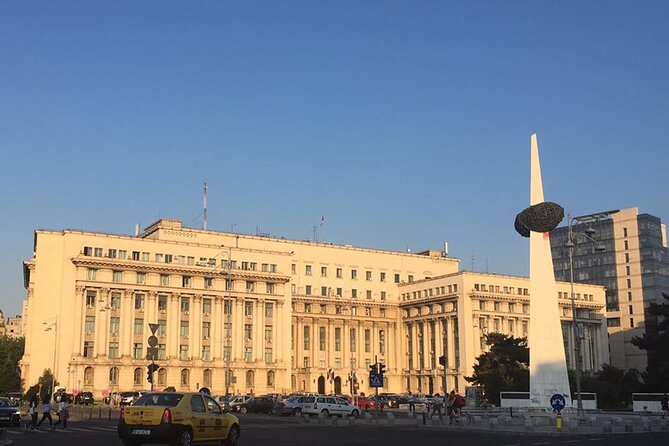
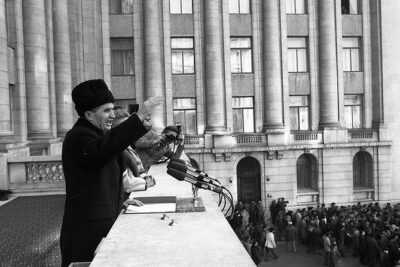
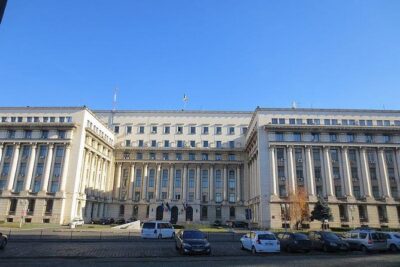
Revolution Square is where the story turns from background into action. You stand at the place where Nicolae Ceaușescu gave his last speech in 1989, and you hear how the dictatorship rose, tightened control, and then collapsed.
This stop matters because it explains the psychology of power. It’s not only about what Ceaușescu did, but about how a system built on fear and propaganda can still misread its own public. The location also gives you a clear sense of scale, so you can imagine the crowds and tension that surrounded the final days.
You’ll spend about 30 minutes here, and the talk is focused. If you only know Romanian communism from distant news footage, this stop gives you the on-the-ground version.
University Square and KM0 of Freedom of Speech
Next comes University Square, tied to KM0 of Romanian freedom of speech. You stand in the area linked to the first heroes who died for liberty in Bucharest on 21 December 1989.
This is where the tour does something valuable: it shifts the frame from one leader to people and ideas. “Freedom of speech” sounds abstract until you connect it to actual loss of life and the risks people took simply to speak, organize, and demand change.
The stop is also around 30 minutes, and it’s timed well within the tour. It helps you understand what the revolution meant to ordinary people, not just what toppled at the top.
Elsewhere in Bucharest, and up the valley
Eroii Revolutiei: Public Transit to a Working-Class Neighborhood
Then the route becomes more “you are here” and less “stand and listen.” You head off the main tourist circuit using public transportation, aiming for Eroii Revolutiei, a typical working-class neighborhood.
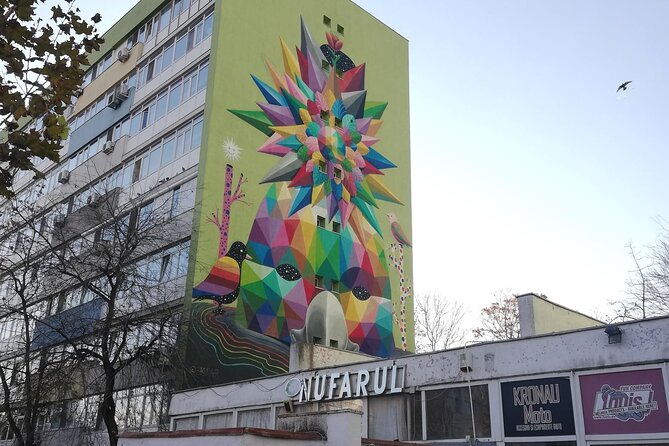
You’ll see the older grey communist-era blocks from the 1970s, then you’ll notice how parts of the area are being reinvented through colorful street art. This is one of the most hopeful contrasts in the whole tour. It doesn’t erase the past, but it shows that people can reclaim space and express identity after decades of strict control.
It’s a shorter stop, about 15 minutes, but it hits hard. When you pair the earlier political sites with these streets, you start to understand what the system meant in daily life: housing, routines, and the look of the city.
Memorial Cemetery: Quiet Paths and Personal Stories
After the neighborhood scenes, you move into a far different mood at Cimit. Eroilor Revolutiei, the Memorial Cemetery for the heroes killed in the 1989 revolution.
You walk through the quieter paths and hear personal stories connected to those losses. This stop is about more than remembering a date. It gives the revolution a human scale, where you can sense how political upheaval becomes grief, family stories, and long-term memory.
You’ll spend about 30 minutes here. It’s a thoughtful pace, and it works well if you want the tour to leave you with more than facts. The cemetery section is also a nice break from the urban noise, so your head can process what you’ve just learned.
Parcul Carol I: Viewpoints and the Monument to Party Leaders
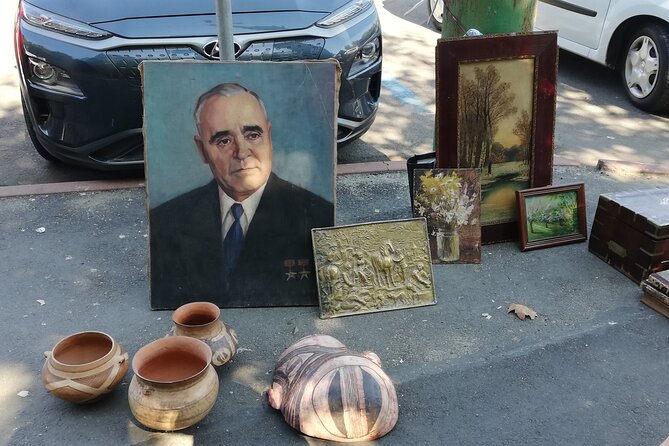
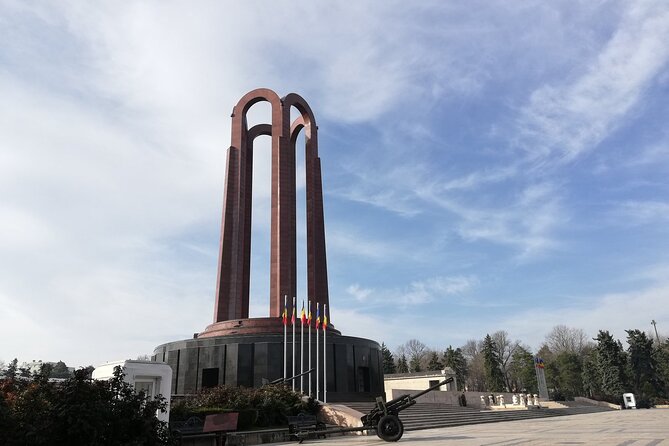
At Parcul Carol I, you get a unique view from one of Bucharest’s higher hills. That elevation gives context, because you can see how the city spreads and where major power symbols sit in relation to everyday life.
Here, you also learn about the Monument of the Heroes for the Freedom of the Motherland, built in honor of communist party leaders. This is a tricky stop in a good way. You’re looking at a memorial, but you’re also learning how regimes use monuments to shape memory and loyalty.
The stop is about 30 minutes. It’s not just photo time, even though you’ll want some. It’s also an explanation of propaganda, how it works over generations, and how citizens learn to read it.
Palace of Parliament: The Exterior, the Scale, and the Why
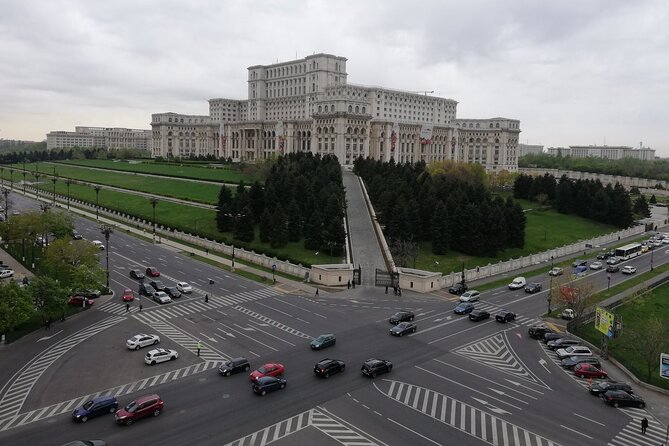
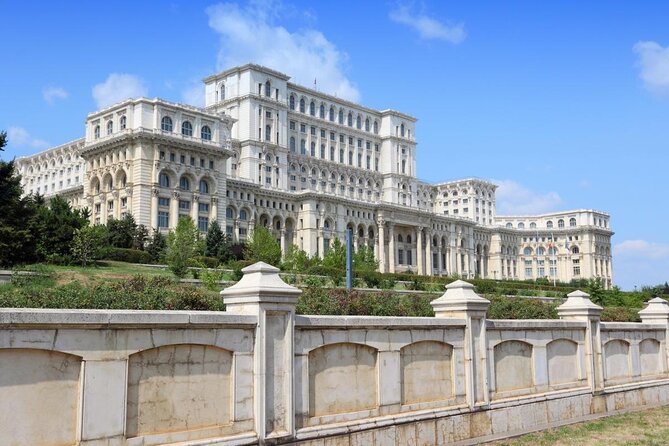
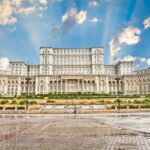
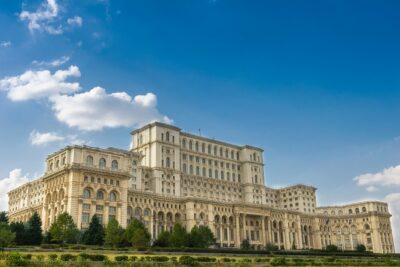
Back in the city center, you stand in front of the Palace of Parliament, described as the second-largest administrative building in the world and linked to Ceaușescu’s last major ambitions.
Important note: admission to the Palace is not included, so you’re not paying for an interior visit on this tour. Even without going inside, this stop is still worth it, because the building’s sheer scale does the storytelling for you. You can feel the “statement” quality of it, and the guide explains why that mattered to the regime.
Plan for about 30 minutes at this point. If you’re the type who loves architecture and wants to see inside, you might decide to add a separate visit later, but don’t expect that to be part of this specific experience.
Unirii Boulevard and the Dancing Fountains Finish
You end near Bulevardul Unirii, close to the dancing fountains. The tour frames them as a design meant as a kind of home-court advantage, a playful idea meant to humble world leaders.
This ending works for two reasons. First, the vibe shifts from solemn to lively, which helps your brain digest what you learned. Second, Unirii is a practical place to be dropped off, so you can keep exploring the old town area afterward.
The final stop is shorter, about 15 minutes, and then you’re free to continue on your own.
Elena’s Style: Why This Tour Feels Personal
A big reason this tour gets consistently high marks is how the guide teaches. Elena’s style isn’t “read the facts, move on.” It’s conversation-heavy, with clear answers and a knack for connecting political events to what daily life looked like.
One review specifically mentioned that Elena uses photos to help people visualize the past. Another praised how she doesn’t rely on rehearsed lines, but chats in a way that feels like a dialogue. That matters because communist history can get emotionally heavy fast. A guide who can slow down and let you ask questions makes the whole experience feel safer and more meaningful.
Also, there’s a recurring theme in feedback: the tour doesn’t feel rushed. You get rest moments, and you’re encouraged to ask anything on your mind.
Who This Tour Fits Best
This is a strong choice if you want context, not just sightseeing. You’ll likely enjoy it most if you:
- care about the 1989 revolution and how it reshaped Romania
- like walking in manageable chunks with occasional transit rides
- want a small group tour where you can ask questions
- appreciate historical sites explained through real human stories
The tour is also best for people with moderate physical fitness, since it’s still a walking experience. If you have mobility limits, you might want to plan for breaks and consider how much you can comfortably walk before booking.
If you’re the type who gets overwhelmed by politics, you should know the tour tackles serious topics. You can still go, but go with the expectation that this is reflective history, not light entertainment.
Price and Value: What You Pay for $42.05
At $42.05 per person for roughly 3 hours, this is a value play for Bucharest. The math is simple: the group stays small, you get a local expert guide, and many stops don’t require paid entry.
Most of the listed stops are free to access, and you’re mainly learning from standing points, walking paths, and exterior views. The one major exception is the Palace of Parliament, where entry is not included. So you’re not paying extra for building tickets during the tour, which keeps your budget predictable.
Add in the fact that the tour includes public transit connections and multiple neighborhoods, and $42.05 starts to feel reasonable, especially compared with paying for separate taxis or trying to stitch together these sites yourself.
One more practical value point: the average booking window is about 17 days in advance. If you want a specific day, don’t wait until the last minute, especially in busy seasons.
Practical Tips Before You Go
A few things will make the tour smoother:
- Wear comfortable shoes. It is not a sit-and-sightseeing walk.
- Bring water if you’re prone to getting thirsty while walking.
- Have a snack or full breakfast beforehand, since you’ll be on your feet.
- If you plan to combine this with other Bucharest highlights, treat it as an anchor activity for one morning or early afternoon.
The tour also uses a mobile ticket, and you should receive confirmation within 48 hours of booking, based on availability.
Weather matters too. The experience requires good weather, so plan to keep an eye on forecasts. If it gets canceled due to poor weather, you’re offered a different date or a full refund.
FAQ
FAQ
How long is the Contrasts of Communism walking tour?
It runs about 3 hours (approx.).
How much does it cost?
The price is $42.05 per person.
Is the tour offered in English?
Yes, it is offered in English.
Is admission included at every stop?
Admission for the Palace of Parliament is not included. Other stops are free based on the tour details.
Where do I meet the guide?
The meeting point is boteca13, Strada Boteanu 3, București 010027, Romania.
Is this tour a lot of walking?
It has a moderate physical fitness level requirement, and it does involve walking plus public transportation.
Is the group large?
No. The tour is limited to a maximum of 8 travelers.
What is the weather policy?
The tour requires good weather. If it’s canceled due to poor weather, you’ll be offered a different date or a full refund.
Should you book this tour?
Yes, if you want Bucharest with context and you like history that connects to real streets, not just monuments. The small group size, Elena’s style, and the way the route mixes 1989 sites with working neighborhoods make this feel personal and efficient at the same time.
Skip it only if politics and the communist era feel too heavy for your taste, or if you know you cannot handle several hours of walking. If those two things are fine, this is one of the best ways to understand modern Bucharest in a single day.
More Tour Reviews in Bucharest
More Bucharest Tours in Bucharest
The Communist City, Continued


Just added from Bucharest


Bucharest Communism Tours, compared.
 ★ 5.0The Real tour of CommunismFrom $32666 reviews
 ★ 5.0Life under CommunismFrom $42358 reviews
 ★ 4.93-Hour Guided Tour of Communist BucharestFrom $29303 reviews
 ★ 5.0Bucharest Essential Tour: Old Town, Calea Victoriei & CommunismFrom $24142 reviews
 ★ 5.0Communism in Bucharest – Landmarks, Museum & Communist AppetizersFrom $48111 reviews
 ★ 4.9Relics of Communism 3-Hour Walking TourFrom $4477 reviews
 ★ 5.0Bucharest Under Communism: Life, Terror & HopeFrom $2376 reviews
 ★ 4.6Entry ticket at the Museum of CommunismFrom $957 reviews
Browse the lists this tour appears in