
REVIEW · BUCHAREST COMMUNISM TOURS
Communist Era Bucharest Tour
This tour makes Bucharest’s Communist past feel real fast. I love the private feel, with a guide who can pace the story around your questions, and I love the way the route mixes big names like Revolution Square with everyday street corners that show how people lived. One thing to keep in mind, though: the tone can be emotionally sharp, so if you prefer a strictly neutral, textbook style, you may want to ask for extra context as you go.
What you get for the time (and what you should watch for)
You’re signing up for a focused, mostly outside walk, so good shoes matter more than you might think. It’s also designed for a moderate walking level, and while the stops include plenty of photo moments, you’ll still want to keep your energy steady for the full 3 hours.
The communist city, three more ways
- The Real tour of Communism★ 5.0 · 666 reviews
- Life under Communism★ 5.0 · 358 reviews
- 3-Hour Guided Tour of Communist Bucharest★ 4.9 · 303 reviews
- Bucharest Essential Tour: Old Town, Calea Victoriei & Communism★ 5.0 · 142 reviews
Key things I’d plan around
- Private group experience that stays small and conversation-friendly.
- Ceaușescu’s Parliament Palace explained as more than a landmark, as a statement of power.
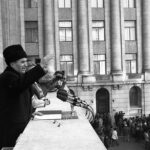
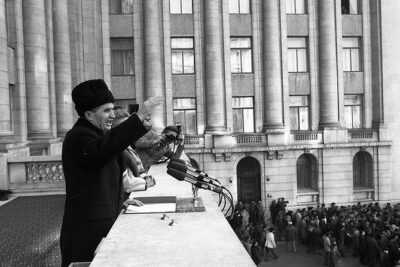
- Revolution Square photo stops including the balcony tied to the final speech.
- A “planned city” route that connects squares, boulevards, banks, and culture buildings.
- Mostly free stops listed along the route, which keeps the cost focused on the tour itself.
Entering Communist Bucharest from the ground up
Bucharest can look like many cities at once, but this tour gives you a single organizing thread: how the Communist era used space to shape daily life and public belief. You’ll walk through grand civic sites, but you’ll also get the smaller details that explain why those places were built and how they were used.
You’ll also notice the mix of old symbolism and newer restoration. Some areas have been regenerated in the years since 1989, so the contrast is part of the point. It turns history into something you can actually see, not just read.
Starting at Manuc’s Inn, then moving with purpose
The tour starts at Manuc’s Inn (Hanul lui Manuc), in the Old Centre. It’s a handy meeting point because it’s central and easy to orient around, and the tour ends back at the same spot.
If you want the smoothest start, arrive a few minutes early and plan to begin with your camera ready. Much of the storytelling happens right where the buildings stand, so being on time helps you catch the first pieces of context.
Piaka Unirii: where the planned city tries to look new
Your first major stop is Piaka Unirii, described as the heart of Bucharest built during a Communist planned modernization program. Today, it’s tied to a modern city center feel, including newly restored Unirii fountains.
What I like here is the way the guide can frame the space as propaganda and public life at the same time. Even if you’ve seen big plazas in other European capitals, this one is unusually effective because you can compare the “designed for control” idea with what it’s becoming now.
Practical note: you’ll likely spend a short stretch here, so if you’re chasing the best fountain photo angle, be ready when the guide gives you the orientation.
Elsewhere in Bucharest, and up the valley
Bulevardul Unirii: the Socialist Victory boulevard, renamed by time
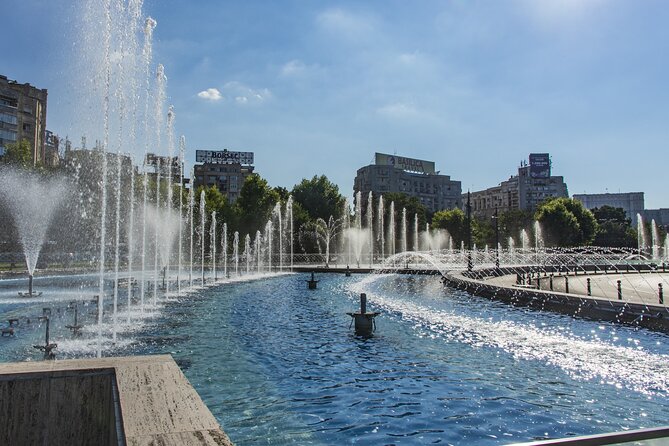
Next comes Bulevardul Unirii, once known as the Boulevard of Socialist Victory, and sometimes compared to the Champs-Élysées of Bucharest. The highlight is a line of 17 artesian fountains decorated to represent the four seasons.
This is one of the most interesting stops for understanding how regimes tried to wrap power in everyday beauty. Fountains and seasonal symbolism sound harmless, but in Communist cities the “nice parts” still often served a messaging role.
If you’re the type who enjoys architecture-as-communication, you’ll likely find this segment especially rewarding. You get visuals, plus explanations for what the boulevard was meant to signal.
Casa Poporului: the heaviest building story you actually remember
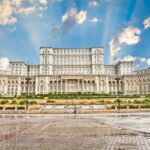
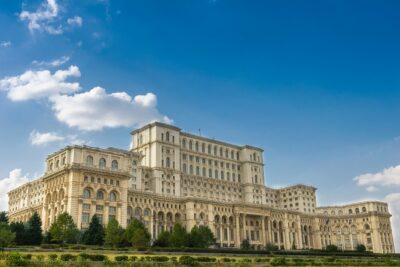
Then you reach the big one: Nicolae Ceaușescu’s Parliament Palace, also called Casa Poporului. The tour focuses on hearing the history of this immense structure, including the claim that it is the heaviest building in the world.
Even if you’ve only seen pictures, standing near it changes the scale in your head. The value of the tour here is that the guide treats the building as a whole concept, not just a sight. You’ll connect the architecture to how the regime wanted authority to feel permanent.
One consideration: because it’s a huge civic landmark, your exact photo spots can depend on crowding and street layout that day. Keep your expectations flexible and move with the guide when they point you toward better angles.
Victoria Avenue walking segment: shops along the line of ideology
After the Parliament area, you’ll take a walk along part of Victoria Avenue, described as lined with beautiful shops. Here, the tour’s goal is to explain what it was like in the Communist era, even though you’re seeing a modern streetfront now.
This is where the tour becomes practical for understanding daily life. You don’t just hear about ideology, you see the kind of street that carries people from one public space to another. A shopping street can look ordinary today, but in this context it becomes part of the larger city design.
If you’re someone who learns best from real-world comparisons, you may especially like this section. It helps you connect the story to your own visual map of the city.
Banks, money, and the CEC Bank stop
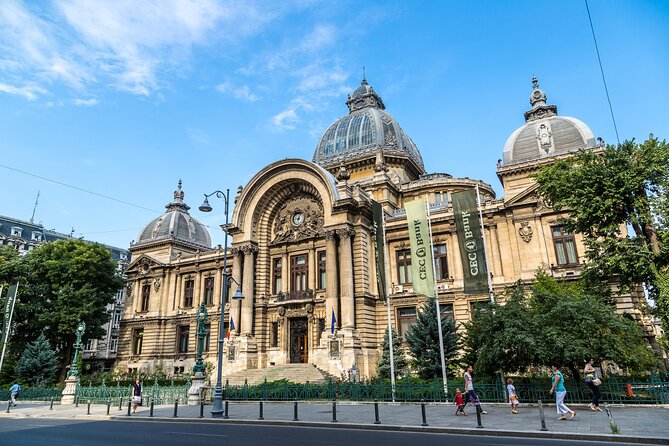
The route then includes the CEC Bank, introduced as the bank of the people during Communist years. The tour also points out the grandeur of Romania’s National Bank and shares the interesting history behind it.
Banks are useful stops for Communist-era context because they connect policy to everyday transactions. Even without going inside (the tour description frames these as see and learn moments), the guide can help you understand why institutions mattered so much in a planned economy.
This is also a good moment to ask questions if you’re curious about how ordinary people experienced the system. The guide’s answers tend to land best when you connect them to what you can physically see, like building scale, location, and street prominence.
University Square and National Theatre: culture under political change
At University Square, you’ll see what’s described as the oldest and largest University in Bucharest. The tour also mentions the Intercontinental Hotel Bucharest, completed and opened in 1971.
Then you pass the National Theatre of Bucharest, an iconic building with many changes to its design in a short history. It’s a reminder that cultural institutions often mirror political shifts, even when the building looks stable from far away.
I like this pairing because it shows the different ways power can show up. Education and culture are not just services, they are identity. When a regime controls or influences those spaces, it reshapes what people think is normal.
Piaka Revolukiei: where the 1989 revolution begins to speak
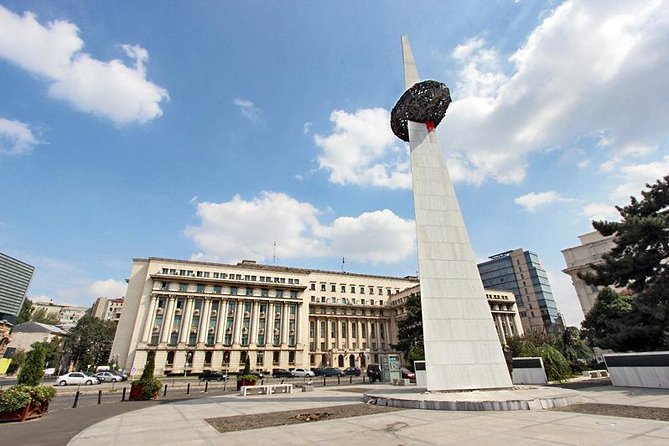
The tour’s emotional high point is Piaka Revolukiei (Revolution Square). You’ll see the area where the famous 1989 revolution started, plus memorials connected to the life-changing events.
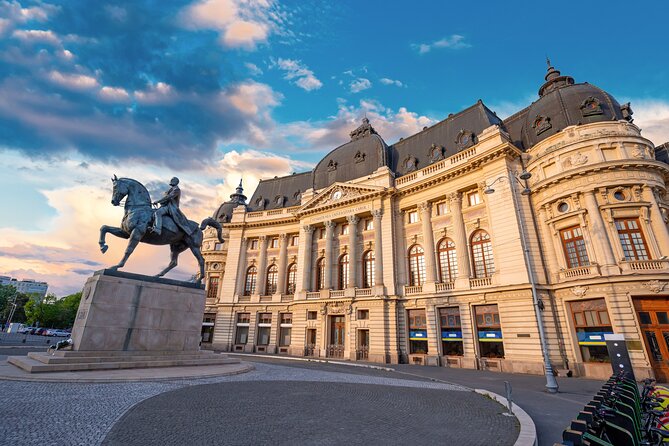
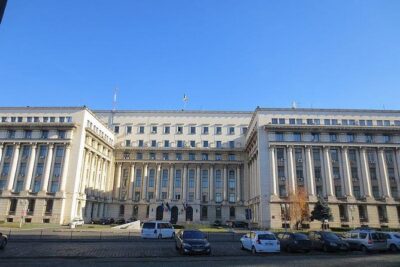
The described highlights include the balcony where Nicolae Ceaușescu made his final speech, the former Communist party headquarters, the Monument of National Rebirth, King Carol the first’s equestrian statue, and the University library. This is also where the tour leans hard into photo opportunities.
If you like building a timeline with your feet, this stop is strong. The guide can help you match names and dates to specific corners and symbols. You’ll leave with a mental map of where key moments happened, not just a list of events.
Practical advice: keep an eye on your footing and your framing. Memorial areas tend to draw crowds, so the best photo moments might require patience, waiting, and stepping slightly to follow the guide’s direction.
Iuliu Maniu Statue and Memorial of Rebirth: the story after the turning point
After Revolution Square, you continue with smaller but meaningful markers.
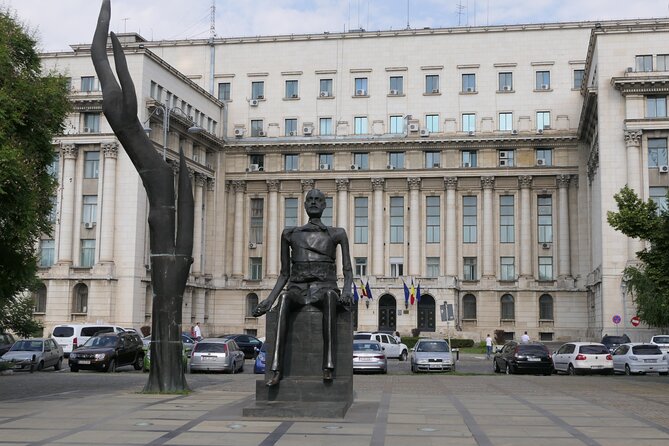
You’ll see the Iuliu Maniu Statue, explained as important for his role as a three-time prime minister and his struggle in the early years of Communism. This stop helps prevent the narrative from becoming only about one family or one building. It introduces another kind of political resistance and consequence.
Next is the Memorial of Rebirth, described as a 25 meter high memorial commemorating the struggles and victims of the Romanian Revolution of Christmas 1989. Even if you think you know the outline of 1989, the guide’s framing here can make the aftermath feel more grounded and less abstract.
The extra stop with gardens and a historic building
The route also includes a segment described as a historic place built for the people of Bucharest by the people of Bucharest, over 100 years ago, with beautiful gardens and a stunning historical building.
I appreciate that this kind of stop exists inside a tour labeled Communist era, because it creates contrast. You’re not trapped only in the 20th-century state machine. You can see how older civic pride and public spaces continued to matter, even as the city changed around them.
Price, pacing, and why $30.72 can feel like good value
At $30.72 per person for about 3 hours, this tour sits in the low-to-mid range for a private, English-language historical walk with pickup offered. The value comes from the format: private time with a guide who connects the dots between buildings and lived experience.
You also get a lot of high-recognition stops in a short window, without needing to manage multiple tickets or complex logistics across the city. Many of the key photo and learning stops are listed as free admission tickets, including Piaka Unirii and Revolution Square.
If you’re short on time in Bucharest, this is the kind of tour that helps you avoid the frustrating experience of seeing impressive sites without understanding what they mean. That alone often justifies the cost, especially for travelers who like history but hate guesswork.
Morning or afternoon choice: pick based on your energy
The tour offers a morning or afternoon option. If you’re the type who photographs a lot, morning light can help, but that’s not a strict rule. Afternoon can work too, especially if your schedule is tied to other Bucharest plans.
Either way, dress for walking. Comfortable shoes are recommended, and the route includes enough movement that you’ll want your feet to feel ready from the start.
What the reviews make clear about the guide style
The strongest praise centers on the guide approach. People consistently highlight deep context for life under Communist rule, plus a willingness to explain the good and the bad, not only one side. Many also mention that guides like Alina and Claire bring personal storytelling layered on top of historical facts, which helps the city feel less like a museum and more like a place where real people lived through real limits.
There’s also one clear caution from less satisfied feedback: if you have trouble understanding a guide due to clarity or tone, that can affect how much you get out of the information. My practical takeaway is simple: if anything feels unclear, ask for repetition or rephrasing early, and don’t wait until you’re halfway through.
Who should book this tour
This tour is a great match if you want Bucharest history that’s tied to what you can see on the street. It’s especially ideal if you enjoy political history, architecture, and city planning, and you like learning through walking rather than sitting.
It also suits travelers who value a conversation. Because it’s a private tour with only your group participating, you can steer questions toward what you care about most, whether that’s Parliament Palace scale, Revolution Square symbolism, or the city’s shifting identity after 1989.
If you’re traveling with someone sensitive to heavy topics, preview your comfort level in advance. The subject matter can be intense, even when delivered with clarity and humor.
Should you book the Communist Era Bucharest Tour?
Yes, if you want your Bucharest to come with a storyline you can walk through. For a little over three hours, you get the big, defining sites, plus the connective tissue that makes them understandable.
Book it if you like local interpretation, photo-friendly stops, and a guide who can answer follow-up questions. Skip it only if you strongly prefer a purely neutral, strictly academic approach, or you know you struggle with spoken explanations in outdoor, walking settings.
More Tour Reviews in Bucharest
More Bucharest Tours in Bucharest
The Communist City, Continued


Just added from Bucharest


Bucharest Communism Tours, compared.
 ★ 5.0The Real tour of CommunismFrom $32666 reviews
 ★ 5.0Life under CommunismFrom $42358 reviews
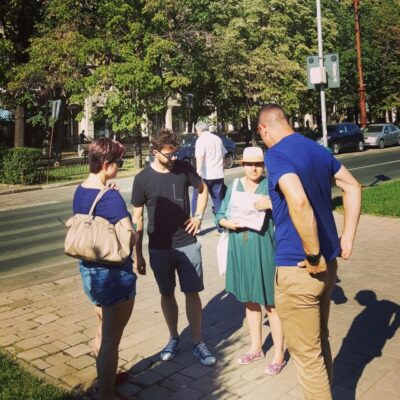 ★ 4.93-Hour Guided Tour of Communist BucharestFrom $29303 reviews
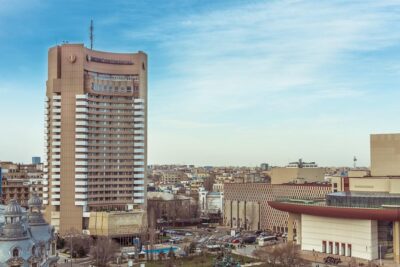 ★ 5.0Bucharest Essential Tour: Old Town, Calea Victoriei & CommunismFrom $24142 reviews
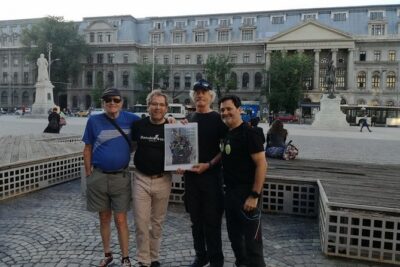 ★ 5.0Communism in Bucharest – Landmarks, Museum & Communist AppetizersFrom $48111 reviews
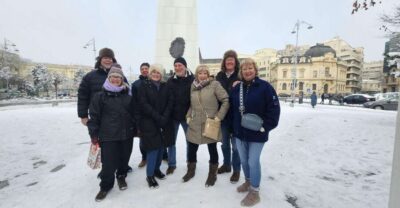 ★ 4.9Relics of Communism 3-Hour Walking TourFrom $4477 reviews
 ★ 5.0Bucharest Under Communism: Life, Terror & HopeFrom $2376 reviews
 ★ 4.6Entry ticket at the Museum of CommunismFrom $957 reviews
Browse the lists this tour appears in