
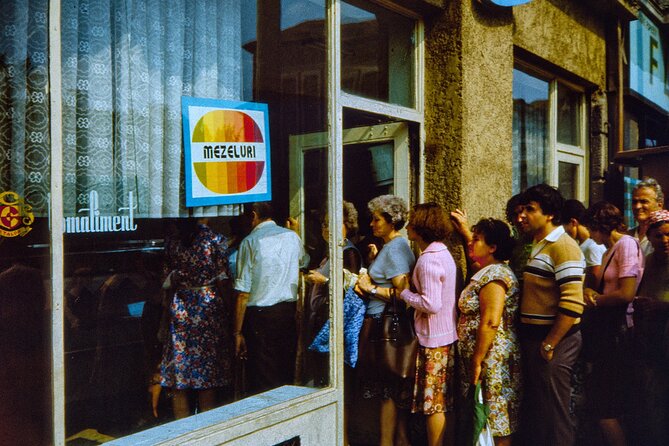
REVIEW · BUCHAREST COMMUNISM TOURS
Communism Walking Tour from Lenin to Ceausescu in Bucharest
Bucharest’s political story comes alive on foot. This communism walking tour strings together the big, blunt buildings and the places where history turned, from Revolution Square to University’s Square. I love how the route links ideas to real street corners, and I love the way the guide’s stories make the scale of the era feel understandable. One thing to consider is that it’s offered in English, so if your English is limited, bring offline translation help.
This is also strong value for the time. For $24 per person you get about 2 hours 30 minutes with a local guide, a capped group size (up to 25), and mobile tickets to keep it simple at check-in.
The walk is packed with major sights, so wear comfortable shoes and expect steady pacing. I also recommend planning on photo stops, because this route is built for “look up and notice” moments.
Key highlights at a glance

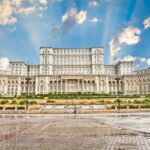
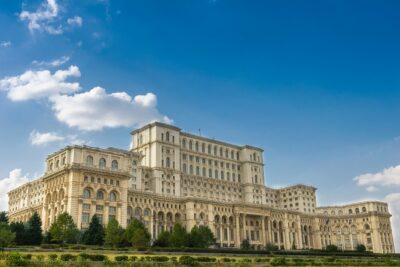
- Palace of Parliament, the last megalomaniac communist project: Start with one of the world’s biggest administrative buildings and the message behind its scale.
- Antim Monastery near Socialist Victory Boulevard pressure: You’ll see how redevelopment almost erased older Bucharest.
- Palatul Patriarhiei and the politics of design: A building inspired by Paris, tied to both early democracy and early communist momentum.
- Unirii Square’s 1980s mark and Dancing Fountains: A landmark that still works as a public statement.
- University’s Square and the Revolution’s cost: A somber stop connected to the bloody Romanian uprising.
- Revolution Square and Ceaușescu’s final speech location: The Central Committee building anchors the end of an era.
The communist city, three more ways
- The Real tour of Communism★ 5.0 · 666 reviews
- Life under Communism★ 5.0 · 358 reviews
- 3-Hour Guided Tour of Communist Bucharest★ 4.9 · 303 reviews
- Bucharest Essential Tour: Old Town, Calea Victoriei & Communism★ 5.0 · 142 reviews
Walking Bucharest the communist way: why this tour is worth your time
If you’ve ever wondered how communist power shows up in a city, this tour answers it in a practical way. You do not sit in a lecture hall. You move through Bucharest, stop at the places people remember, and let your guide stitch the meaning together.
What I like most is the balance of “big state vision” and “human consequences.” The route includes enormous projects like the Palace of Parliament, but it also returns to the smaller, older sites that were displaced or left behind. That tension helps you understand the era instead of just memorizing dates.
At the same time, it’s not all doom. You also see architecture with outside influences, like Palatul Patriarhiei’s inspiration and the Ateneul Roman’s landmark status. Even when the story turns dark, the walk keeps you oriented in the city you’ll actually return to.
Getting oriented: where you meet, how long it takes, and what the group size means
The tour starts at Bulevardul Unirii 5, București 040101 and begins at 10:30 am. It ends at Revolution Square (Piața Revoluției), which is useful if you want to continue sightseeing on your own afterward.
You’re looking at about 2 hours 30 minutes. That duration matters because it tells you how much you can realistically absorb without rushing through each stop.
The group size is capped at 25 travelers, and you’ll use a mobile ticket. I like smaller groups for tours like this because the guide can adjust their pacing when people ask questions, and you still get a personal feel instead of moving like a stampede.
Palace of Parliament: starting with concrete scale and political messaging
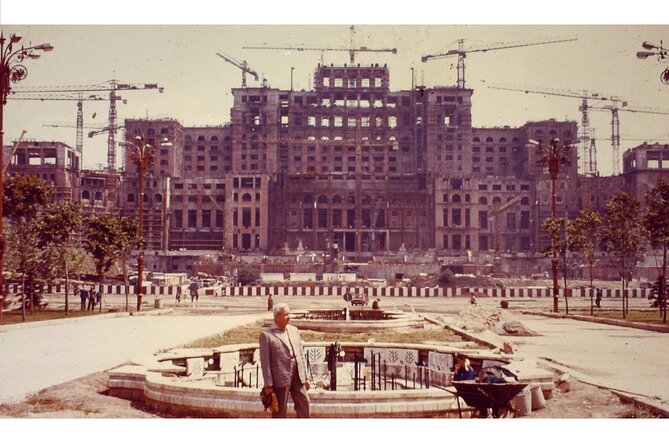
You kick off in front of the Palace of Parliament, described as part of the last megalomaniac communist project. Even if you think you know what big government buildings look like, this one is framed for impact, right away.
The stop is about 20 minutes, and the admission ticket for this stop is free. That’s a big deal for value, because it means you can see more without adding extra costs at the door.
More than the building itself, this opening sets the tone. You’re primed to notice how power gets built into the skyline, not just how it gets discussed in textbooks. If you like architecture as a form of communication, you’ll enjoy how the tour treats scale like evidence.
Manastirea Antim: the old city nearly erased by a new boulevard

Next you head to Manastirea Antim, and the story becomes more intimate. This monastery was part of the old city and, according to the tour framing, it was almost demolished to make space for the new Socialist Victory Boulevard.
You’ll spend around 15 minutes here, with free admission for the stop. That time is short, but it works because the goal is not a long worship visit, it’s an understanding of redevelopment pressure and what got sacrificed.
This is also a turning point for how you process the walk. Early on, the tour shows you the grand vision. Now it shows you the cost of that vision, at street level, in the fabric of older Bucharest.
Elsewhere in Bucharest, and up the valley
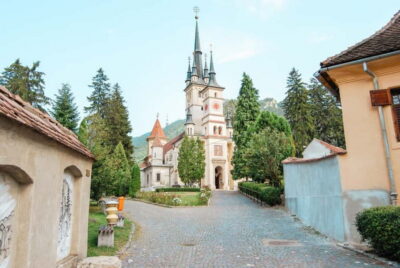
Palatul Patriarhiei: Paris-inspired design tied to democracy and communist beginnings
The route then shifts to Palatul Patriarhiei. The tour notes it was inspired by Garnier Opera from Paris, and it’s connected to both the start of democracy in Romania and the start of the communist movement.
Plan for about 20 minutes at this stop, again with free admission. I like this kind of stop because it resists a simple good-versus-bad story. Instead, it shows that movements and ideas overlap in real time, in real buildings.
If you’re the kind of traveler who enjoys “how did we get here” moments, this one helps connect early political shifts to what comes later on the route. You start to see the city as layered decisions, not one straight line.
Piaka Unirii (Unirii Square): the 1980s boulevard and Dancing Fountains
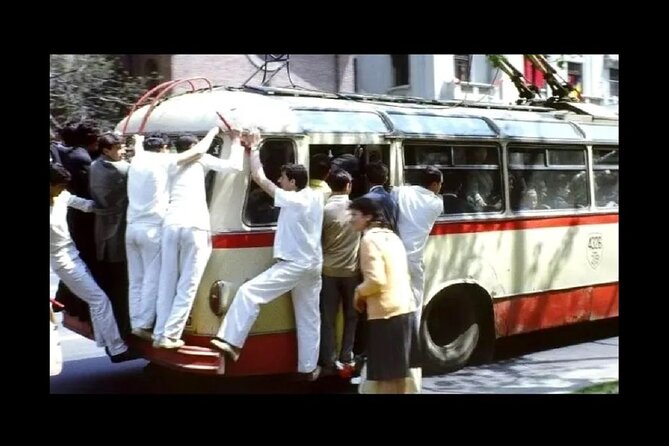
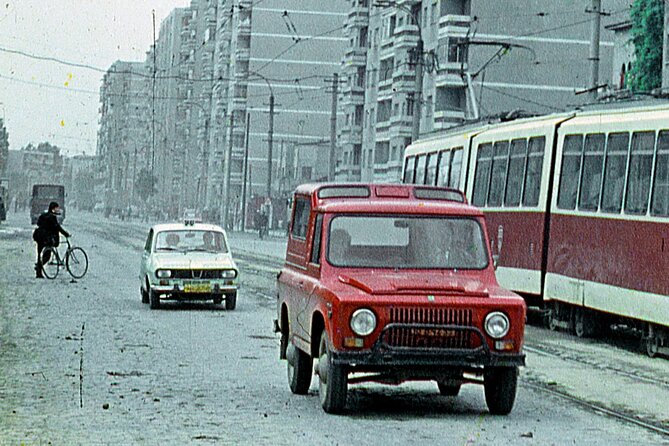
At Unirii Square, the tour brings you to a landmark built during the 1980s as part of the Socialist Victory boulevard. The key detail here is that it’s now known for the Dancing Fountains, which gives the square a more lively, modern-feeling identity than you might expect for a communist-era site.
Expect about 20 minutes and free admission. This stop is a helpful contrast: not every communist-era structure has only a tragic association. Some become public spaces that people use now, long after the original message was written into the stone.
Practical tip: this is a good place to pause for photos and to reset your eyes before moving into the darker, more direct revolution stops.
Old Town and University’s Square: abandonment and the violence of revolution
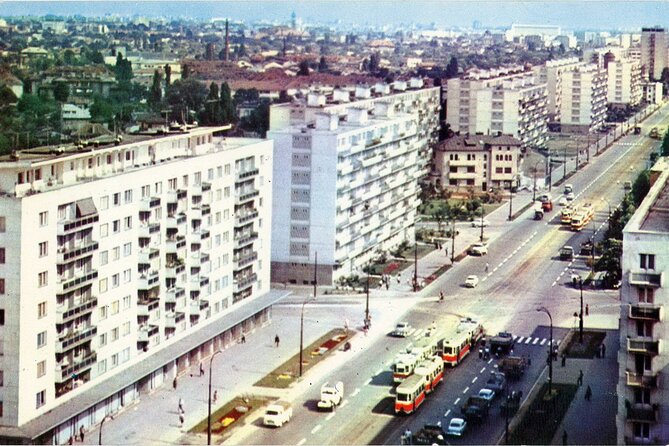
From Unirii Square, the tone turns heavier.
First comes the Old Town, described as a symbol of the old regime that became abandoned during the communist era. You’ll spend about 15 minutes here with free admission. I find this kind of stop clarifies what regimes do beyond building new things, they also neglect, control, and let parts of the city fall out of use.
Then you reach University’s Square, where the tour directly points to the violence of Romania’s communist exit. Romania is described as the only country in the communist block that ended with a bloody revolution, and the tour connects many victims to being shot in this square.
This stop also takes about 15 minutes with free admission. It’s short, but it’s meant to land. If you tend to rush through memorial-type places, slow down here and give yourself a minute to absorb it, even if the group keeps moving.
Royal Palace to National Art Museum: when royalty became a protocol building
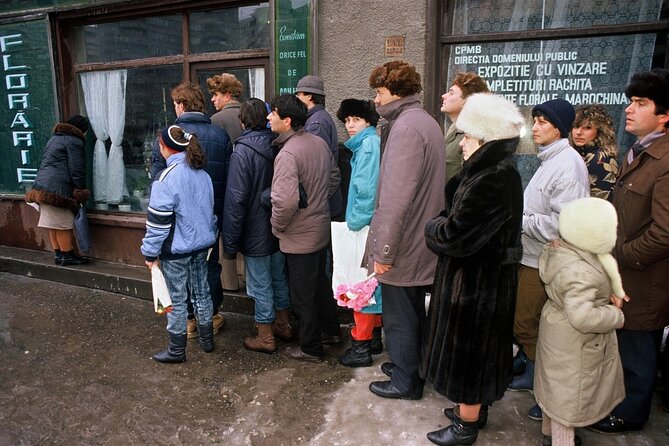
Next, you’ll see the transition from monarchy to communist administration through Palatul Regal / Royal Palace. Today it’s the National Art Museum, but the tour explains it functioned as the winter residence of Romania’s Royal family.
In the early years of communism, it became the Palace of the Republic and a protocol building. You’ll spend about 15 minutes here, with free admission.
This stop matters because it makes the political point in a tangible way. You can almost feel the shift in identity: the same walls, different authority, different purpose. For me, that’s the most effective lesson on a walk like this, because it’s not abstract.
Ateneul Roman and Revolution Square: from national pride to the end of a speech
The walk closes with two iconic anchors.
The first is the Ateneul Roman, described as one of Bucharest’s most representative buildings, even printed on the 5 lei bill. You’ll have about 5 minutes here, with free admission. Short stop, big payoff, because it reminds you how national symbols persist even through political upheaval.
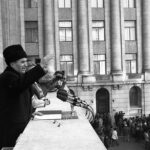
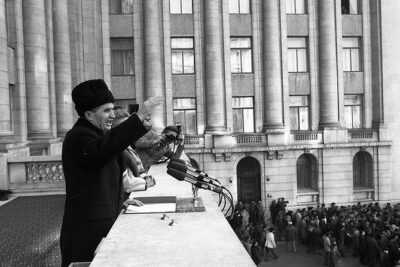
Finally, you arrive at Revolution Square (Piața Revoluției) for the most charged moment of the route. The tour explains that the main building here was the Central Committee of the Communist Party, and that Nicolae Ceaușescu held his last speech in front of the Romanian people.
This stop gets about 25 minutes, with free admission. I like ending here because it ties your whole walk together. You started with a monumental vision of power. You finish at a place tied to the moment power collapsed.
If you’re deciding between languages, this ending is the part where strong guiding matters most, so keep an eye on clarity and take advantage of the chance to ask questions while you’re there.
Price and value: what $24 buys you (and what it does not)
At $24 per person for about 2.5 hours, this tour is priced for getting real context without shelling out for multiple paid museum stops. Every listed stop has free admission noted in the tour information, and you get a local guide included.
What’s not included is also important. Food and drinks are not part of the deal, so plan accordingly if you’re walking from another neighborhood before the 10:30 am start.
Also, this is a walking tour built for history talk. If you want long inside visits or lots of downtime, you might find the pace brisk. But if you want a structured route that makes Bucharest’s political geography make sense, the value is strong.
One more practical detail I appreciate: the tour provides a mobile ticket, and it’s offered in English. If your language needs are flexible, you can focus on listening instead of wrestling with paperwork.
Who should book this tour from Lenin to Ceaușescu?
This works best if you like connecting city sights to political change. It’s also a great fit if you enjoy guided storytelling that helps you hold multiple sites in your head without feeling lost.
It’s also suitable for groups in the sense that it’s short enough to handle different ages and interests, and it’s capped at 25. If you’re traveling with family across generations, the focus on visible landmarks makes the experience accessible.
If you know you’ll struggle with English, the tour can still be interesting because the buildings and squares do the heavy lifting visually. But you may need to plan for comprehension support, like using offline translation.
Should you book this Communism Walking Tour?
I’d book it if you want a clear, walkable route that turns Bucharest’s communist-era imprint into something you can actually picture. The itinerary is built around major anchors, including Palace of Parliament, University’s Square, and Revolution Square, and it keeps the walking time reasonable for a single afternoon.
Skip it if you want a light, casual stroll with minimal political weight. This route goes where the story is, including sites tied to violence and repression. It’s not long, but it is direct.
If your schedule matches the 10:30 am start and you’re comfortable with English, this is one of the more efficient ways to understand the communist era’s physical footprint in Bucharest.
FAQ
How long is the Communism Walking Tour from Lenin to Ceaușescu?
It lasts about 2 hours 30 minutes.
How much does the tour cost?
The price is $24.00 per person.
What language is the tour offered in?
The tour is offered in English.
Where do I meet the tour?
The meeting point is Bulevardul Unirii 5, București 040101, Romania.
Where does the tour end?
The tour ends at Revolution Square (Piața Revoluției), București, Romania.
Are admission tickets included for the stops?
The tour information lists admission ticket free for each of the listed stops.
Is food included?
No, food and drinks are not included.
What size is the group?
The tour has a maximum of 25 travelers.
Can I use a mobile ticket?
Yes, it includes a mobile ticket.
Is free cancellation available?
Yes, free cancellation is available. You can cancel up to 24 hours in advance for a full refund.
More Tour Reviews in Bucharest
More Bucharest Tours in Bucharest
The Communist City, Continued


Just added from Bucharest


Bucharest Communism Tours, compared.
 ★ 5.0The Real tour of CommunismFrom $32666 reviews
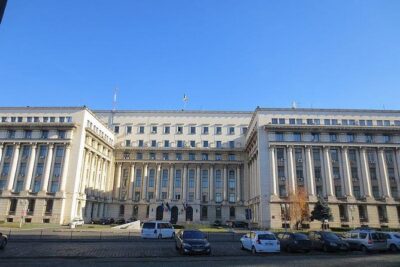 ★ 5.0Life under CommunismFrom $42358 reviews
 ★ 4.93-Hour Guided Tour of Communist BucharestFrom $29303 reviews
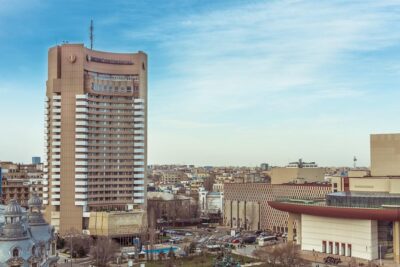 ★ 5.0Bucharest Essential Tour: Old Town, Calea Victoriei & CommunismFrom $24142 reviews
 ★ 5.0Communism in Bucharest – Landmarks, Museum & Communist AppetizersFrom $48111 reviews
 ★ 4.9Relics of Communism 3-Hour Walking TourFrom $4477 reviews
 ★ 5.0Bucharest Under Communism: Life, Terror & HopeFrom $2376 reviews
 ★ 4.6Entry ticket at the Museum of CommunismFrom $957 reviews
Browse the lists this tour appears in