
REVIEW · WALKING TOURS
Bucharest: Guided Walking Tour with Romanian Snack
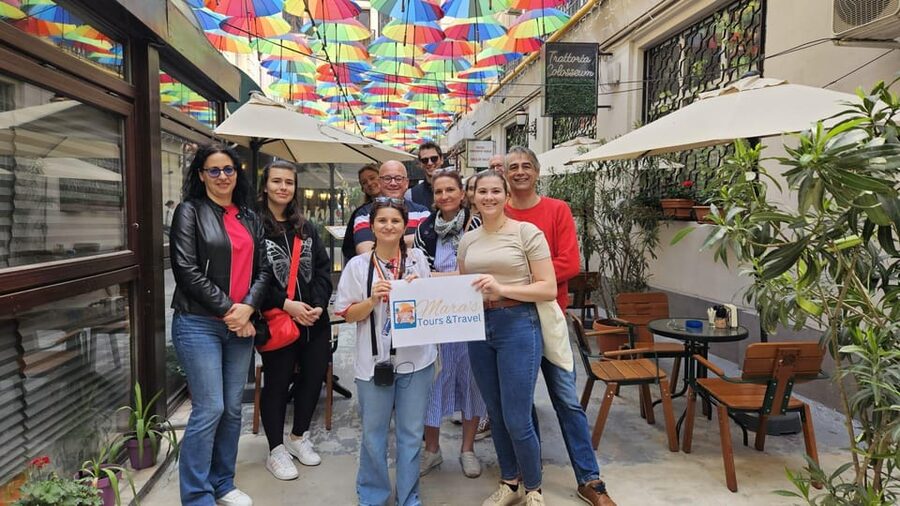
Bucharest reveals itself in walking distance. This 3-hour, small-group tour turns central landmarks into a clear story, starting at Piața Unirii with a view of the Palace of the Parliament and ending near the Romanian Athenaeum.
I love the small group setup, limited to 10 people, so you get real chances to ask questions. I also like the focus on Romania’s modern turning point, with discussion around Communist rule and the change after the 1989 revolution.
One thing to consider: it is a walking tour, not a full museum day. Since the route is built around sights you see from outside, you may want extra time on your own if you plan to go inside major buildings.
Key highlights you should care about
- Unirii Square orientation fast, with the massive Palace of the Parliament in view
- Old Town plus royal-era leftovers, including the former Royal Court ruins
- Church and monastery stops that show older Bucharest layers beyond the big squares
- French-era architecture on Calea Victoriei, plus why Bucharest earned Little Paris
- Revolution Square discussion, with context for what life under Communism meant
- One included Romanian snack, served during the route and praised in reviews
Elsewhere in Bucharest, and up the valley
- Bucharest: Dracula’s Castle, Peles Castle, & Brasov Old Town★ 4.5 · 17,858 reviews
- Bucharest: Dracula Castle, Peles Castle & Brasov Old Town★ 4.6 · 10,891 reviews
- Bucharest: Dracula’s Castle, Peleș Castle & Brașov Day Trip★ 4.5 · 5,919 reviews
- Bucharest: Palace of Parliament Tickets and Guide★ 4.3 · 3,182 reviews
Starting at One Sip and getting your bearings in Piata Unirii
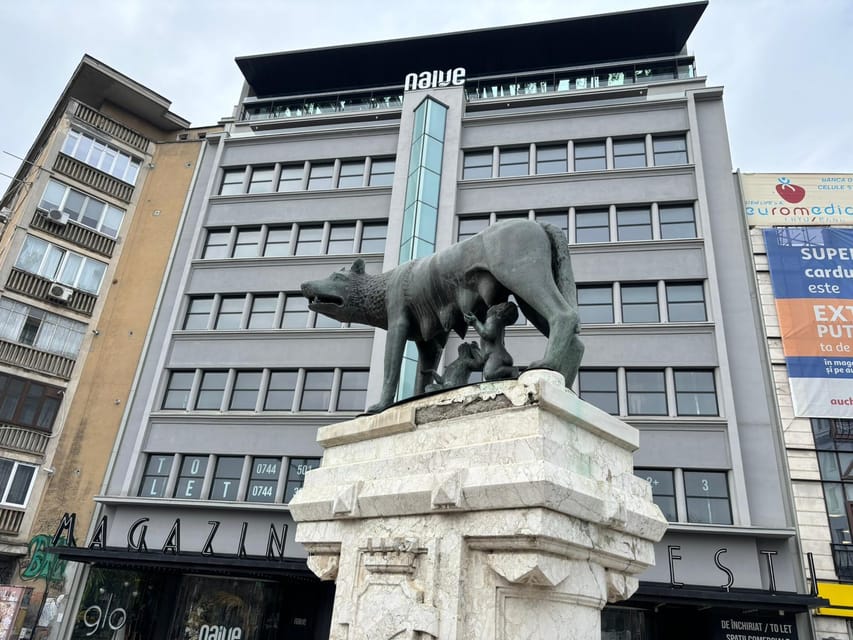
Your tour begins in front of One Sip cafe on Unirii Boulevard, with the closest metro stop being Piata Unirii. I like this choice because it places you right where you need to be to understand Bucharest’s layout, before you start zigzagging through streets.
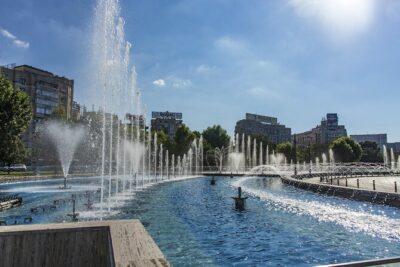
Within a few minutes, you are at Piața Unirii, looking out toward the Palace of the Parliament. The building is so oversized it can feel abstract from photos, so seeing it in person helps you grasp why it still dominates the city’s sense of scale.
Expect your guide to set the tone quickly, then start connecting streets to eras. That matters because Bucharest is one of those cities where different periods sit close together, and a good guide helps you stop treating them like separate postcards.
Palace of the Parliament views and the story behind the city’s big scale
From Piața Unirii, you get that famous first look at the Palace of the Parliament, described as the second-largest building in the world. Even if you do not plan to go inside, the exterior view is useful. It gives you a reference point for everything else you will see later, especially the smaller, older lanes.
Here is the practical benefit: once you know where this landmark sits, you can start to understand how the city’s later plans collided with older neighborhoods. You also begin to hear how Bucharest’s modern identity formed, not in a straight line, but through abrupt changes.
If you like architecture with context, this early stop is a strong start. It is the kind of moment that makes the rest of the tour feel less like a checklist and more like a timeline you can walk.
Hanu’ lui Manuc, St. Anthony’s Church, and Bucharest’s older layers
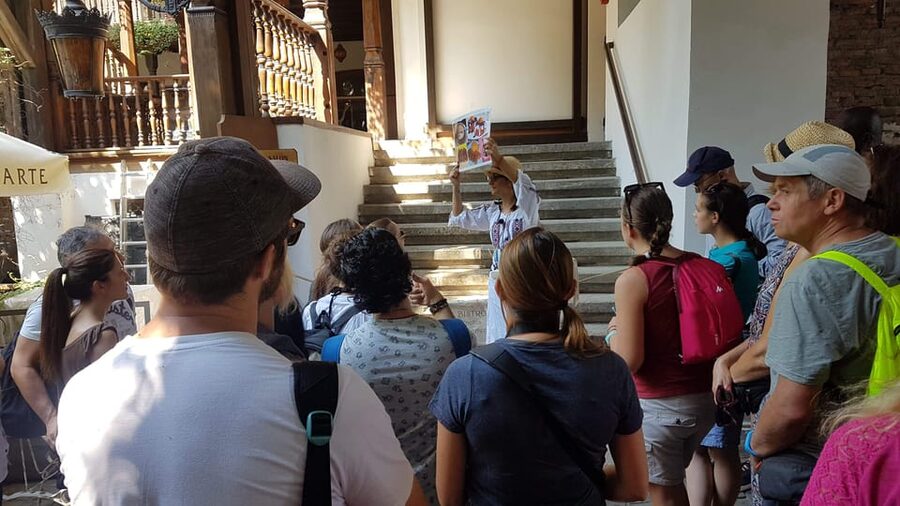
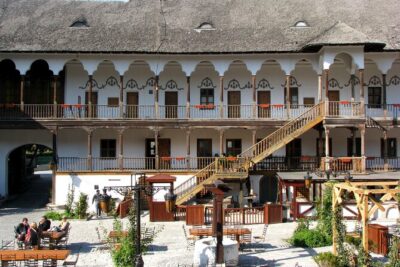
As you continue, you stop at Hanu’ lui Manuc, a historic name that carries weight in Old Town storytelling. Right away, you get the sense that Bucharest was once built around places where people gathered, traded news, and held social life together.
Next comes Biserica Sfantul Anton (St. Anthony’s Church), noted as the oldest church in the city. This is not just a quick photo moment. The value is in how the guide frames it, linking the church to the older heartbeat of the city, before the later boulevards and big civic projects.
From there, you pass by the ruins of the former Royal Court. I find that these ruins are easier to understand when someone gives you the why, not just the what. You start noticing the “between” spaces, spots where the city shows damage, change, and reuse rather than only polished continuity.
Old Town streets, Stavropoleos Monastery, and the quiet contrasts
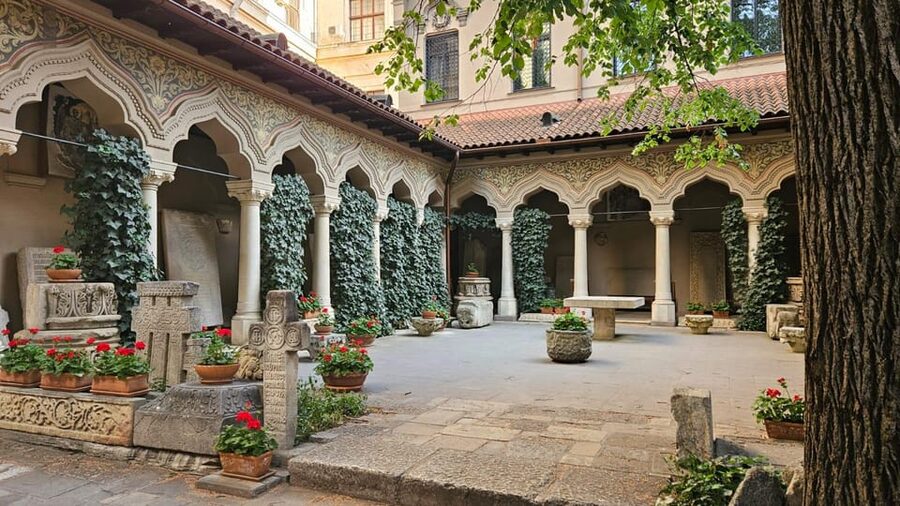
The walk shifts into the medieval Old Town, which today sits right in the middle of everyday city life. You see how Bucharest can feel like multiple time periods sharing the same blocks, with older structures tucked alongside modern street activity.
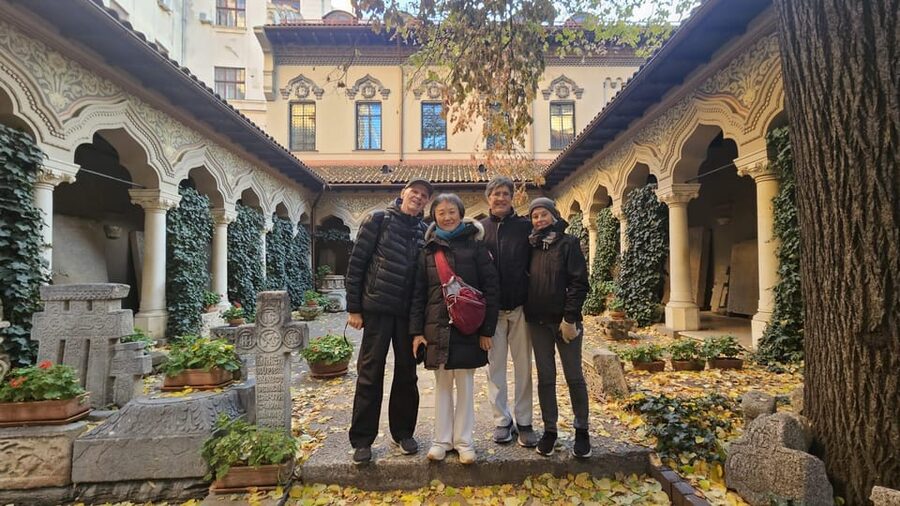
Then you add a spiritual and architectural reset at Stavropoleos Monastery. A monastery stop works well on this tour because it slows the tempo without turning the day into a museum marathon. You get to shift gears from public squares and grand civic scale to a more human-sized place.
In reviews, the pacing comes up often, with guides making time for pauses and breaks when needed. That is a small detail, but it affects how enjoyable the history feels. A long, fast route can make even great content blur; a steadier pace lets you actually look up at buildings, not just keep walking.
More of Bucharest on foot
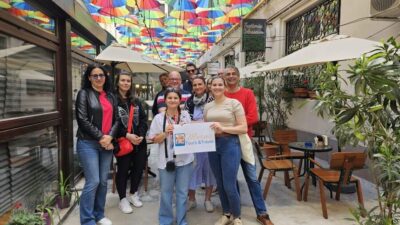
Cărturești Carusel as a modern pause in the middle of history
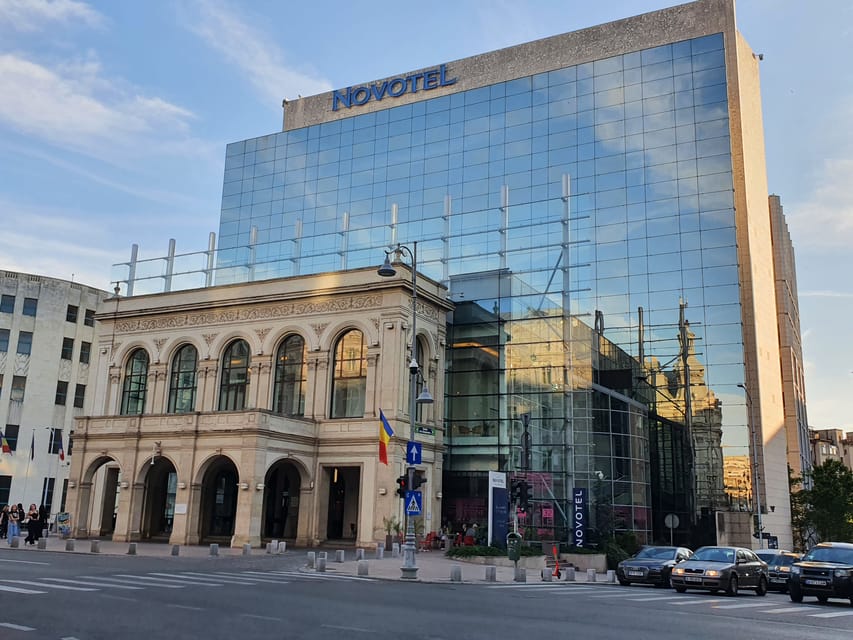
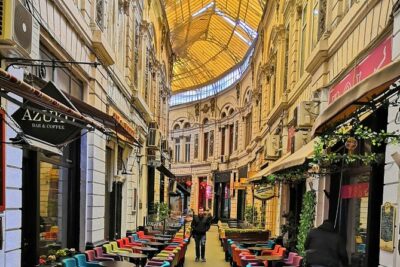
At some point, you will reach Cărturești Carusel. I see this stop as more than a break. It is a useful contrast point that reminds you Bucharest is not only preserved history, it is also present-day culture.
This is a good moment to slow down, check your bearings, and regroup for the next section. It also helps if you like shopping streets, bookstores, or design spaces, because Bucharest does that well in the center.
The practical upside is you get a mental rest before the tour leans into the French-style boulevard feel along Calea Victoriei. Walking tours can wear you out by hour two, so having a cultural stop that does not demand a long attention span is smart.
Calea Victoriei and the idea of Little Paris
Next up is Calea Victoriei, where the tour highlights beautiful French-style buildings. This is where you start understanding why Bucharest once earned the nickname Little Paris.
I like this part because it reframes the city. Instead of treating Bucharest as only a story of wars and politics, you see how people also invested in elegant streetscapes, grand facades, and the city’s self-image.
As you walk, pay attention to how the buildings change the street mood. Boulevards like this do not just look different, they move people differently. They widen sightlines and make the city feel more “planned,” even when the city’s older heart is still close by.
If you are the kind of traveler who likes architecture but does not want to research on your own, this is a great middle segment. You get the visual payoff with enough context to understand what you are looking at.
Revolution Square, Carol I, and what 1989 changed in real life
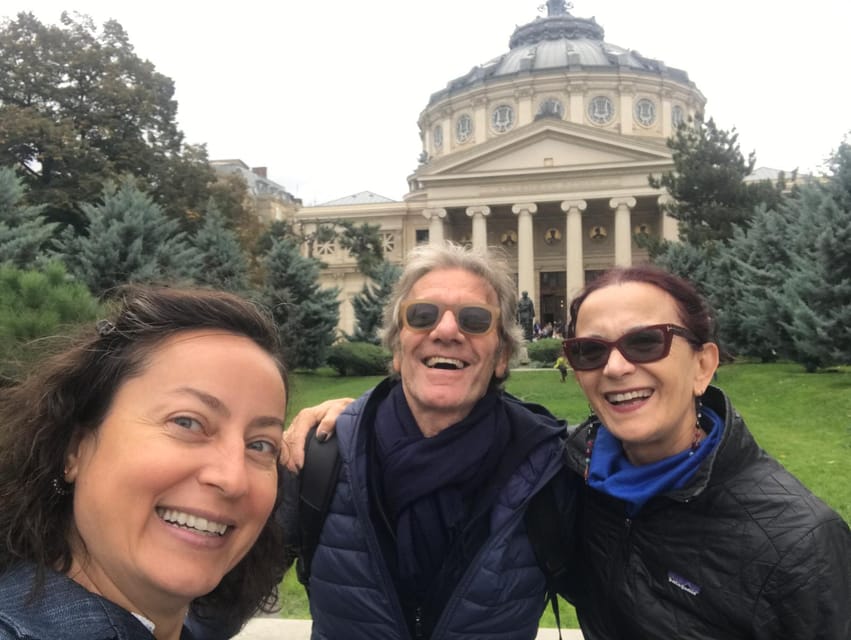
The tour then centers on Revolution Square. This is where the historical story takes a darker turn, with the guide explaining what Communist rule meant for Romania and Bucharest, and how the country changed after the 1989 revolution.
This discussion can be emotionally heavy, so the value is in how it is handled. A good guide does not just recite facts, they connect them to daily life, to what people lost, what people adapted, and what the city looks like afterward.
After that, you pass the Equestrian Statue of Carol I. This statue stop matters because it anchors the politics and identity story in a specific person and era. It also keeps you moving through the city’s layers, so the day does not freeze at one heavy topic.
Your included Romanian snack, and how it fits the day

You will get 1 famous Romanian snack during the walk. It is not just an extra perk. Food breaks up the schedule and gives you a taste of local culture in a way that feels natural, not planned.
In reviews, the snack has been described as a sandwich from a pastry shop, and some guides have pointed people toward places known for eclairs, including a shop name mentioned as The French Revolution. Even if your snack ends up different, the point stays the same: you get a quick local bite timed to keep you comfortable during the walk.
I also like that the day mixes history with something you can eat. That combination helps the tour stick. You end the day remembering streets and stories, not just building names.
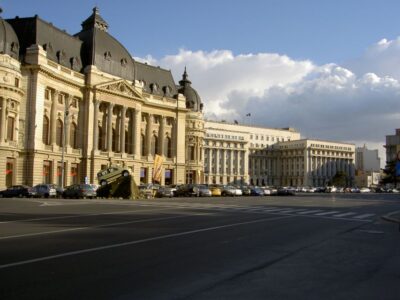
Ending at the Romanian Athenaeum, plus optional entrance planning
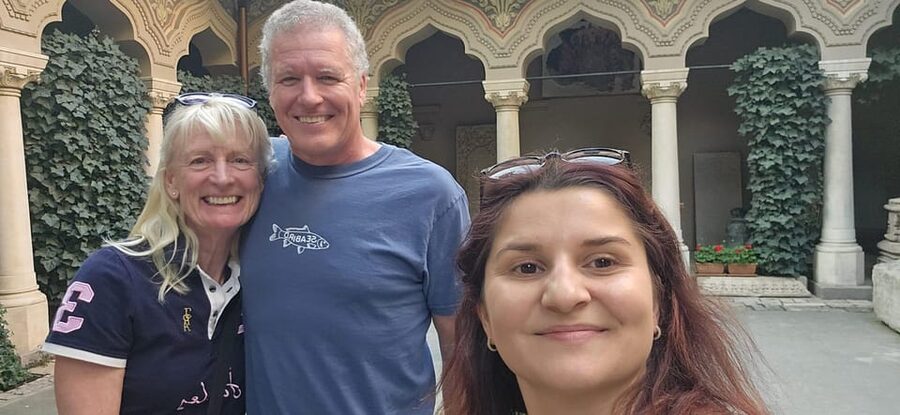
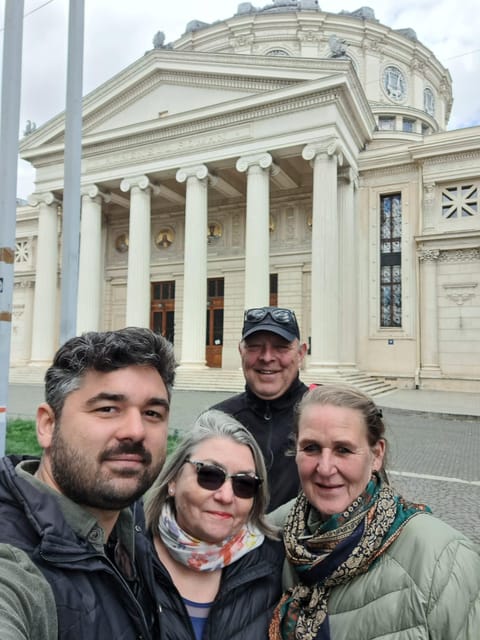
The route ends near the Romanian Athenaeum. If you want to go inside, there is an optional entrance priced at 15 lei (about 3 EUR), and it is cash only.
You do not need to plan a museum day to enjoy the tour. The Athenaeum stop works as a finish line, a moment where Bucharest’s cultural identity feels visible and official.
One practical tip if you care about interiors: set aside time in your own schedule for the Athenaeum visit if you truly want to spend time there. Since this is a 3-hour walking tour focused on exterior sights and short stops, the optional entrance is best treated as an add-on, not the main event.
Price, group size, and whether $45 feels fair
At $45 per person for 3 hours, this tour is priced in the mid-range for a central city walking experience. What makes it feel fair is the mix of elements you get for that time: major landmarks, older neighborhood layers, and guided context that ties eras together.
The value also comes from the small group limit of 10 participants. With fewer people, guides can slow down, answer questions, and steer around the parts of the route that feel too fast.
The included Romanian snack helps, too, because it means you do not have to hunt for food right when you get hungry. Also, the guide language is English for this tour, which is a big deal if you want the political and historical discussion explained clearly.
If you are comparing to other tours you might consider in Europe, here is my simple way to judge this one: do you want a well-structured city overview, with history that includes Communist rule and the post-1989 shift? If yes, the price usually makes sense.
Who this tour suits best, and who might want something else
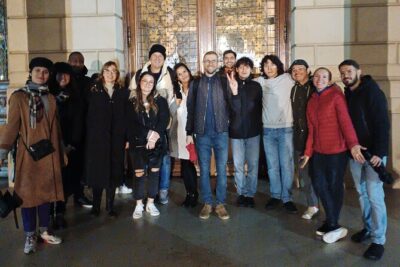
This is a strong fit if you want to get oriented fast and understand Bucharest as a sequence of time periods. It is also ideal for people who like asking questions, because reviews repeatedly praise guides for engaging, friendly conversation and for answering questions throughout the walk.
It is especially good for first-time visitors who plan to explore the city afterward on their own. You will leave with a mental map of where the big landmarks sit, plus a clearer reason behind what you see.
If you prefer deep museum time, long interior visits, or a slow, sit-down pace for every stop, you might find a 3-hour route short. In that case, you can still book it for orientation, then add your own time later at the places that hook you most.
Should you book this guided walk with a Romanian snack?
If you want a compact, high-impact overview of central Bucharest, I would book it. The biggest reason is the way the tour links architecture to real history, including the stories around the Communist period and the change after 1989.
Also, the guide quality looks consistently strong in feedback, with names like Mara, Elena, Andrea, and Julian appearing in reviews, and the themes stay the same: clear English, engaging storytelling, and a pace that does not feel rushed.
If your main goal is interior sightseeing all day, you might choose a different format. But if your goal is to walk the city, understand it, and end with one tasty Romanian snack, this one is an easy yes.
FAQ
Where do I meet the guide?
Meet your guide in front of One Sip cafe at the Unirii Boulevard.
What is the closest metro station?
The closest metro station is Piata Unirii.
How long is the tour?
The tour duration is 3 hours.
How much does it cost?
The price is $45 per person.
Is the snack included?
Yes, the tour includes 1 famous Romanian snack.
What languages are spoken?
The tour runs in English, and live tour guides are listed as Italian and English.
Is the Romanian Athenaeum entrance included?
An optional entrance to the Romanian Athenaeum costs 15 lei (cash only). It is not described as included.
How big is the group?
The group is limited to 10 participants.
What are the cancellation terms?
Free cancellation is available up to 24 hours in advance for a full refund.
More Tours in Bucharest





More Tour Reviews in Bucharest

More Bucharest Tours in Bucharest
Just added from Bucharest


Walking Tours, compared.
 ★ 4.9City Highlights Guided Walking TourFrom $211,482 reviews
 ★ 5.0Bucharest Highlights Walking TourFrom $21469 reviews
 ★ 4.9Ghost Stories & Romanian Mythology Walking TourFrom $35287 reviews
 ★ 5.0Best of Bucharest | Private Walking TourFrom $314199 reviews
 ★ 5.0Walking Tour- Delightful Bucharest (Highlights, Stories, Sights)From $22145 reviews
 ★ 5.04h Bucharest Private Tour (2h by Car and 2h Walking in Old Town)From $10090 reviews
 ★ 5.0Bucharest 3-hours Walking Tour (Small Groups)From $5485 reviews
 ★ 5.0Guided Walking Tour of Historical BucharestFrom $3084 reviews
Browse the lists this tour appears in