
REVIEW · HISTORICAL TOURS
Guided Walking Tour of Historical Bucharest
Bucharest makes history visible on every corner. This 3-hour walking tour strings together old inns, Orthodox churches, and communist-era landmarks into one logical route, with a guide who turns architecture into real stories. Two things I really like: the focus on how Bucharest changed over time, and the built-in photo stops at major squares and viewpoints. The main drawback to plan for is walking time, especially in hot or windy weather, since this route is dense and expects a steady pace.
You also get the practical perks. Hotel pickup and drop-off are included, plus the tour uses a mobile ticket, so you are not juggling paper. It is private, meaning only your group goes along, which usually makes questions easier and the pace feel more human.
One more thing to know before you book: the tour covers Ceaușescu’s dictatorship and the Cold War era, so you should expect politics to show up in the narration. If you prefer strictly neutral facts and minimal opinion, tell your guide up front and steer the conversation toward buildings, events, and everyday life.
Key highlights at a glance
- Manuc’s Inn start: A strong opening point in the Old Centre.
- Vlad the Impaler link: Ruins of the Old Princely Court and the city’s Wallachian past.
- Unirii Square to Parliament: Multiple high-impact views and fountains for photos.
- Hidden passages and shopping streets: Macca and Villacrosse plus a walk along Victoria Avenue.
- Institutions as characters: The National Bank, University Square, and Suțu Palace.
- 1989 Revolution focus: Ceaușescu’s balcony, memorials, and the 25-meter Memorial of Rebirth.
Elsewhere in Bucharest, and up the valley
- Bucharest: Dracula’s Castle, Peles Castle, & Brasov Old Town★ 4.5 · 17,858 reviews
- Bucharest: Dracula Castle, Peles Castle & Brasov Old Town★ 4.6 · 10,891 reviews
- Bucharest: Dracula’s Castle, Peleș Castle & Brașov Day Trip★ 4.5 · 5,919 reviews
- Bucharest: Palace of Parliament Tickets and Guide★ 4.3 · 3,182 reviews
Getting oriented fast at Manuc’s Inn
Most good city days start with a landmark that feels both central and local. This tour begins at Manuc’s Inn (Hanul lui Manuc), 62 Strada Franceză, in the Old Centre. That matters because you are not starting on a random side street. You begin in an area where you can still sense older Bucharest life, and the guide can point out the layers right away.
Logistically, you get pickup outside the main entrance of Manuc’s Inn, and the tour ends back at the same meeting point. For first-time visitors, that is a big deal. You are less likely to waste half a day figuring out transit or orientation, and you can save your energy for actual walking.
Pace is something I would plan around. Reviews mention around 17,000+ steps and describe it as not overly rushed, but still active. So treat it as a real walk, not a casual stroll. If you have moderate physical fitness, you should be fine, but wear comfortable shoes and keep water in your day bag, especially in heat or summer sun.
Old-town foundations: inn history, St Anton Church, and Vlad’s ruins
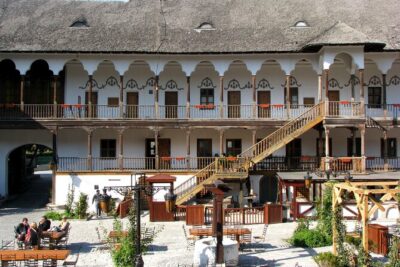
The first stretches set the tone: Bucharest is not just a pile of pretty facades, it is a city with a long memory. Early on, you learn the story of Bucharest’s oldest and most famous inn, starting at Manuc’s Inn itself. Inns in this part of town were more than lodging. They were meeting points for trade, arrivals, and the social life that helped shape the city.
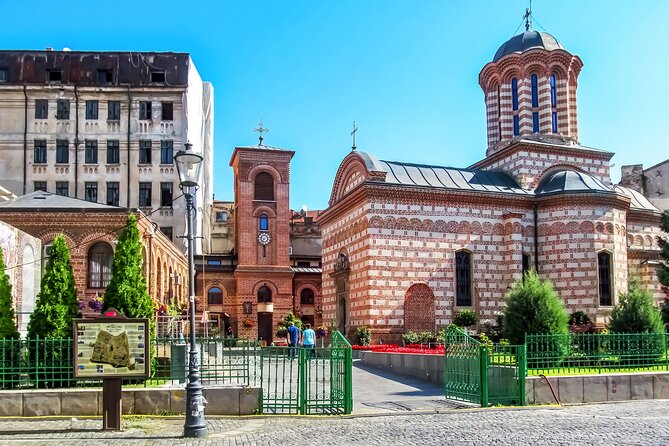
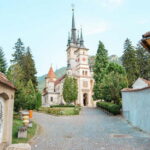
Next comes St Anton Orthodox Church, described as a former coronation church for Wallachian rulers. That is a powerful concept for a walking tour. When you stand in front of a church like this, you are not only looking at architecture. You are looking at a site tied to political legitimacy and ceremonies that mattered in Wallachia for generations.
Then you reach the Old Princely Court ruins, including the connection to Vlad the Impaler. Even if you only catch a partial view of the ruins, the guide’s framing helps. You are seeing one of the oldest buildings in Bucharest and a former residence tied to the city’s most famous medieval figure. Admission at this stop is listed as free, so you can focus on the story without paying extra.
Small consideration: ruins and church exteriors can look similar if you are not listening closely. This is where the guide quality really matters. The strong reviews repeatedly highlight how guides keep the timeline clear and animated, with humor and local perspective.
Unirii Square to the Palace of Parliament: the city in big frames
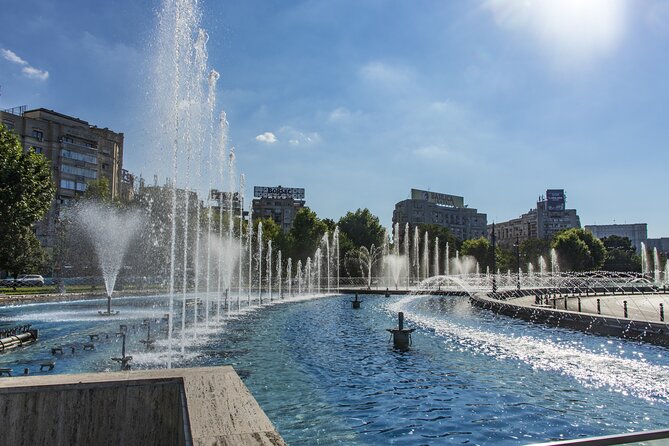
If you want the classic Bucharest “wow” moments, this route delivers. You head to Piaka Unirii (Unirii Square), the heart of the city, where you get refurbished fountains and excellent photo opportunities. Squares like this are important because they show how public space was designed to signal power and civic pride, not just convenience.
From there, you walk to Bulevardul Unirii, once the Boulevard of Socialist Victory, often compared to Romania’s version of the Champs-Élysées. That comparison is useful. It helps you read the avenue as a statement: wide, dramatic, meant to move people through a controlled narrative of national identity.
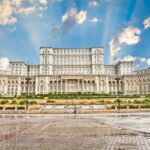
Then comes one of the loudest visual moments in the whole city: the Palace of Parliament. Even if you have seen photos online, standing nearby is different. The tour builds context around how Bucharest’s political eras shaped what you see today, and the Palace is the clearest “Cold War era by architecture” example on the walk. You get excellent photo opportunities here, so plan to pause longer than you think.
You finish this segment at Piaka Constitukiei (Constituției Square), right in front of the Parliament buildings. Again, the value is that you are taking the same political geography from multiple angles instead of rushing past it.
CEC Palace, Victoria Avenue, and the quiet texture of old Bucharest
After the big-government buildings, the tour shifts to details that make Bucharest feel like a city you could actually live in. You hear the history of the CEC Palace in Bucharest. Financial buildings can sound boring on paper, but in Bucharest they often represent modernization drives, national identity, and the evolution of civic institutions. Your guide’s job here is to connect what you see on the street to why it exists.
Next, you take a walk along Victoria Avenue, lined with shops. This is a simple stop, but it helps you reset your brain. After heavy historic moments, commercial streets give you breathing room while you still stay in the central loop.
Then you enter the old centre of Bucharest, described as dating back over 500 years. This is where the tour becomes more than monuments. You are moving through lanes and transitions, watching how architectural styles and urban planning change block by block.
The walk through passage Macca and Villacrosse is another highlight for practical reasons. Passages are Bucharest’s in-between spaces: covered or semi-covered walkways that connect streets and create mini worlds of shops and history. If you like wandering with purpose, this kind of stop is exactly why a guided walk beats a self-guided checklist.
The route continues with the grandeur of Romania’s National Bank, where you get historical context tied to the building’s role and symbolism. Another big plus: many of the major stops along this section are marked with free admission in the schedule, so you are not constantly deciding whether it is worth paying for access.
More of Bucharest on foot

University Square and Suțu Palace: institutions and stories in stone

At University Square, you see the oldest and largest university in Bucharest, built by Alexandru Ioan Cuza and founded in 1864. This is the kind of stop that helps you understand Bucharest as more than politics and big buildings. Education and public life are part of the city’s identity too.
From there, you go to Suţu Palace, described as the history museum of Bucharest and the former residence of Costache Suţu. Even if you only see the exterior from the tour route, Suţu Palace provides a useful bridge between private wealth and public storytelling. Museums housed in former residences often work like a time machine: the building sets the mood before you even learn the facts inside.
This portion also tends to get praised in reviews for staying organized. The best moments in this tour are when the guide keeps timelines clear, so you can mentally label what era you are seeing without getting lost in dates.
Colțea Hospital, the National Theatre, and Biserica Kretzulescu
Next, you hit an iconic pair: Colțea Hospital and church, built in 1888. In many cities, hospitals do not get a spotlight on walking tours. Here, it makes sense because the building is central and visually memorable. A hospital complex also tells a human story about how care, public systems, and architecture evolved.
You also pass the National Theatre of Bucharest, described as iconic with many changes in its design history. The value of “pass by” stops is context. You are not paying for entry, but you are still learning what you are seeing and why it matters to the city’s cultural identity.
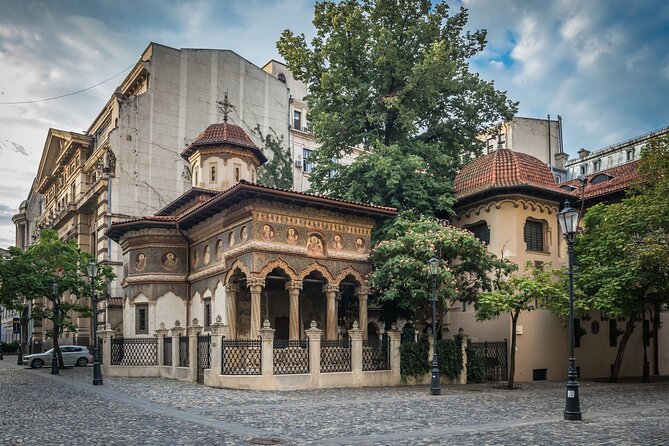
Then you reach Biserica Kretzulescu, noted for an interesting history. Churches in Bucharest often serve as date markers. They help you read what changed in style, power, and religious life over time. You also get an additional church stop described as built in 1724, so you are likely to get that early 1700s time period reinforced before the revolution-era section begins.
A small caution: if you have hearing challenges or noisy street conditions, English clarity matters. One review specifically flagged that the guide’s English could be hard to understand at times. If this is a concern for you, you may want to sit closer to the guide when possible and ask for clarification if you miss a key point.
Revolution route: Ceaușescu’s balcony, Monument of National Rebirth, and Memorial of Rebirth
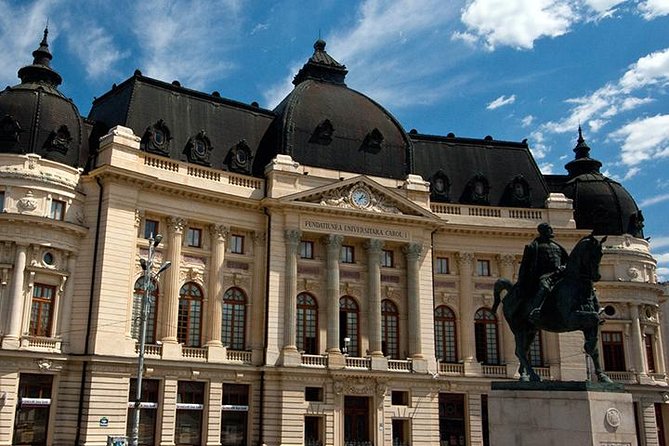
This is the emotional spine of the tour. You walk through the area where the 1989 revolution started, and you see memorials connected to life-changing events. The tour includes landmarks such as the balcony where Nicolae Ceaușescu made his final speech, the former headquarters of the Communist party, the Monument of National Rebirth, King Carol the First’s equestrian statue, the University library, and more.
What I like about including this cluster of stops is that the guide can connect event history to physical space. Revolution stories get real when you can stand where speeches happened, where institutions stood, and where people gathered.
Next is Memorial of Rebirth, described as a 25-meter memorial commemorating the struggles and victims of the Romanian Revolution of Christmas 1989. Because it is so tall and visible, it works as an anchor. When your brain starts to feel overloaded with dates and names, a big monument like this helps you regain structure.
A practical note: this segment can feel intense because you are discussing dictatorship and Cold War effects throughout the tour. If you want politics kept factual and brief, you will still get the historical context, but you might want to ask the guide to focus on architecture and everyday impacts rather than personal opinions.
Military Circle and Sărindar Fountains to end on a softer note
To wrap things up, you reach the magnificent Military Circle and the Sărindar Fountains. The Military Circle is described as built over 100 years ago and created for the people of Bucharest by people of Bucharest, with beautiful gardens and a stunning historical building.
This ending works because it turns the dial down from the highest-intensity political sights. Gardens and fountains give your legs a moment and give your eyes something calm to rest on after dense city-center walking.
If you want photos, this is another strong option. Even if you are tired, stop for a couple frames here. The fountain light and the garden shapes tend to look better than you expect, especially if the day is bright.
Is this the right Bucharest walk for you?
I think this tour is a great choice if you want an early start plan that covers a lot of ground without feeling random. It is also strong value for $30.77 per person because you get a guided route through major sights, pickup and drop-off, and a schedule that repeatedly flags free admissions at several stops. Private format helps too, especially if you like asking questions.
You should consider a different option if you hate walking, dislike political history, or have trouble following English narration on the go. This route is active, and the topic coverage includes Ceaușescu and the Cold War, so your head needs to be ready for that.
If you are the kind of traveler who likes “read the city, not just the postcard,” I’d book it. It is one of the quickest ways to connect Bucharest’s architecture to the forces that shaped it.
FAQ
How long is the Guided Walking Tour of Historical Bucharest?
The tour lasts about 3 hours.
What does the tour cost?
The price is $30.77 per person.
Do I get hotel pickup and drop-off?
Yes. Hotel pickup and drop-off are included, with pickup outside the main entrance of Manuc’s Inn.
Where does the tour start and end?
It starts at Manuc’s Inn (Hanul lui Manuc), Str. Franceză 62, and it ends back at the same meeting point.
Is the tour private or shared?
It is a private tour/activity, so only your group participates.
What language is the tour offered in?
The tour is offered in English.
Is this tour good for beginners or moderate walking fitness?
The tour is for travelers with a moderate physical fitness level. It is a walking tour, so plan for a fair amount of walking.
Do I need tickets or cash for entrances?
The itinerary notes admission ticket free for multiple stops, so you may not need paid entry for many parts. If you want to be sure for a specific stop, ask your provider before you go.
What happens if weather is bad?
This experience requires good weather. If it is canceled due to poor weather, you are offered a different date or a full refund.
What is the cancellation policy?
You can cancel up to 24 hours in advance for a full refund. If you cancel less than 24 hours before the start time, the amount paid is not refunded.
More Tours in Bucharest


More Tour Reviews in Bucharest
More Bucharest Tours in Bucharest
Just added from Bucharest


Historical Tours, compared.
 ★ 4.93-Hour Dark History Tour with a LocalFrom $55301 reviews
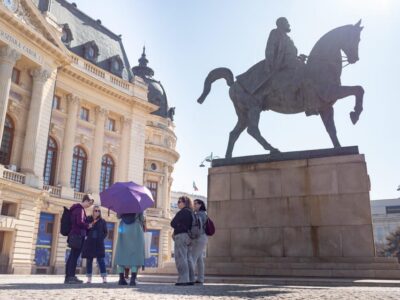 ★ 4.7Small Group History, Art & Secrets TourFrom $22152 reviews
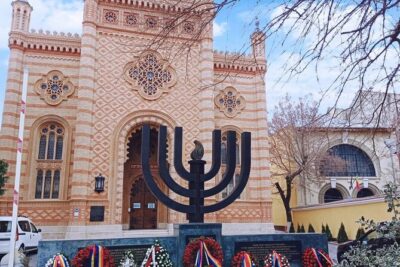 ★ 5.0Bucharest Jewish Heritage | Holocaust Memorial | Private Car TourFrom $11338 reviews
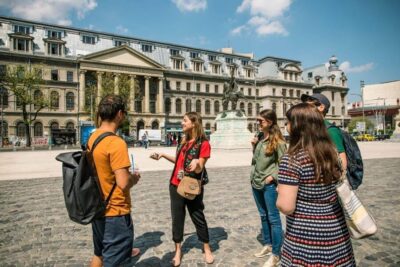 ★ 5.0Private Bucharest: History & Food with Traditional MealFrom $14034 reviews
 ★ 5.0Bucharest Historical Food Tour in Old CenterFrom $10821 reviews
 ★ 5.0Half-Day Jewish Heritage Walking Tour in BucharestFrom $31820 reviews
 ★ 5.0Private Tour – Food, Culture, History & TraditionsFrom $11418 reviews
 ★ 5.0Sweet Delights History and Desserts Walking TourFrom $7718 reviews
Browse the lists this tour appears in