
REVIEW · HISTORICAL TOURS
Bucharest: 3-Hour Dark History Tour with a Local
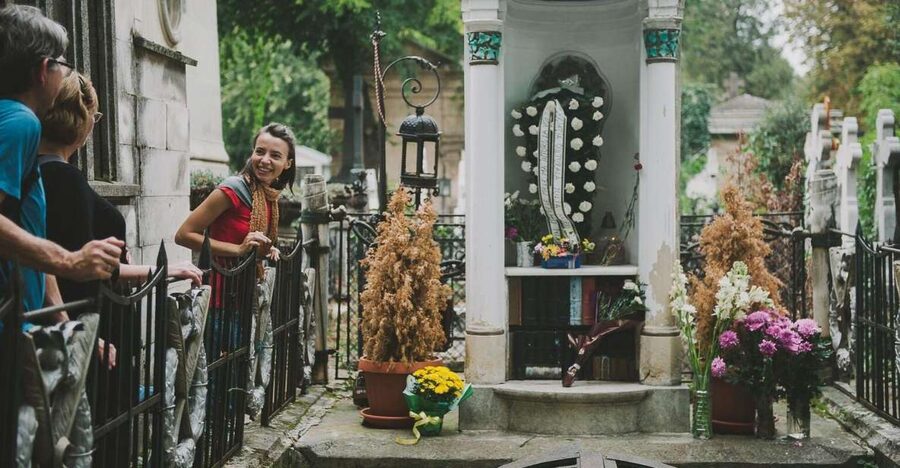
Bucharest gets real fast. This 3-hour dark history tour uses the city’s most dramatic corners to explain how violence shaped modern Romania, from the Revolutionary upheaval to the communist crackdown. I especially love the Bellu Cemetery stop, where the architecture turns the past into something you can actually see, and I also like the way the guides tell stories like street-level history, not a lecture. The main drawback is that it is heavy material, plus it is a long walking tour, so it can feel chilly and intense if you prefer lighter sightseeing.
You start near the Ion Luca Caragiale National Theatre, then move through a tight route that mixes cemeteries, squares, and old Bucharest atmosphere. Guides I’ve heard named again and again, like Alex and Elena, tend to bring humor and strong local detail, so the pace stays lively even when the topics get grim.
This is a small-group tour, max 12 people, and it is not for kids under 16. If you’re sensitive to stories about torture, prisons, prostitution, or serial crime, you’ll want to think twice before booking.
Key things to know before you go
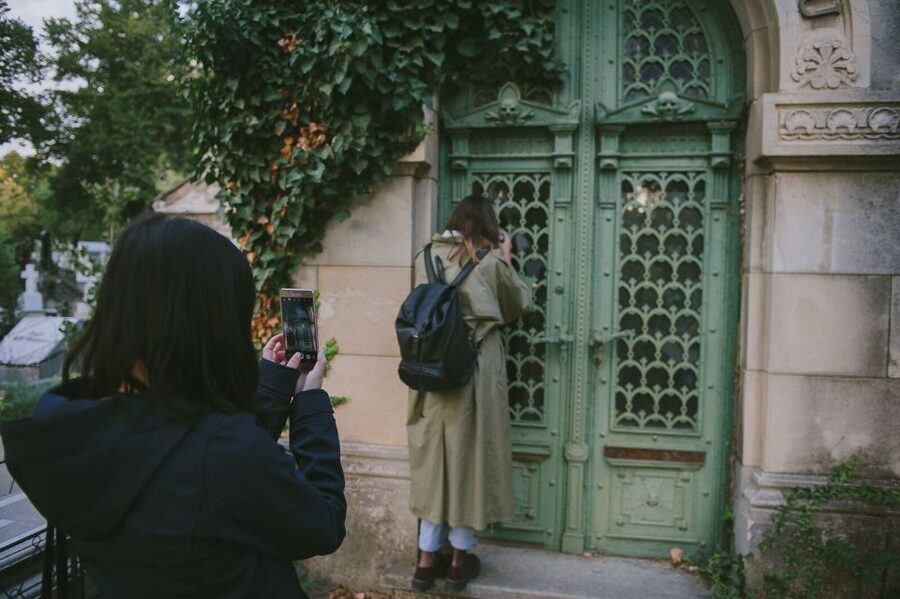
- Bellu Cemetery: a national historical monument with “art-gallery” style monuments and lots of story behind the stones
- Revolution impact, on the ground: University Square and Revolution Square connect daily city life to 1989 events
- Little Paris period: you’ll hear what’s left of the interwar sex trade and how Bucharest branded itself as sophisticated
- Vampire of Bucharest: a 1970s serial-killer thread that shows how fear spreads through a city
- Small group feel: max 12, so you get real back-and-forth with your guide
- Local touches: a traditional street snack is included, and Bellu Cemetery often comes with a cat-and-dog spotting moment
Elsewhere in Bucharest, and up the valley
- Bucharest: Dracula’s Castle, Peles Castle, & Brasov Old Town★ 4.5 · 17,858 reviews
- Bucharest: Dracula Castle, Peles Castle & Brasov Old Town★ 4.6 · 10,891 reviews
- Bucharest: Dracula’s Castle, Peleș Castle & Brașov Day Trip★ 4.5 · 5,919 reviews
- Bucharest: Palace of Parliament Tickets and Guide★ 4.3 · 3,182 reviews
Meeting at Ion Luca Caragiale National Theatre, then walking with purpose
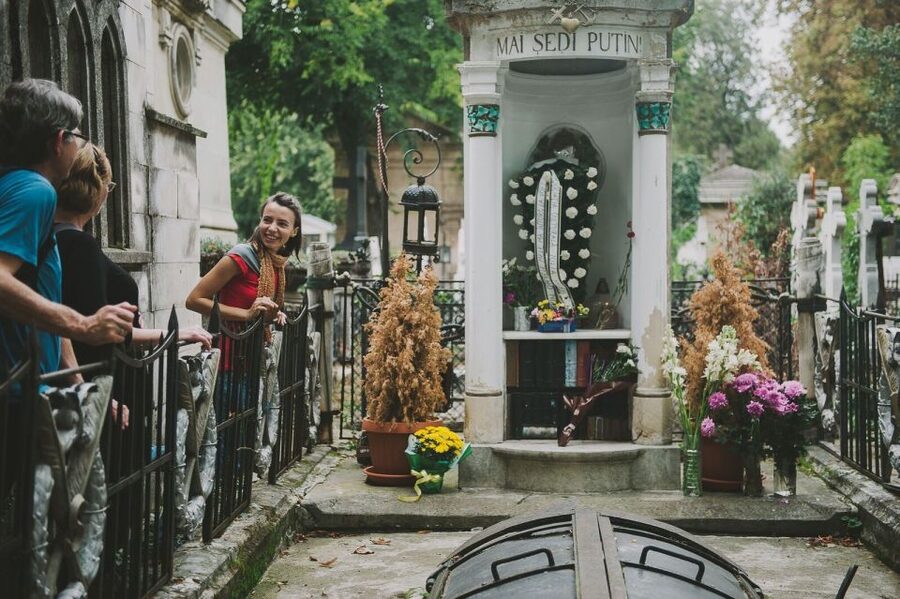
The meeting point is the main entrance of the Ion Luca Caragiale National Theatre, at Bulevardul Nicolae Bălcescu 2. From the start, the vibe is practical: you’re not just looking at landmarks, you’re learning how Bucharest’s layout ties to its darker episodes.
One included win is the traditional street snack. It sounds small, but it helps break the “museum mode,” and it keeps the mood human during a tour that goes to serious places.
Your guide also handles the city moves, including metro tickets. Expect a couple of metro segments in a compact 3-hour block, so you get variety without spending half the day commuting.
The cemetery street idea: Bucharest holds layers in one area
The tour begins with a street that has multiple cemeteries clustered together, including the Cemetery of the Victims of the Revolution in 1989, the Jewish Cemetery, the Cemetery of the Russian Soldiers, and the old historical Bellu Cemetery. That single geography matters, because it shows how Bucharest doesn’t treat death as a far-away thing. It sits next to daily life, again and again.
Even before you reach Bellu, your guide frames what you’re about to see. You’ll learn what each cemetery represents, so the visit doesn’t turn into random rows of graves. The point is to connect identity, conflict, and memory.
If you’re the type who likes symbolism, watch how your guide points out details. People talk about big historical events, but the “small evidence,” like names, dates, and styles of monuments, is what makes the stories feel grounded.
Entering Bellu Cemetery: funerary art, love stories, and quiet mysteries
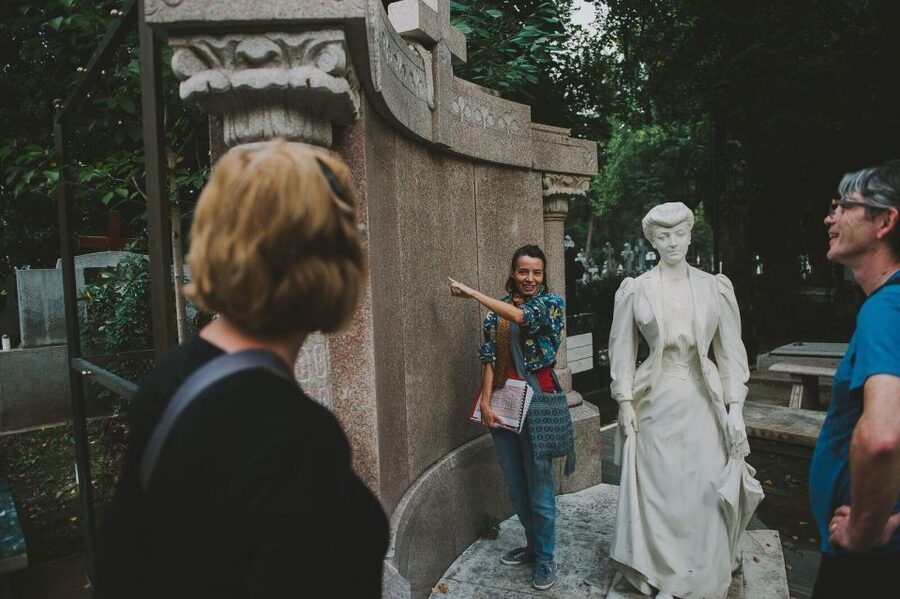
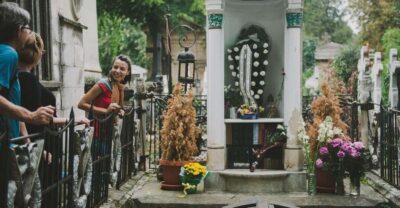
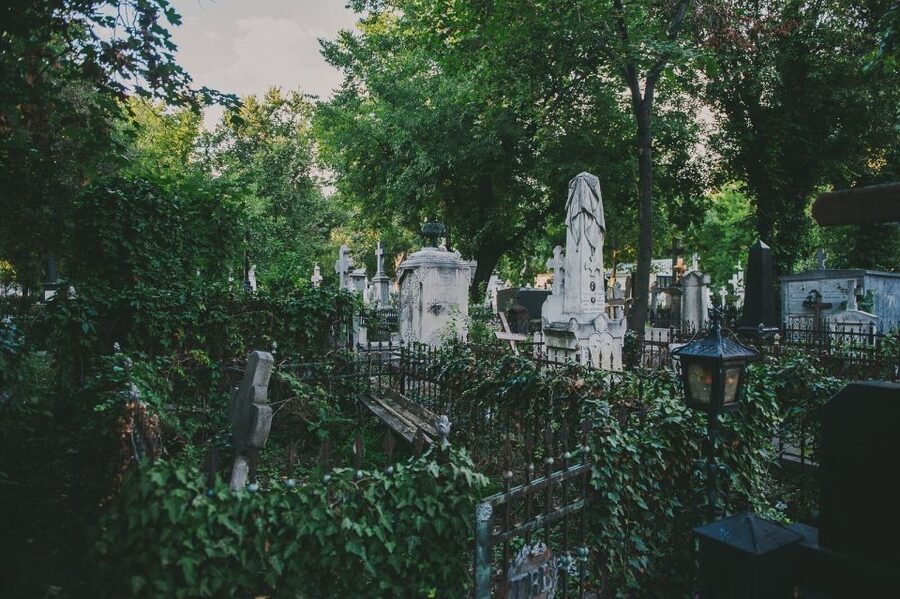
Bellu Cemetery is the star stop, and it earns it. This is a national historical monument, and the place is filled with funerary architecture you would usually expect from a museum gallery.
What I like most about this stop is the range of tone. Your guide moves between sad love stories and darker, more sinister mysteries, so you’re not stuck in one emotional lane. It’s also one of the few places in Bucharest where you can feel the city’s aesthetics at full volume while still learning hard history.
You’ll likely notice how guides steer your attention. In recent tours, guides have pointed out things like street-level details, and in Bellu that can mean monument shapes, symbolic motifs, and the way certain plots became cultural landmarks over time.
Also, don’t be surprised if Bellu comes with living atmosphere. Some guides are attentive to the stray cats and dogs, and you may see them feed cats or share treats. It’s a small moment, but it helps you see that this is not only about the dead, it’s also about a living city that keeps caring for its animals.
A practical heads-up for Bellu
Wear comfortable shoes. The ground and paths can be uneven, and you’re there to walk and look, not to rush photo ops. If it’s cold, dress warmly, because you’ll be stopped in place while your guide explains monuments and context.
More history, told properly
University Square: blood, protest, and how 1989 reshaped the city
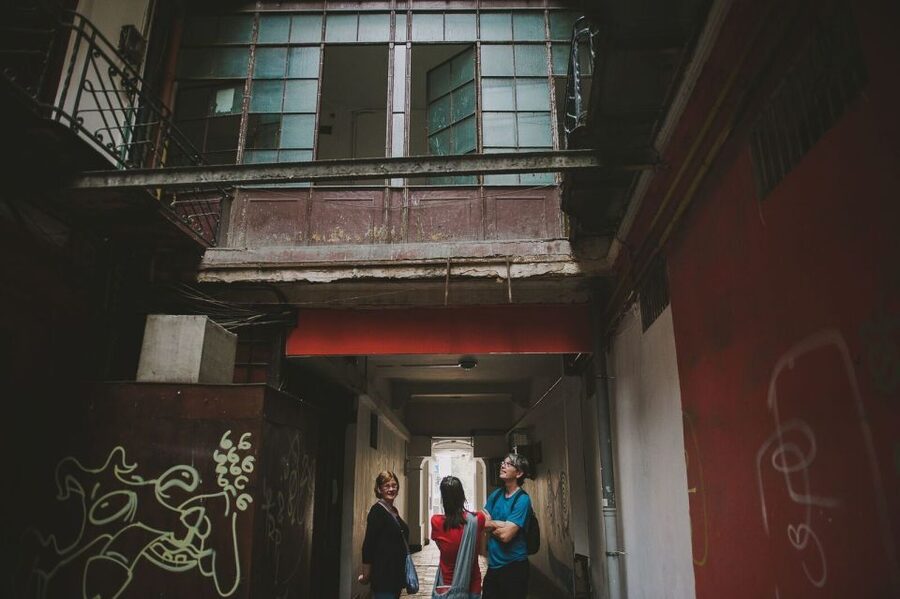
After Bellu, you move toward University Square, one of Bucharest’s key points for the Revolution in 1989 and later student protests in the 1990s. Your guide connects those moments, so it feels like one long thread rather than separate headlines.
This is where “dark history” stops being abstract. University Square is presented as a place where politics wasn’t just debated, it was paid for, with consequences visible in how the city remembers itself.
In some guided experiences, your guide also highlights small evidence you might miss on your own, like signs of impact and “survivor details” in the built environment. The result is that you start seeing the city differently, with more respect for what past events left behind.
Little Paris in interwar Bucharest: sophisticated image, harsh reality
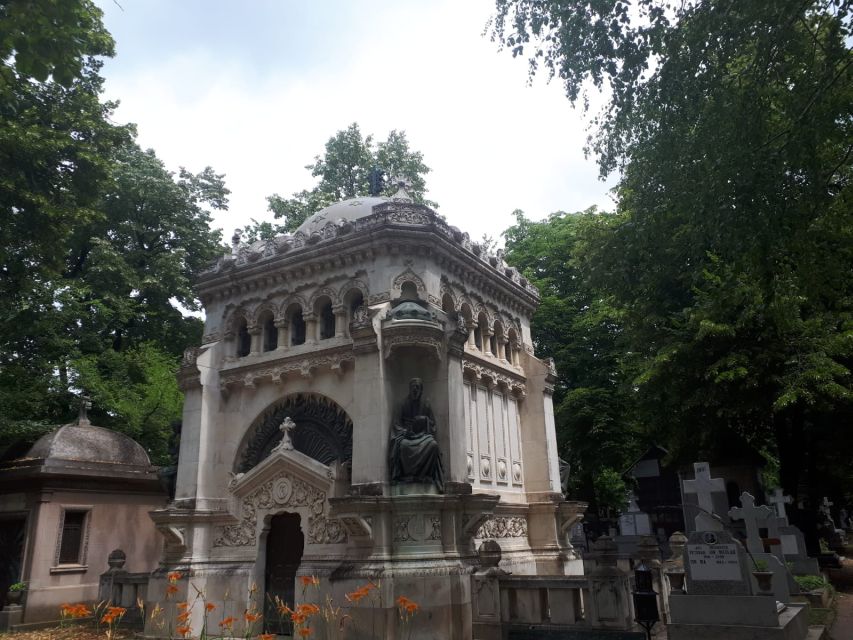
Then comes the Little Paris era, where Bucharest chased a glamorous Western image and developed a reputation tied to nightlife and nightlife-adjacent culture. Your guide explains the practice of the sex trade in interwar Bucharest, and you’ll see what remains of a former brothel in the city fabric.
This section can be uncomfortable, but it also helps you understand Bucharest’s contradictions. The goal is not sensationalism. It’s context, so you can connect how the city marketed itself and how commerce and exploitation worked behind the curtains.
Your guide also uses this stop to bridge toward more modern fear, including the serial-killer story that follows.
The Vampire of Bucharest: fear in the early 1970s
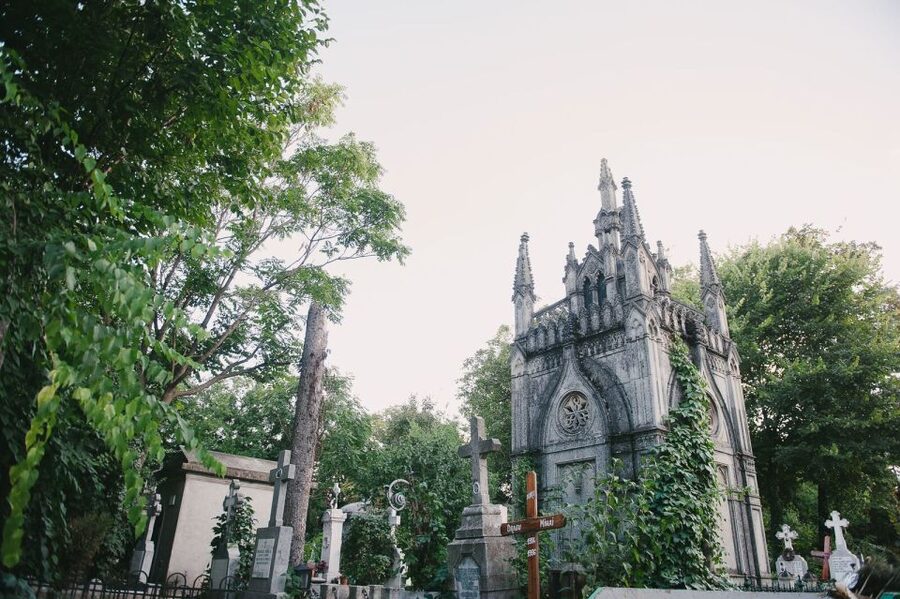
Next, you’ll hear the story of a serial killer nicknamed the Vampire of Bucharest, who terrorized the city in the early 1970s. Your guide frames it as a citywide panic, not just a criminal case.
This matters because it shows how fear travels and sticks. In a city that has already lived through political terror, a serial-killer era becomes another layer in the same theme: how people learn to watch their streets differently.
Guides also tend to connect this era to the broader atmosphere of the time, so you’re not just memorizing names and dates. You’re learning how the city’s mood shifted, and how residents’ daily choices could be shaped by that.
Revolution Square and the communist machinery of fear
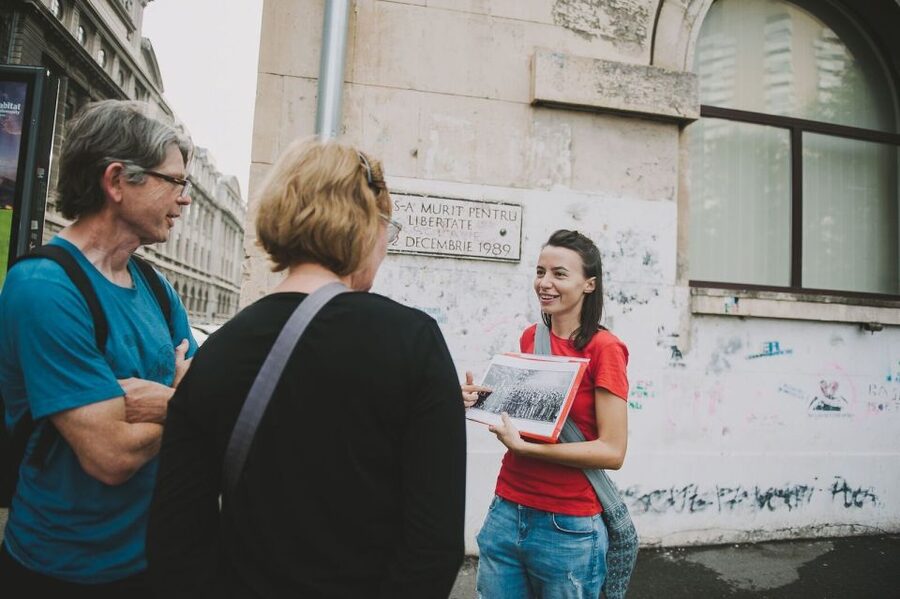
The tour closes with Revolution Square, presented as the place where the 1989 Revolution started in Bucharest. From there, your guide expands into the communist regime’s methods to silence critics.
You’ll learn about prisons and labor camps, and you’ll hear about torture methods attributed to the Securitate, Romania’s internal security force. The tour also discusses Ceaușescu’s dictatorship and the day-to-day hardship people endured to simply survive.
I appreciate how the guide usually keeps this structured. The information is heavy, so you need a clear narrative arc, and this tour gives you one: from who had power, to how dissent was punished, to what that meant for ordinary people.
For your mood
This section is not “spooky walking tour” light. It is historically serious. If you like your city stories with context and consequences, you’ll likely find it worth your time. If you’re easily shaken, plan to go in with steadier expectations.
How the guides make it feel local, not canned
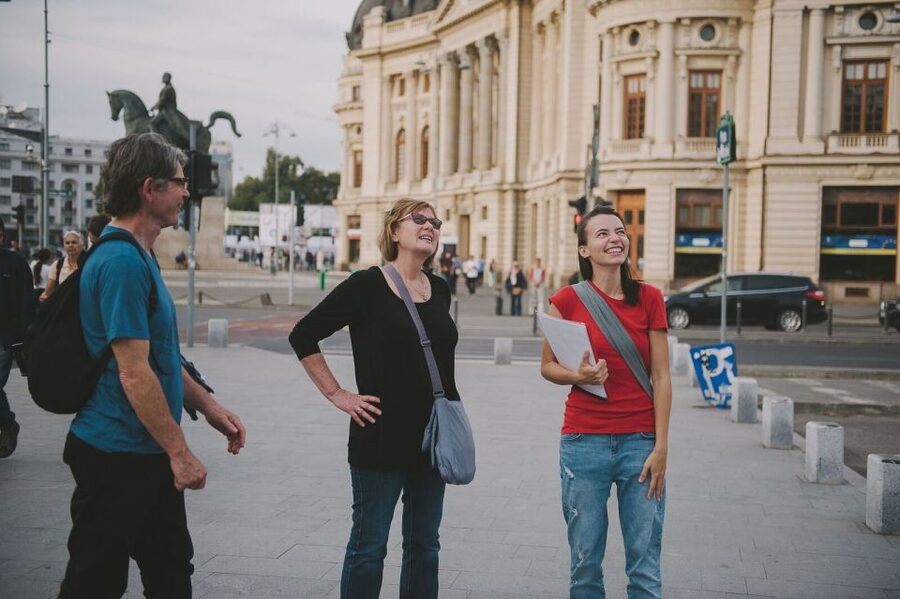
A big reason this tour scores so well is the guide quality. Many experiences feature guides like Alex, Elena, Andra, Vlad, and Irina, and the common theme is storytelling ability plus strong command of architecture and history.
Here’s what you’ll feel on the street:
- Guides point out details you might miss, from bullet-hole type traces in the urban environment to street art cues and local flora
- Guides bring photos and personal anecdotes to connect past and present
- Many tours include extra conversational time and practical recommendations, especially for food and what to see next
One small but meaningful pattern: your guide often tailors the pace to your questions. Some guides ask what you care about, then shape the route accordingly. If you like history with social detail, that personal angle can be a big upgrade from a standard group walk.
Also, the 12-person max group size helps. You get less “talk into the void,” and more chance to ask follow-ups while you’re standing in the exact place the story happened.
Price and value for a 3-hour dark history route
At $55 per person for 3 hours, the value comes from what’s included and what’s avoided. You get a local English-speaking guide, a traditional street snack, and metro tickets. That means you’re paying for expert context, not just transportation between photos.
The other value driver is efficiency. You cover multiple major memory sites and cultural layers in a short time, and you’re moving with a guide who knows how to connect them.
Is it worth it if you like darker themes? Yes, especially if you want Bellu Cemetery and Revolution context. If your goal is only “pretty sights,” you might prefer a different style of tour. This one is built for understanding, not just sightseeing.
Walking, cold weather, and comfort tips
Plan for a fair amount of walking. Bring comfortable shoes. If you’re touring in winter or on a cold day, bundle up, because you’ll be outside while your guide stops and explains.
Who should book this tour, and who should skip it
Book it if you:
- want Bucharest history that goes beyond the obvious monuments
- like guided context for 1989 events and communist-era impact
- enjoy cemeteries as cultural spaces, not just “graveyards”
Skip it if you:
- need a kid-friendly tour, since it is not permitted for under 16
- get uncomfortable with topics like torture, prison camps, prostitution, and serial crime
This is also a great match for first-time visitors who want a fast, guided way to understand how the city’s identity formed, even through its worst chapters.
Should you book this Bucharest dark history tour?
If you’re curious about how Bucharest became Bucharest, this is one of the better ways to do it in a half-day. You’ll see Bellu Cemetery up close, then connect it to University Square and Revolution Square, with a clear thread through fear, power, and survival.
The decision comes down to your comfort level with heavy topics and walking. If that doesn’t scare you, you’ll leave with a much sharper sense of the city, plus stories that change how you notice streets, buildings, and public memory.
FAQ
How long is the tour?
The tour lasts 3 hours.
How much does the tour cost?
The price is $55 per person.
Where is the meeting point?
You meet at the main entrance of Ion Luca Caragiale National Theatre, Bulevardul Nicolae Bălcescu 2, București 010051, Romania.
What’s included in the price?
Included are a local English-speaking guide, a traditional street snack, and metro tickets.
What is not included?
Additional food and drinks, plus souvenirs and personal shopping, are not included.
Is the tour suitable for children?
No. Travelers under 16 years of age are not permitted on this tour.
What should I bring?
Bring comfortable shoes.
How big is the group?
The maximum group size is 12 people.
What if my plans change?
Free cancellation is available up to 24 hours in advance for a full refund.
More Tours in Bucharest





More Tour Reviews in Bucharest

More Bucharest Tours in Bucharest
Just added from Bucharest


Historical Tours, compared.
 ★ 4.7Small Group History, Art & Secrets TourFrom $22152 reviews
 ★ 5.0Guided Walking Tour of Historical BucharestFrom $3084 reviews
 ★ 5.0Bucharest Jewish Heritage | Holocaust Memorial | Private Car TourFrom $11338 reviews
 ★ 5.0Private Bucharest: History & Food with Traditional MealFrom $14034 reviews
 ★ 5.0Bucharest Historical Food Tour in Old CenterFrom $10821 reviews
 ★ 5.0Half-Day Jewish Heritage Walking Tour in BucharestFrom $31820 reviews
 ★ 5.0Private Tour – Food, Culture, History & TraditionsFrom $11418 reviews
 ★ 5.0Sweet Delights History and Desserts Walking TourFrom $7718 reviews
Browse the lists this tour appears in