
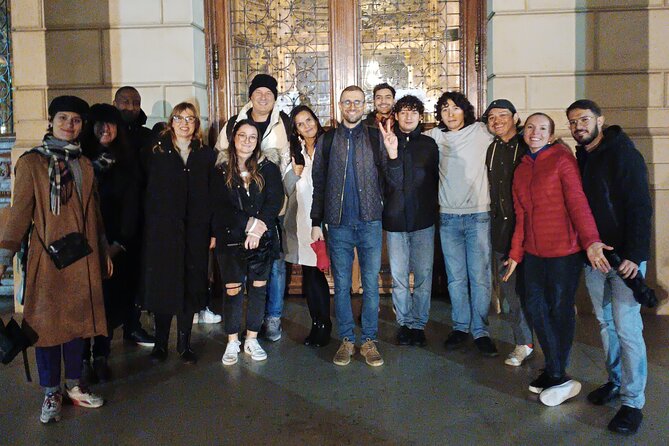
REVIEW · WALKING TOURS
Walking Tour- Delightful Bucharest (Highlights, Stories, Sights)
Fast way to get your Bucharest bearings. In about two hours, you walk central Bucharest with a local guide, collecting a clear orientation of what to see next.
I love how Adrian turns architecture into quick, human stories, so the city feels less like a blur and more like a place you understand. I also love the small group format (up to 25), which keeps the pace fair and makes it easier to ask questions as you go.
One thing to plan for: several highlights are view-from-the-street stops, and the route includes uneven old-town cobbles that can feel slick in rain.
Key highlights you will actually remember
- A fast, guided overview of central Bucharest that helps you navigate your own schedule
- Adrian’s humor and local stories, including personal memories shared at the sights
- Real stops with real context, not just photo stops, from monasteries to Revolution Square
- Two included admissions, at Stavropoleos Monastery and Macca Villacrosse Passage
- A clean start and end point, starting at Marmorosch Bucharest and ending at the Romanian Athenaeum
Elsewhere in Bucharest, and up the valley
- Bucharest: Dracula’s Castle, Peles Castle, & Brasov Old Town★ 4.5 · 17,858 reviews
- Bucharest: Dracula Castle, Peles Castle & Brasov Old Town★ 4.6 · 10,891 reviews
- Bucharest: Dracula’s Castle, Peleș Castle & Brașov Day Trip★ 4.5 · 5,919 reviews
- Bucharest: Palace of Parliament Tickets and Guide★ 4.3 · 3,182 reviews
Getting oriented fast, starting at Marmorosch and ending at the Athenaeum
This is a classic first-day kind of walk. You start at the Marmorosch Bucharest, Autograph Collection on Strada Doamnei 2, then the route carries you across central Bucharest until you finish at the Romanian Athenaeum on Strada Benjamin Franklin 1 to 3. That end point is useful, because you’re placed right where you can keep sightseeing without backtracking.
The tour is offered in English, and you get a mobile ticket, so you are not wrestling with printouts in your pocket. Most people can join, and it runs with a maximum group size of 25 travelers, which helps the guide keep an eye on everyone and move at a steady pace.
Also, it helps that it’s near public transportation. If your day runs late, you will still have options to get to the starting point and then continue after the walk ends.
How the 2-hour timing helps you see more of Bucharest
At about 2 hours, this is long enough to cover a solid slice of the center, but short enough that it does not eat your whole morning or afternoon. The stops are spaced so you get context, then you move on. You’re not stuck standing around waiting for one long photo moment.
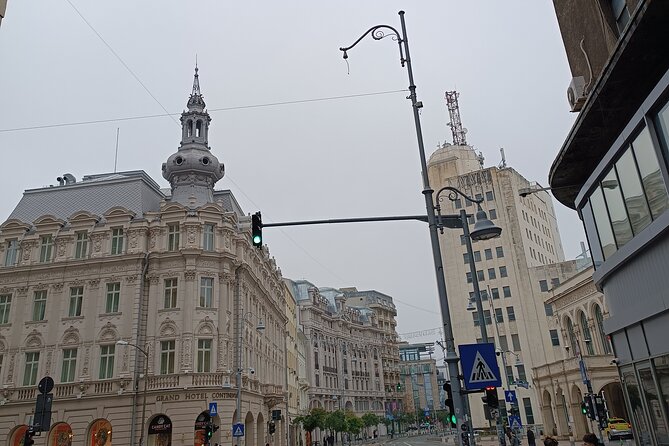
In practice, this format works best when you want a guided “map” of Bucharest’s themes. You will see religious heritage, Belle Epoque style, military-era symbolism, and the political history that marks modern Romania. Then you finish at the Romanian Athenaeum, which gives you a strong visual anchor for the rest of the trip.
My advice for comfort is simple: wear shoes with grip. Old-town streets can be uneven, and if the weather turns, you will feel it. One good thing here is that Adrian’s approach tends to keep moving without losing the story, so you’re not just trudging from one stop to the next.
Stop 1: Stavropoleos Monastery, a late Romanian Renaissance start with included entry
You kick off at Stavropoleos Monastery, right in the heart of the city. The tour frames it as a jewel of Orthodox Christianity, and it’s described as late Romanian Renaissance in feel.
This is one of the best ways to begin because you step into a different rhythm fast. Instead of only looking at buildings from the outside, you also get admission included, which makes this stop feel like a real visit, not a quick drive-by glance.
What you should do here is slow down for details. Listen for the guide’s explanation about the monastery’s place in the city, and then look for the architectural cues that make it feel like late Renaissance Romania. Even if you are not a temple person, this kind of start helps you “calibrate” the rest of your walk.
How long you’ll spend: about 15 minutes. That’s enough for the main sights without turning it into a time sink.
Stops 2 and 3: Palatul CEC and Macca Villacrosse Passage, Belle Epoque vibes you can feel
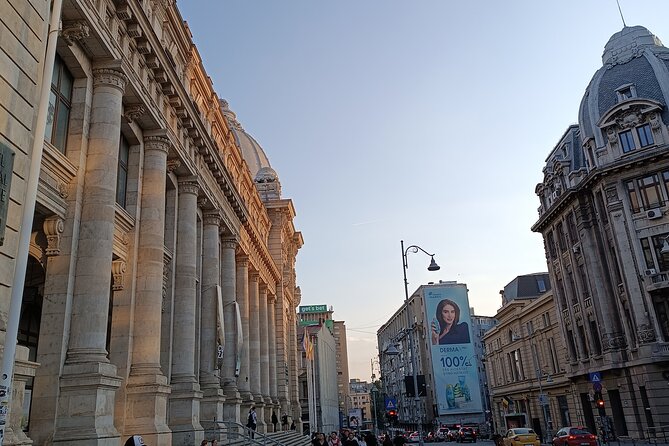
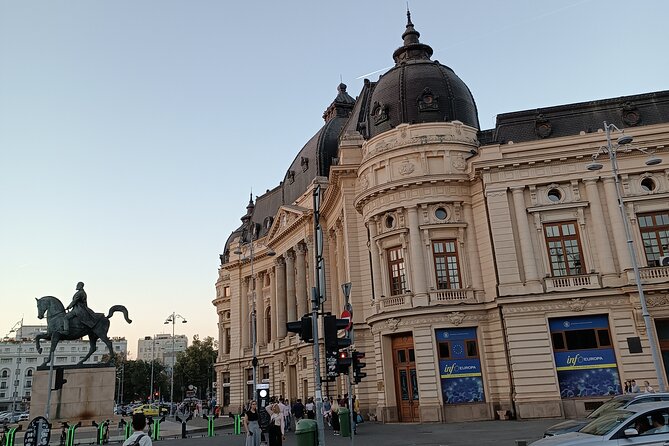
Next up is Palatul CEC, a major landmark tied to the idea of Little Paris and Belle Epoque Bucharest. The key practical note: the site cannot be visited inside on this walking route. So you’re there for the exterior character, the symbolism, and the stories you hear as you look.
This matters because you should adjust your expectations. You won’t get interior rooms or a full guided tour inside. Instead, the guide’s job is to help you read the building from the street, and to explain why it became the kind of landmark Bucharest keeps pointing to.
Then the route shifts to something more intimate and photogenic: Macca Villacrosse Passage, a cute covered arcaded street with an interesting history. This stop has admission included, so you do get more than a sidewalk look.
Covered arcades are a big deal in cities like Bucharest, especially if weather changes your plans. You get a sheltered pocket of the city’s older commercial life, and it’s the kind of place where walking feels more like wandering than rushing.
Time on these stops is short but purposeful, about 15 minutes at Palatul CEC and 10 minutes at Macca Villacrosse Passage.
More of Bucharest on foot
Stops 4 and 5: National Military Club and the Palace of Telephones, symbolism in plain sight
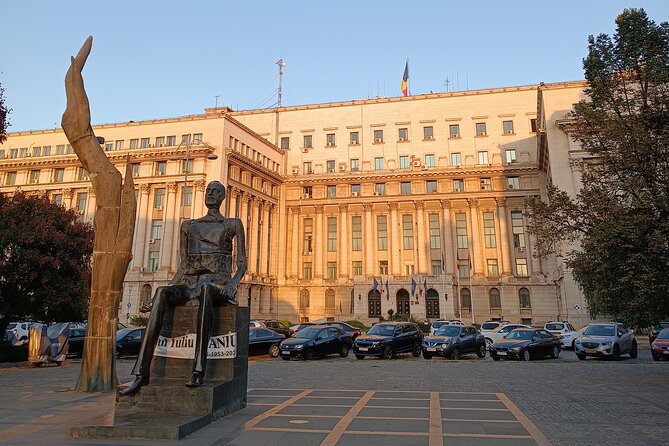
After the arcades, you move into more dramatic territory. National Military Club is presented as a representative example of Romanian Army power and ambitions. Like Palatul CEC, the note here is that you cannot visit inside. You’ll be reading meaning from the outside.
This is still worth it, because the guide’s commentary helps you spot what a façade is trying to communicate. You’re learning to look at buildings as messages, not just stone.
Then comes the Palace of Telephones, described as a lucky place with a twisted history. Again, you will not go inside on this tour, so you’re relying on the guide’s storytelling to make sense of what you see.
What I like about combining these two stops is that you see how Bucharest can switch moods without warning. One minute, it’s refined style. The next, it’s power, ambition, and a quirky narrative hook. That contrast is part of why a walking tour works here. You’re not just driving past history, you’re standing in it.
Timing is about 10 minutes at the National Military Club and 15 minutes at the Palace of Telephones.
Stop 6: Revolution Square, the political center that reshaped the city’s story
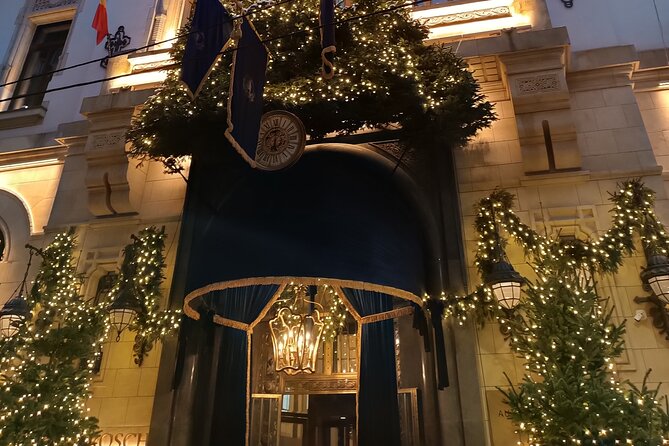
Revolution Square is the emotional midpoint of the route. It’s framed as a symbol of the last decades of Romanian society, where major events happened, and where different political regimes started and ended.
Unlike some stops where the main value is architecture, this one is about understanding time. As you stand in the square, the guide’s job is to connect those big-picture shifts to the street-level reality you see around you.
The practical upside: Revolution Square is an easier place to take in the scale. You spend about 20 minutes, which gives time for both explanation and a bit of breathing room.
Also, the stop is free, so you are not juggling tickets while the story gets heavier. If you only have one stop where you want the guide’s storytelling to hit hardest, this is it.
Stop 7: Romanian Athenaeum, finishing with the 19th-century temple feeling
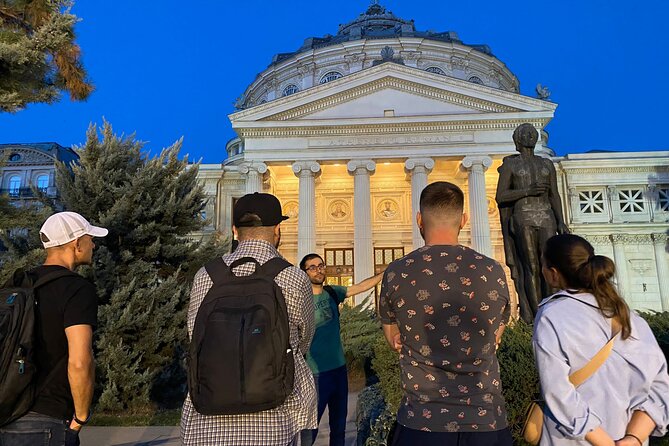
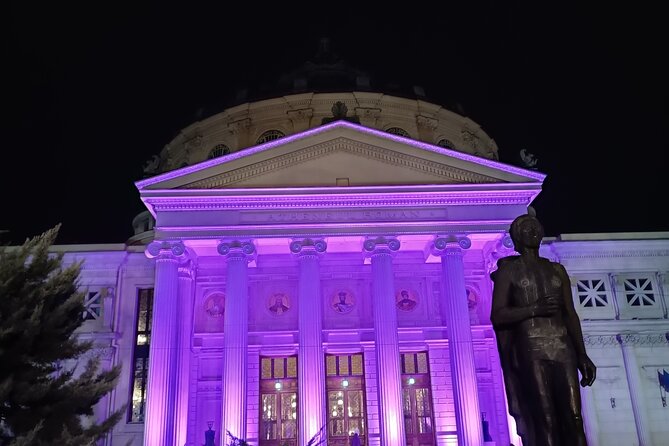
You end at the Romanian Athenaeum, described as the temple of the Romanian nation and a masterpiece of 19th-century design. The tour cannot take you inside because of the walking-tour format, but the finish here is still a smart reward.
Ending at the Athenaeum does two things. First, it gives you a dramatic visual close, so your brain makes a clean memory line from earlier stops to this final landmark. Second, it puts you in a strong location to keep exploring on your own afterward.
Time here is about 15 minutes for the guided portion before you wrap up. It’s a good pace because you’re not still walking when your energy starts to drop. You’re set up to continue by transit, on foot, or with an easy plan for dinner.
And yes, this route ends different from where it started. In this case, that’s not a problem. It’s the point. You’re walking a loop-like story from downtown monuments toward a classic Bucharest centerpiece.
Price and value: why 22.99 can work for a tight schedule
This tour costs $22.99 per person for about 2 hours. On paper, it’s not a bargain-stunt price. It’s a fair rate for a guided walk that strings together major stops, some with included admission.
Here is what you get for your money based on how the tour is structured:
- A guided route across multiple iconic areas in central Bucharest
- English commentary
- A small group experience capped at 25
- A mobile ticket for easy entry
- Admission included at Stavropoleos Monastery and Macca Villacrosse Passage
- View-from-the-street stops where the guide explains symbolism so you do not feel like you missed interior access
Value also comes from time. If you have limited hours and you want an orientation you can use later, this tour can save you from playing guessing games on your own. You leave with a mental map of neighborhoods, themes, and key landmarks, which helps your next day feel smoother.
One practical note for budgeting: some sites are not visited inside on this tour. That means your cost is mainly for the guide experience and the included admissions, not for covering entry to every landmark.
What it’s really like with Adrian: pace, stories, and the personal touch
Adrian is a big part of why the rating stays so high. The tone is upbeat, and the tour often feels like a lively walk with a local storyteller. You get local insights, and the guide includes humor and quick explanations that keep things moving.
There are also personal details that make the history feel less like a textbook. For example, he has shared memories from his hometown, including a story about an exorcism his grandmother attended, and how that connects to Romanian church life you may see while walking. That kind of connection is what turns landmarks into something you can remember.
One detail I really appreciate is that Adrian seems tuned in to the group. He answers questions and adjusts when conditions are rough. If it’s rainy, you still get to move through, and the guide’s style aims to keep you comfortable enough to stay engaged.
Now, the balanced note: this is not a silent, strictly neutral tour. The storytelling can lean into strong national themes and humor, and one past guest also flagged that the guide’s humor and pace were not for everyone. If you prefer totally gentle, low-key narration, you might want to go into this with a flexible mindset, and know you can always ask for a slower moment if you need it.
Practical tips so you enjoy the walk more
Bucharest’s old center can be hard on shoes. Bring grippy walking shoes. If rain is possible, consider a small umbrella or rain shell, because wet cobbles can make the ground slick.
If you are traveling with mobility limits, you’ll want to go in with realistic expectations. This is still a walking tour, so even if most people can join, you should plan for steady walking and a route across uneven streets.
If you are bringing a stroller, be ready for bumps. Old-town cobbles can slow you down, and that affects the pace of any group.
Finally, after the tour ends at the Athenaeum, you can keep the momentum going. You’ll be in a central location, which makes it easier to grab lunch, see one more monument, or just wander without feeling lost.
Should you book this Bucharest highlights walking tour?
Book it if you want a time-efficient orientation to Bucharest, especially on your first day or if you only have a few hours. You will get a tight route through major landmarks, story-driven context, and two stops with included admission that go beyond a quick glance.
Skip it or consider a different style if you hate walking on uneven old streets, or if you want every major sight visited inside. Since several landmarks are viewed from the outside only, your experience depends on whether the guide’s explanations feel satisfying to you.
For most first-time visitors who want clarity fast, this is a solid pick. The combination of a small group, English narration, and Adrian’s energetic, story-first approach makes the $22.99 feel like it buys you time and understanding, not just footsteps.
FAQ
How long is the Delightful Bucharest walking tour?
The tour runs for about 2 hours.
Is the tour in English?
Yes, the tour is offered in English.
What is included with the tour ticket?
You get a mobile ticket. Admission is included at Stavropoleos Monastery and Macca Villacrosse Passage, while some other stops are view-from-the-street and do not include admission.
Where does the tour start and end?
It starts at Marmorosch Bucharest, Autograph Collection on Strada Doamnei 2, and ends at the Romanian Athenaeum on Strada Benjamin Franklin 1 to 3.
How big is the group?
The tour has a maximum of 25 travelers.
Is it suitable for most travelers, and can service animals join?
Most travelers can participate, and service animals are allowed.
What is the cancellation policy?
You can cancel for a full refund up to 24 hours in advance of the experience start time.
More Tours in Bucharest





More Tour Reviews in Bucharest


More Bucharest Tours in Bucharest
Just added from Bucharest


Walking Tours, compared.
 ★ 4.9City Highlights Guided Walking TourFrom $211,482 reviews
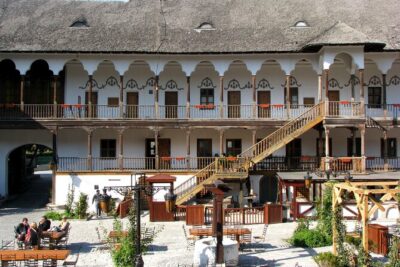 ★ 5.0Bucharest Highlights Walking TourFrom $21469 reviews
 ★ 4.9Ghost Stories & Romanian Mythology Walking TourFrom $35287 reviews
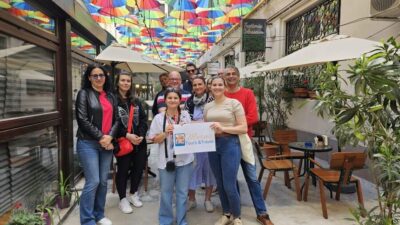 ★ 4.9Guided Walking Tour with Romanian SnackFrom $45228 reviews
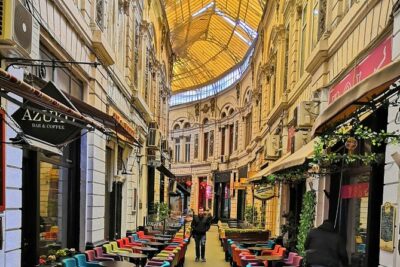 ★ 5.0Best of Bucharest | Private Walking TourFrom $314199 reviews
 ★ 5.04h Bucharest Private Tour (2h by Car and 2h Walking in Old Town)From $10090 reviews
 ★ 5.0Bucharest 3-hours Walking Tour (Small Groups)From $5485 reviews
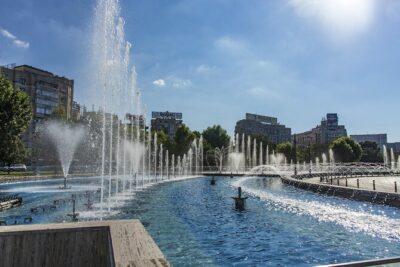 ★ 5.0Guided Walking Tour of Historical BucharestFrom $3084 reviews
Browse the lists this tour appears in