

REVIEW · BUCHAREST COMMUNISM TOURS
Bucharest: Communism, Revolution & City Highlights Tour
Bucharest runs on contradictions. This private walking tour turns that idea into a story, starting at Revolution Square and ending with the sheer scale of the Palace of Parliament. I especially like how you get both the emotion of 1989 and the visual gut-punch of a city reshaped by ideology. One heads-up: you mostly stay outside, so you will see key buildings, but not go inside most public sites.
You get a private group with a licensed English-speaking guide, and the pace is slow enough to take photos and regroup. The route is under 2 miles (3 km) total, and the tour ends in the Old Town area where your next meal and wandering plans are easy. If you want lots of museum time and indoor access, this is not that kind of tour.
Key highlights you will care about

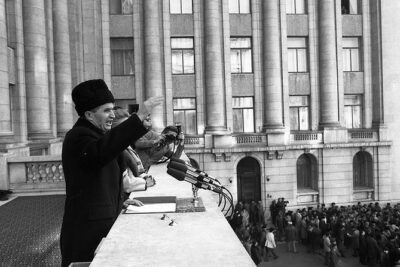
- Revolution Square in 1989, including where Ceaușescu delivered his final speech
- Old Town vs. Communist Civic Center, the clearest contrast in Bucharest
- Victory Avenue and University Square stories, from Cold War pressure to student uprisings
- Palace of Parliament exterior photos, with context on why it displaced 40,000 residents
- A strong guide focus, with Mihai commonly praised for making the era click fast
The communist city, three more ways
- The Real tour of Communism★ 5.0 · 666 reviews
- Life under Communism★ 5.0 · 358 reviews
- 3-Hour Guided Tour of Communist Bucharest★ 4.9 · 303 reviews
- Bucharest Essential Tour: Old Town, Calea Victoriei & Communism★ 5.0 · 142 reviews
Two eras, one city: how Bucharest tells its communist story

Bucharest can feel like two cities glued together. You see Belle Époque elegance in one direction and cold, Soviet-influenced geometry in the next. That contrast is not just visual. It is the whole point of this tour.
The guide frames Romania’s communist era as a brutal timeline, from the violent rise of the system after WWII to its violent end in 1989. You also get the earlier context that Bucharest once earned the nickname Little Paris for its 19th-century architecture. That helps the later changes land, because you understand what was lost, not just what replaced it.
If you like city walks that feel like a guided film, this fits. You are not just sightseeing, you are building a mental map of power, control, and resistance. And because it is private, you can ask questions as you go, which makes the whole hour-by-hour story feel less like a lecture and more like a conversation.
Athenaeum, Royal Palace, Memorial of Rebirth: pre-communist Bucharest first
The tour starts with quick but meaningful photo and viewing stops around some of Bucharest’s grand older landmarks. You stop at the Romanian Athenaeum, which is one of the city’s signature symbols of past grandeur. Even if you do not go inside (this tour does not include interior visits), standing nearby gives you a feel for the city’s earlier confidence.
Next you pause at the Royal Palace of Bucharest for another round of sightseeing and photos. These stops matter because they set up the contrast you will keep returning to later, when communist-era architecture and planning take over the story.
Then comes the Memorial of Rebirth. This is one of those places that helps you read Bucharest like a timeline. The theme of rebirth connects directly to the revolution and Romania’s pivot away from dictatorship, and it also frames the city as something that keeps trying to restart itself.
One practical note: these are photo-stop moments. If you enjoy slow looking and extra reading time, you may want to ask your guide for a quick “what to watch for” in each area so your photos end up more intentional.
Revolution Square and the final speech where history tipped

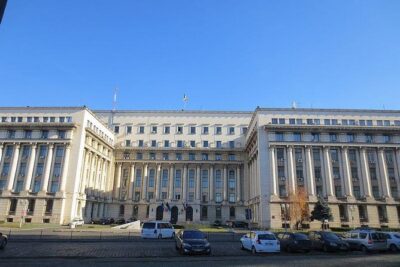
Revolution Square is the emotional anchor of this whole experience. You stand in the place tied to Romania’s 1989 revolution, when Nicolae Ceaușescu’s final speech changed the country’s course. It is the kind of stop that makes the past feel suddenly physical, not academic.
The guide ties the space to the tension of the time, and that is what makes this part work. The square is not just a viewpoint. It is a stage, and your guide turns it into a story with cause and effect.
You also visit nearby landmarks such as the National Military Circle, and then you move on toward University Square. That progression helps you feel how authority, institutions, and everyday pressure all formed one system. You see how power shows up in buildings, but also how it shows up in people’s fear and constraints.
If you have limited time in Bucharest and want your first tour to make sense of the city quickly, Revolution Square is a great starting point because it gives you context for everything you will see later.
Victory Avenue to University Square: student uprisings and surveillance pressure

On this walk you go down Victory Avenue, once associated with aristocratic Bucharest. Today it is lined with embassies and elegant palaces, but it also includes communist-era buildings, so you get another built-in comparison.
Then you reach University Square for a longer stop. This is where the tour slows down on purpose. You hear stories about student uprisings, Cold War oppression, and life under constant surveillance. That kind of detail is exactly what makes the communist era understandable. It is not only about leaders, it is about how the system affected daily behavior.
University Square gives you a practical lesson in how dictatorships keep control. They do not just rely on fear, they rely on monitoring, compliance, and turning institutions like schools and youth movements into potential threats. Your guide’s job here is to connect the architecture and the locations to those human realities.
One drawback to keep in mind: because the tour is a walking route with multiple stops, you will be on your feet while the story develops. If you need frequent breaks, tell your guide early. The private format is built for pace adjustments.
Elsewhere in Bucharest, and up the valley
Old Town cobblestones to Ceaușescu’s austerity reality

After the city-center squares, you get a break and time to photograph Old Town. This is where Bucharest’s more relaxed, restored side appears, with cobblestones and older mansions that look like they survived the worst parts of history by sheer stubbornness.
Then you transition into a guided exploration of Old Town that is longer than the earlier stops. This is one of my favorite stretches because the contrast becomes more than a theme. It becomes a question: how can a city look so beautiful while being shaped by such harsh control?
Your guide uses the setting to explain what life under Ceaușescu’s rule could feel like, including the shift toward austerity and control. You talk about food rationing, propaganda, and the human rights abuses that helped fuel the 1989 revolution. It can feel heavy, but it also answers the question many people quietly ask, which is what exactly changed for ordinary people.
This segment also helps with orientation for your remaining time in Bucharest. Old Town is where many hotels, restaurants, museums, and shops are. When the tour ends here, you are not stranded in an empty area. You are dropped into a place where you can keep exploring right away.
If you want to get maximum value, use this part to ask practical questions like how daily life worked or what people did to cope. The guide can adapt your focus, since the tour is private.
Former Communist Civic Center and the Palace of Parliament’s brutal scale

The tour’s final major thematic shift takes you into the former Communist Civic Center area. This is the “grand but cold” zone that often feels more interesting to visitors than locals, partly because of how the spaces were designed and what they replaced.
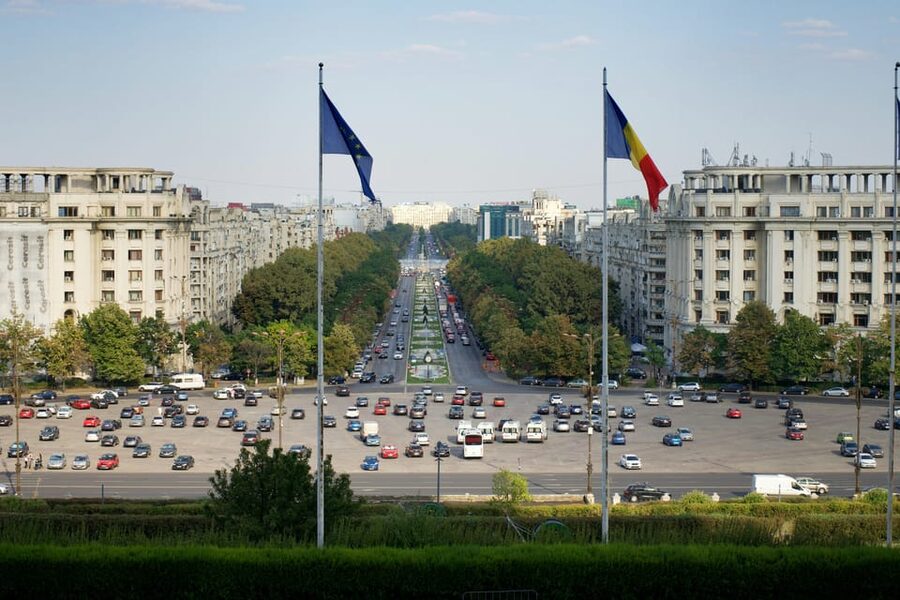
As you get closer, the sheer ambition becomes clear. Ceaușescu had a vision for Bucharest that was meant to symbolize a socialist utopia. Instead, the project became a social scar. The construction displaced about 40,000 residents and erased whole neighborhoods, changing the way the city functions at street level.
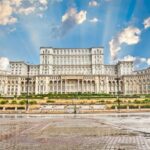
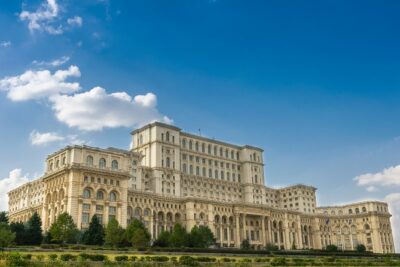
And then there is the Palace of Parliament. You do not need to be a building nerd to understand why people talk about it. It is colossal and it is described as the world’s heaviest building. Your guide’s job is to explain why it is more than a spectacle, and why its scale matters to the story of control and propaganda.
You get the chance to admire the exterior from a photo stop. This is also where you walk a short distance on foot to reposition and see more angles. The experience is not about entering, it is about witnessing the impact of planning on a city and then comparing it to the warmth of Old Town you already walked through.
If you are the kind of traveler who enjoys reading a place’s past in its sidewalks, this is a strong finale. It also makes the revolution story feel grounded, because you end where the system tried hardest to show permanence.
Price and value: why $90 can be a smart deal in Bucharest
At $90 per person for a 4-hour private walking tour, the value comes from three things: time, guide quality, and structure.
First, you get a full half-day narrative with multiple context stops, not a quick highlights loop. This matters in Bucharest because the story is layered, and you are seeing it in the right order. Second, the tour includes free hotel pickup, which reduces your hassle and helps you start without losing prime sightseeing time to transit.
Third, this is led by a licensed English-speaking guide. Many bookings specifically praise guides like Mihai for keeping the pace engaging, even when conditions were tough. That matters because communist history can turn dry if the storytelling does not have momentum. A good guide keeps it human.
There is a tradeoff: you do not go inside government buildings or museums, and the Palace of Parliament interior is not included. That is the main reason this tour is not perfect for people who want to check “inside a famous building” off their list.
Still, if you want a strong first impression of Bucharest plus a clear explanation of why the city looks the way it does, this is a solid use of time.
How to get the most from your 4 hours

A few practical moves will make a difference.
Wear solid walking shoes. The tour is under 2 miles total, but the route includes uneven older streets in Old Town and multiple outside photo stops.
Bring a camera, but also bring questions. Your guide can answer everything from how surveillance worked to why certain areas feel colder or more deliberate than others.
Plan for outdoors time. Since this is mainly outside sightseeing, weather will be a factor. If it is rainy or windy, it helps to keep your pace flexible and rely on your guide’s slow, stop-heavy rhythm.
Use the Parliament option wisely. The interior visit is possible only with phone reservation one day prior, and availability can be limited. The tour itself does not include entry, but if you care about seeing inside, ask your guide for help making the reservation. The guide can assist if you want that extra step.
Sit down for Old Town food after. The tour ends in the Old Town area, near the Palace of the Deposits and Consignments. That timing is perfect for turning history into lunch and then turning lunch into more walking.
Should you book this Bucharest communism and revolution tour?
Book it if you want your Bucharest time to start with clarity. You will see the key places tied to 1989, and you will understand how Belle Époque charm and communist planning coexist in the same streets. You also get a well paced, moderate walk with pickup included, which is a big quality-of-life win when you are only in town for a short visit.
Skip it if you primarily want museum entrances and interior tours. This experience focuses on learning through locations outside, and the Palace of Parliament interior is not part of the standard plan.
My take: if you like your city tours grounded in real places and real decisions, this is the kind of half-day that gives you context for everything else you do in Bucharest.
FAQ
How long is the Bucharest communism and revolution walking tour?
It lasts 4 hours.
How much walking is involved?
It is a moderate walking tour with less than 2 miles (3 km) in total, and it is slow-paced with several stops.
Does the tour include hotel pickup?
Yes. Pickup is included, with the guide waiting in the hotel lobby next to reception. If there is no lobby, the guide waits downstairs in front of the building.
Will we visit the inside of the Palace of Parliament or other public buildings?
No. This is a walking tour and does not include visits inside public or government buildings. You will admire the Palace of Parliament exterior, and interior access is not included.
Is the Palace of Parliament interior ever possible?
Access to the Palace of Parliament is described as possible only by phone reservation one day prior, with limited availability. The guide can assist if you want help making that reservation.
What language is the tour guide?
The tour guide is available in English and Romanian.
Where does the tour finish?
It finishes in the city center area known as Old Town, at the Palace of the Deposits and Consignments.
Is the tour wheelchair accessible?
Yes, the tour is listed as wheelchair accessible.
More Tour Reviews in Bucharest
More Bucharest Tours in Bucharest
The Communist City, Continued


Just added from Bucharest


Bucharest Communism Tours, compared.
 ★ 5.0The Real tour of CommunismFrom $32666 reviews
 ★ 5.0Life under CommunismFrom $42358 reviews
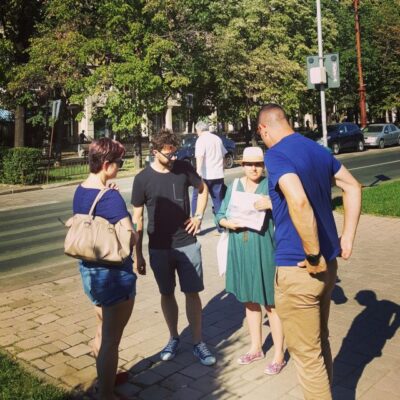 ★ 4.93-Hour Guided Tour of Communist BucharestFrom $29303 reviews
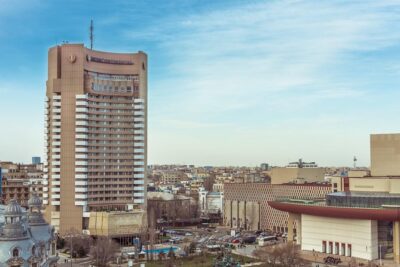 ★ 5.0Bucharest Essential Tour: Old Town, Calea Victoriei & CommunismFrom $24142 reviews
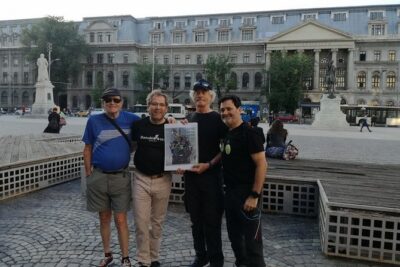 ★ 5.0Communism in Bucharest – Landmarks, Museum & Communist AppetizersFrom $48111 reviews
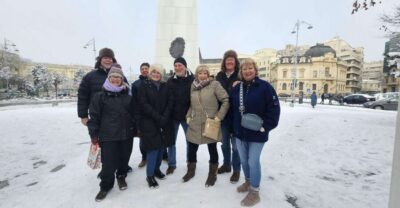 ★ 4.9Relics of Communism 3-Hour Walking TourFrom $4477 reviews
 ★ 5.0Bucharest Under Communism: Life, Terror & HopeFrom $2376 reviews
 ★ 4.6Entry ticket at the Museum of CommunismFrom $957 reviews
Browse the lists this tour appears in