
REVIEW · 3-HOUR EXPERIENCES
Bucharest: Alternative Sightseeing 2.5-3h-Hour Guided Tour
Forget the postcards, follow the murals. I love how this walk connects street art to real-world freedom of expression stories, and I love the small group setup that keeps the conversation human. One consideration: it is an active city-walk, so plan for lots of street corners and bring comfortable shoes.
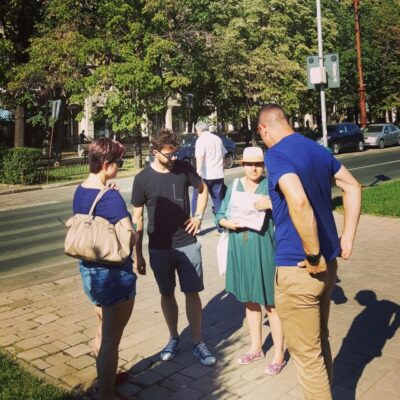
You start at Izvor Metro Station, then move through areas most first-time visitors miss. The tour runs about 2.5 to 3 hours with an English live guide, and the group is capped at 10 people, which makes it easier to ask questions and focus on what you are actually seeing.
Expect a culture-first route: graffiti and murals show up near places like libraries, bars, indie theaters, and the creative spaces that support young artists. You end with a food-focused stop at Food Hood, so you can keep the evening rolling right after the walking part.
Key highlights
- Izvor Metro Station start: you begin in a practical, central spot, then head straight into the alternative scene
- Activism context: you learn how street art links to protests, free speech, and social change
- Photo-friendly mural hunting: you get guidance on what to notice on walls, from small stickers to big compositions
- Small group, big attention: max 10 people means more back-and-forth with the guide
- Coffee and market stops: a specialty coffee break plus a quick look through Kraft Market
- A standout mural stop: the masonic Bram Stoker and Dracula painting is the kind of detail most people miss
Elsewhere in Bucharest, and up the valley
- Bucharest: Dracula’s Castle, Peles Castle, & Brasov Old Town★ 4.5 · 17,858 reviews
- Bucharest: Dracula Castle, Peles Castle & Brasov Old Town★ 4.6 · 10,891 reviews
- Bucharest: Dracula’s Castle, Peleș Castle & Brașov Day Trip★ 4.5 · 5,919 reviews
- Bucharest: Palace of Parliament Tickets and Guide★ 4.3 · 3,182 reviews
Why Bucharest street art is more than decoration
Bucharest street art works on two levels at once. Yes, it is visual, colorful, and made for your camera. But it also acts like public commentary. The best way I can explain the feel is this: the city’s walls act like informal billboards for ideas that people may not say out loud somewhere else.
This tour leans hard into that meaning. You will hear how freedom of expression shows up in the street, then you will connect murals and graffiti to activism and the everyday realities of the city. That matters because Bucharest can look traditional from a distance, yet the street level tells a different story. Once you start seeing that pattern, your whole walk through town changes.
You also get something many sightseeing tours do not: a mindset shift. Instead of treating murals as random art, you learn to read them like messages in public space. It is the difference between snapping photos and actually understanding why those images are where they are.
Meeting at Izvor Metro: the simplest way to start strong
Starting outside Izvor Metro Station is smart. You avoid wasting time finding a meeting spot, and you are dropped into a real part of the city right away. The first stretch is meant to reset your eyes, because you are looking for early signs of freedom of expression before you even reach the more mural-heavy corners.
From there, the guide keeps you moving toward hidden areas where graffiti and street art show up again and again. This is not just about seeing one wall with good artwork. The goal is pattern recognition. You start to understand which locations attract creators, how certain neighborhoods support an art scene, and why the street becomes a gallery.
Timing-wise, you should think of this as a 2.5 to 3 hour walking experience with short guided stops. That means you will want a steady pace and quick snack timing if you usually get hungry. The tour includes a specialty coffee break, which helps.
Facultatea de Sociologie și Asistență Socială: where ideas meet the street
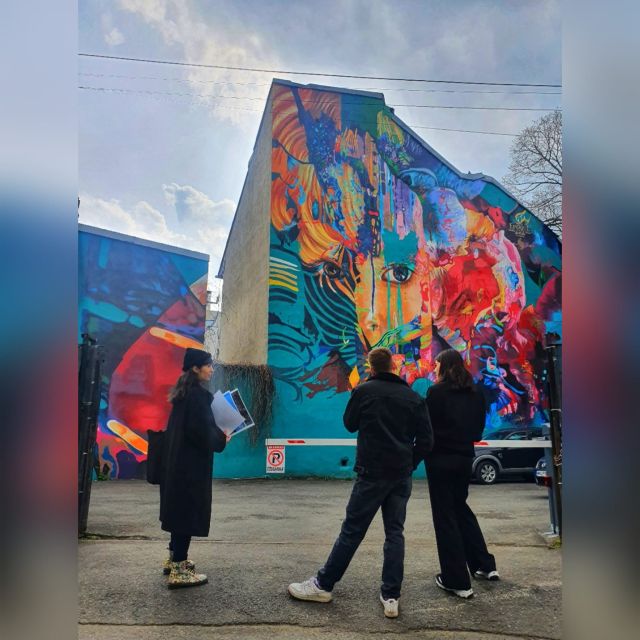
One of the tour’s first guided stops is at Facultatea de Sociologie și Asistență Socială. This is a perfect match for an alternative art tour because it points you toward how people think, study, and argue in the public sphere. A sociology and social assistance faculty might not sound like street art territory at first, but that connection is exactly the point.
You will get context on how young artists and local voices use public space. In many cities, art ends up separated from debate. Here, the boundary is thinner. Murals and graffiti often show up where conversations about society already happen: near institutions, meeting points, and places where people gather and share ideas.
The practical upside for you: you learn what to pay attention to as you walk. Instead of trying to memorize artwork details, you learn to read themes. That makes every next stop easier, and it helps your photos look more intentional, not random.
Epoque Hotel: a longer stop that adds texture
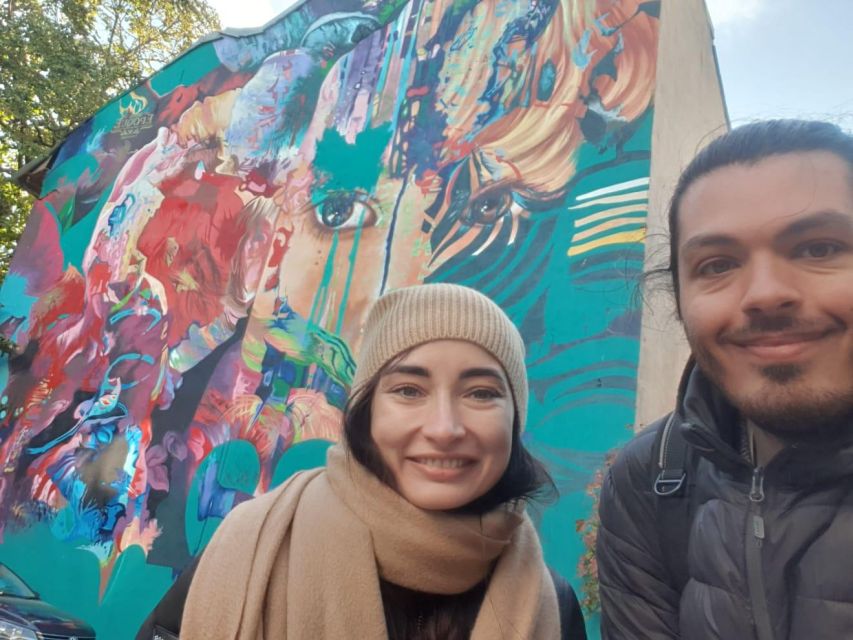
The tour continues with a guided segment at Epoque Hotel, about 20 minutes. A stop like this works because it slows the pace at a point where you can see how street art interacts with built space, entrances, facades, and pedestrian routes.
Hotels and large buildings are often overlooked in alternative itineraries, but walls near public foot traffic become surfaces for expression. That is where street art becomes useful as a map. It tells you where attention gathers and which corners feel open to new voices.
If you like photography, this is the kind of stop where you start noticing composition details. You might be guided toward what works in close shots versus wider frames, and how light changes how murals read. Even if you are just using your phone, it helps to know where to stand.
Other guided days in Bucharest
Beans & Dots specialty coffee: the guided break that keeps the theme
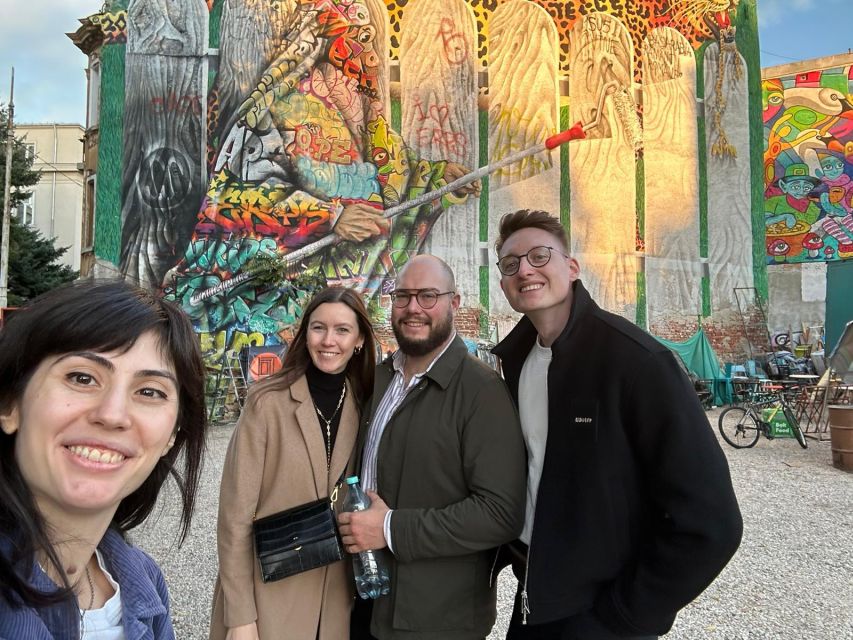
About 20 minutes gets set aside for coffee at Beans & Dots Specialty Coffee, with guided explanation during the break. I like this part because it keeps the tour from becoming only walking and standing around. You reset, you warm up, and you stay in the same conversation about art and public space.
This is also a good point in the tour to ask questions. When your brain is already tuned to symbolism and local context, it becomes easier to understand what you are seeing on the street. The coffee break gives you a chance to connect stories from earlier stops with what you will see later.
Practical tip: if you are sensitive to cold or wind, this is your chance to take a real pause. And if you are planning to do the photo work after this stop, coffee can help you slow down and notice details instead of rushing.
Kraft Market and Calea Victoriei: from small stickers to big statements
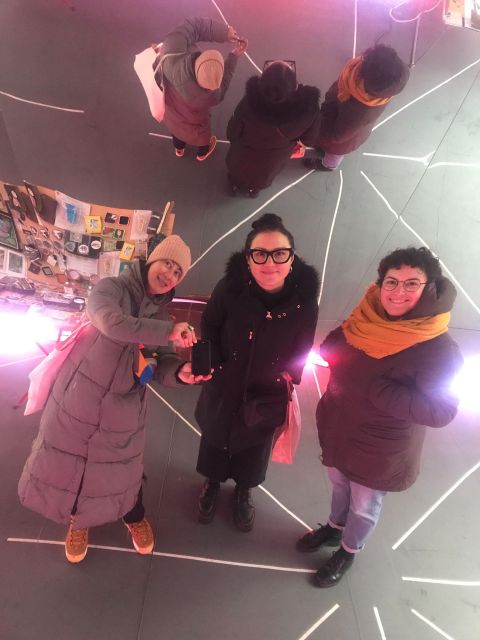
The tour uses two sections that work as bookends for scale. First, you get about 10 minutes at Kraft Market. Then you move into a longer stretch along Calea Victoriei for around 30 minutes.
Kraft Market helps because it shows how street art culture can connect to creative commerce and everyday browsing. You get the sense that these murals are not just wall decorations. They sit in a living ecosystem of people who create, sell, and support. In other words, the art scene is not separate from daily life.
Then Calea Victoriei changes the feel. A longer guided walk here makes sense because it is a corridor where you can build a visual timeline. You are not only stopping at one place, you are traveling through the city with an eye for what is consistent and what changes. Along major streets, murals and graffiti often respond to visibility. They can be bolder or more symbolic, because the message is designed for more eyes.
If you want photos that show variety, this is where you tend to get it. Think of it like a mural sampler across different sizes and styles, plus the street context that surrounds each piece.
The Bram Stoker and Dracula masonic mural: the stop most people miss
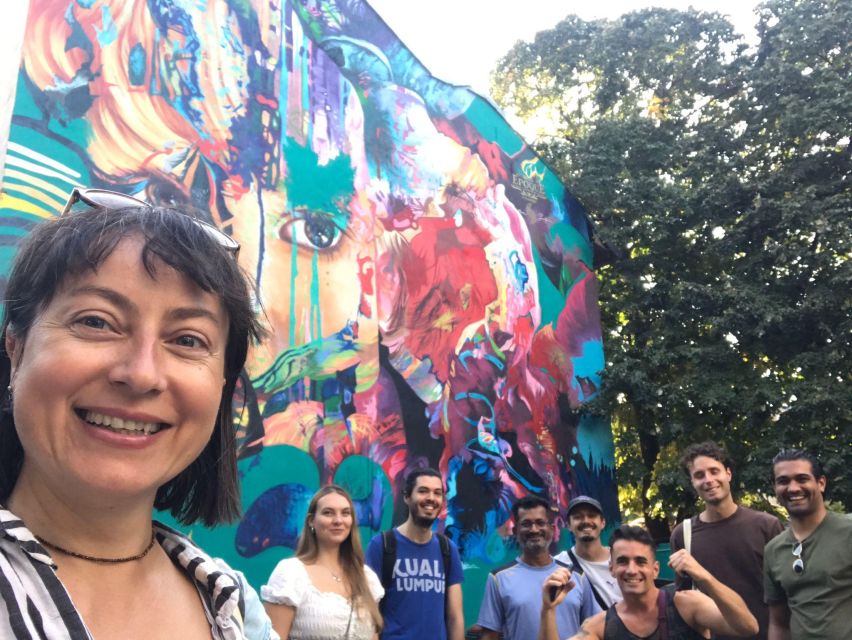
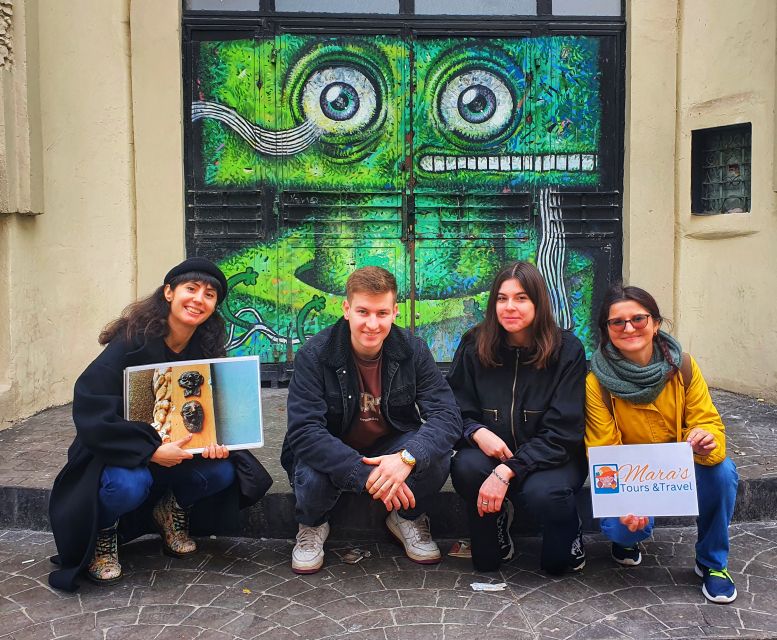
About 15 minutes goes to a painted mural featuring Bram Stoker and Dracula, with a masonic theme. This is one of those stops that teaches you why the tour matters even if you are not obsessed with graffiti.
Many visitors recognize the Dracula name, but they usually do not connect it to local symbolic layers and the way artists borrow myth, history, and secret-signaling aesthetics. That is what this stop is about. You learn how the artwork fits into a larger culture of reference and meaning in Bucharest’s street scene.
From a photo standpoint, murals like this often reward you for slowing down and viewing from different angles. You can get different readings depending on where you stand. This is also a place where the guide’s storytelling style becomes especially valuable, because meaning is not always obvious at first glance.
Food Hood finish: keep the night going with local food energy
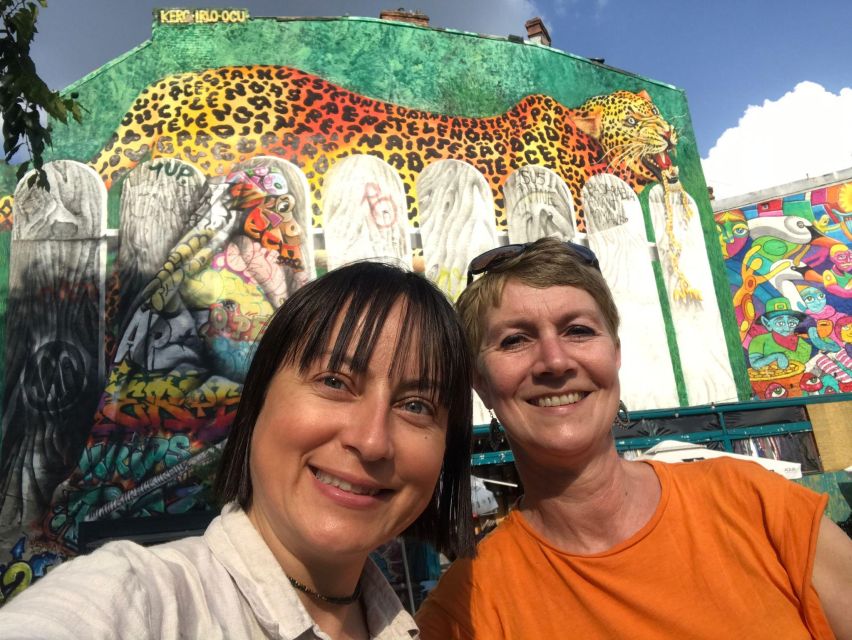
The tour wraps at Food Hood. I like a finish like this because it gives you momentum. You do not end the day in a random spot where you have to scramble for transportation or hunt for something to eat. You walk out into a food-focused area and can choose your next step based on appetite and energy.
Food Hood is also a useful end point for an alternative walking tour. Street art is part of the city’s public culture, and food is part of how you experience it in real life. The ending reinforces the tour’s core message: Bucharest creativity is not stuck in a museum. It shows up on sidewalks, in cafés, and in places where people actually hang out.
Price and value at $47 for a 2.5 to 3 hour guided walk
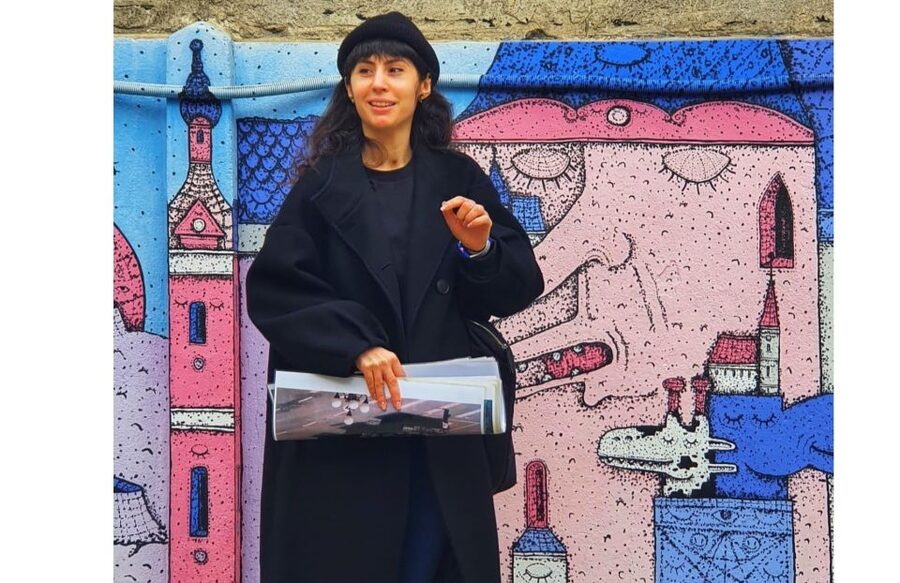
At about $47 per person for roughly 2.5 to 3 hours, the value depends on what you want. If you are chasing the most famous landmarks, this is not that kind of tour. But if you want context for the city you are walking through, the price is easy to justify.
Here is why. You get a live English guide, a small group size (max 10), and multiple guided stops, including a specialty coffee segment and time at specific locations like Facultatea de Sociologie și Asistență Socială, Epoque Hotel, Kraft Market, Calea Victoriei, and the Bram Stoker and Dracula mural.
The biggest value is the guidance on what to notice. Street art is everywhere once you start looking, but it is not automatically readable. The tour helps you understand themes, symbols, and the activism angle. That turns your photos into stories, not just images.
Also, you get flexibility built in. You can reserve and pay later, and cancellation is offered with a full refund if you cancel at least 24 hours in advance. Those things matter because plans in a new city often shift.
The kind of traveler who will love this most
This tour suits you best if you like art that comes with a point. You enjoy street-level culture, you want photos with meaning, and you like learning how locals interpret public space.
It is also a great first introduction to Bucharest. If your current plan is doing museums and historic squares, this balances things out. You will come away with a different mental map, one where murals and graffiti are treated as a voice inside the city.
Small-group format helps too. With up to 10 people, the guide can respond to questions and adapt to what your group focuses on. Several guides associated with the experience, like Elena and Anca, are praised for being enthusiastic and story-driven, with an interactive style that invites your interpretation before explaining theirs.
Should you book this alternative Bucharest street art tour
Yes, if you want to see Bucharest as a living conversation, not just a list of sights. I would book it if street art, graffiti, and public expression are already on your radar, or if you want a different way to understand the city in a short time.
Book something else if you want only classic, ticketed landmarks, or if you do not enjoy walking between multiple stops. This is an active outing, and the payoff comes from noticing details as you go.
If you do book it, bring comfortable shoes, show up ready to look closely, and treat the murals like messages. By the end, you will start spotting the kind of symbolism the guide trains your eyes to recognize, even after you leave the route.
FAQ
Where do I meet the tour guide?
Meet outside the Izvor Metro Station.
How long is the Bucharest alternative sightseeing tour?
The tour lasts about 2.5 to 3 hours.
What language is the guided tour in?
The live tour guide speaks English.
How many people are in the group?
The group is limited to a maximum of 10 participants.
Is there a coffee stop on the tour?
Yes. There is a coffee stop at Beans & Dots Specialty Coffee.
What should I bring or wear?
Wear comfortable shoes.
How much does it cost?
The price is listed as $47 per person.
More Tours in Bucharest


More Tour Reviews in Bucharest
More Bucharest Tours in Bucharest
Just added from Bucharest


3-Hour Experiences, compared.
 ★ 4.93-Hour Guided Tour of Communist BucharestFrom $29303 reviews
 ★ 4.93-Hour Dark History Tour with a LocalFrom $55301 reviews
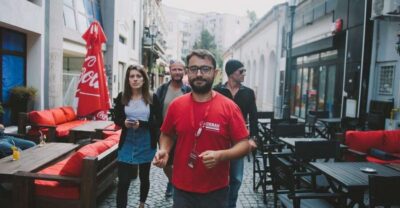 ★ 4.93-Hour Walking TourFrom $5377 reviews
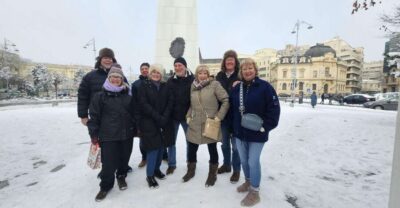 ★ 4.9Relics of Communism 3-Hour Walking TourFrom $4477 reviews
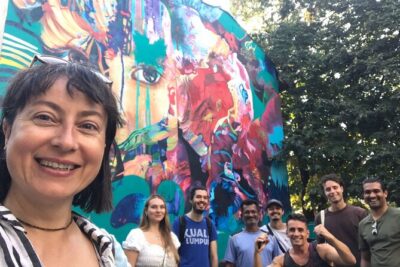 ★ 5.0Alternative Bucharest: 2.5-3 Hours Walking tour (Small groups)From $4832 reviews
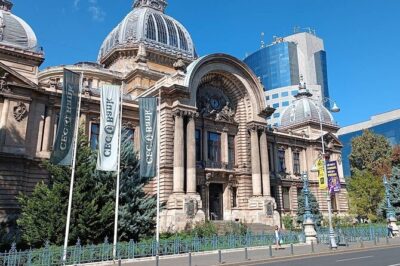 ★ 4.53h Bucharest Private Walking Tour – only your groupFrom $11912 reviews
 ★ 4.53h Bucharest Private Tour by CarFrom $10711 reviews
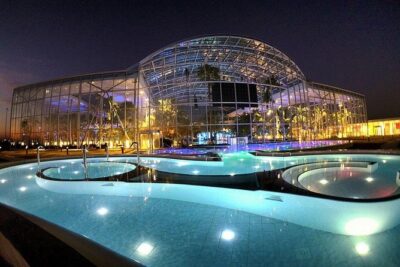 ★ 4.5Private Transfer and 3H Tickets to Therme BucharestFrom $11610 reviews
Browse the lists this tour appears in