
REVIEW · WALKING TOURS
Walking Tour of Bucharest City Center – Private Tour
Bucharest gets clearer when you walk it. This private 3-hour route links communist-era turning points with handsome historic streets, so you do not just see sights, you understand how the city changed. I like that you get a licensed English guide who can answer questions on the spot, plus bottled water to keep the pace comfortable.
What also works for me is the efficiency. Hotel pickup and drop-off mean less time stuck in transit, and more time actually inside the old center atmosphere. One thing to consider: it is still a walking tour, so plan for moderate walking time and comfort on uneven sidewalks.
Key Stops You’ll Experience on This Private Bucharest Walk
- Ateneul Roman interior (if available), plus murals that tie the building to Romanian identity
- Calea Victoriei, Bucharest’s grand avenue, with guide-led stops at landmark facades
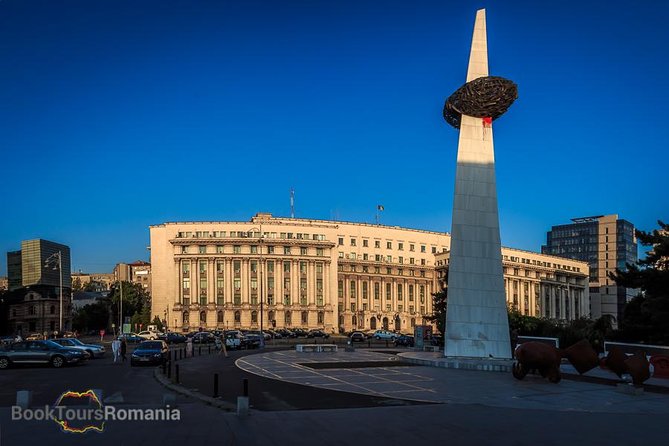
- Revolution Square, where December 1989 anti-communist protests ignited major change
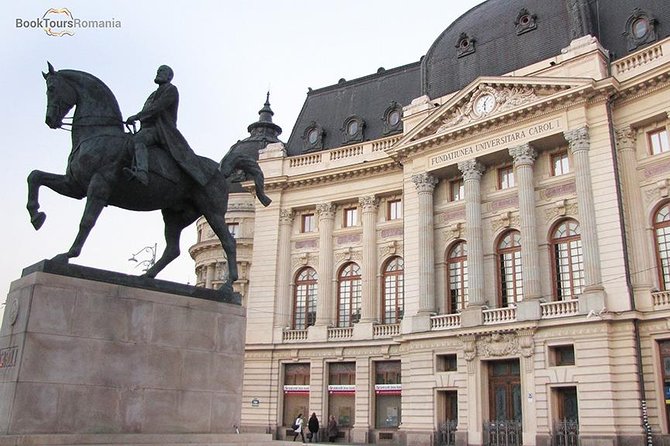
- Royal Palace area, focused on the monarchy and how it shaped modern Romania
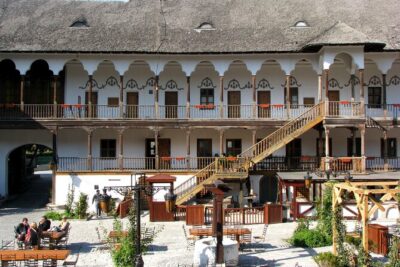
- Old Town and Lipscani, including Princely Court and the area around Manuc’s Inn
- Palace of Parliament, the massive political statement of the communist era
A Private 3-Hour Bucharest Walk With Hotel Pickup
If your time in Bucharest is short, this tour is built for that reality. You meet, get in motion, and cover a tight city-center loop in about three hours on foot. The big practical win is the hotel pickup and drop-off, which cuts down on the usual time tax of figuring out transit or matching bus lines.
Since it is private, you are not sharing your guide with other groups. That matters when the questions get specific, like how Bucharest’s communist period shows up in street layout, public buildings, and monuments. A review-focused takeaway here is clear: the best moments come when your guide can answer everything you ask, without rushing you out the door.
One more detail I appreciated is that the tour uses a full itinerary timing instead of a loose “wander around” plan. You still get foot-level atmosphere, but you are also more likely to hit the highlights you actually came for: Revolution Square, the Parliament area, and the Old Town streets.
Elsewhere in Bucharest, and up the valley
- Bucharest: Dracula’s Castle, Peles Castle, & Brasov Old Town★ 4.5 · 17,858 reviews
- Bucharest: Dracula Castle, Peles Castle & Brasov Old Town★ 4.6 · 10,891 reviews
- Bucharest: Dracula’s Castle, Peleș Castle & Brașov Day Trip★ 4.5 · 5,919 reviews
- Bucharest: Palace of Parliament Tickets and Guide★ 4.3 · 3,182 reviews
Ateneul Roman: When the Concert Hall Explains National Identity
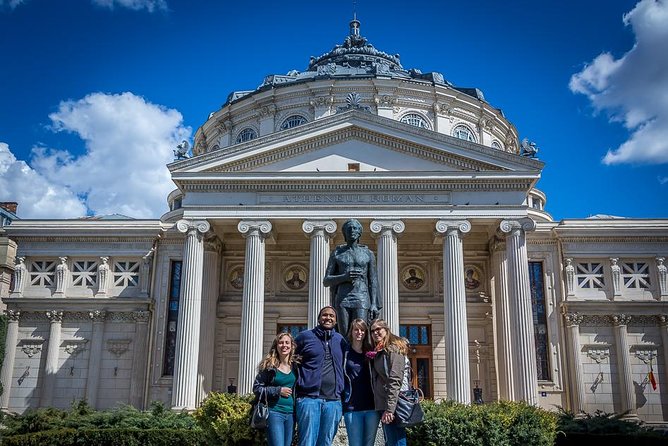
The tour starts with Ateneul Roman, a standout concert hall and one of Bucharest’s emblematic buildings. Even if you are not a classical-music person, this stop makes sense because the building is tied to Romanian culture, not just architecture.
There is a chance to visit the interior, and that is worth your attention. If interior access is available, you get brought into the Great Hall where history and identity are painted around the space. You can see how the building uses art to tell a story, not just to look impressive.
The admission ticket is included for this stop, which is a smart setup if you want to avoid extra “buy this ticket, queue there” moments later. Plan on about 30 minutes here, which is enough time to take it in without feeling like you are stuck in a museum hallway forever.
Downside to consider: interior access is dependent on availability. You might still get the outdoor impression, but the “inside murals tied to Romanian history” part is only if the interior visit is possible on your day.
Calea Victoriei on Foot: Victory Avenue and the Power of Details
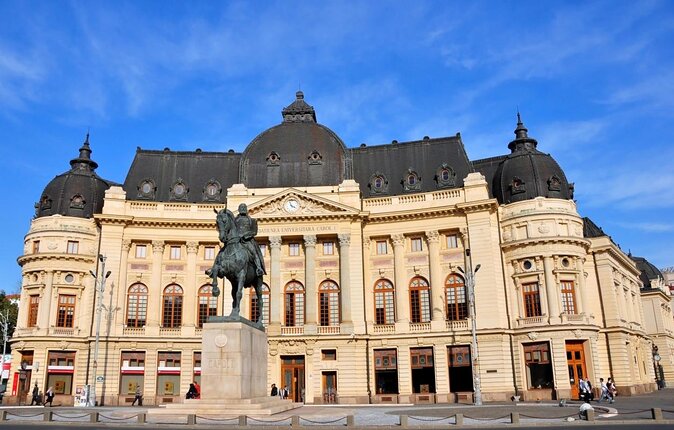
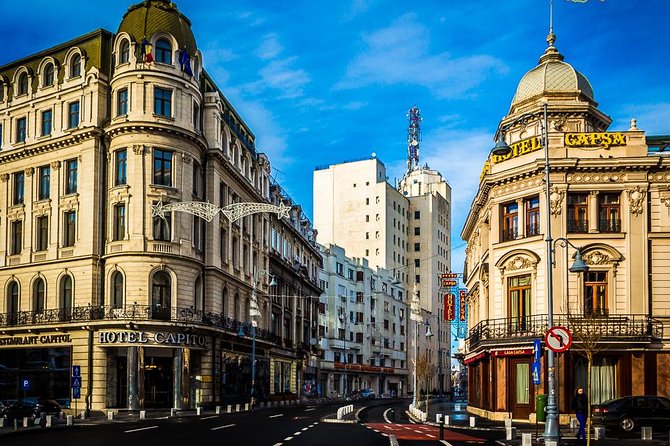
Next comes Calea Victoriei, often called Victory Avenue, and it is one of those streets that rewards slow walking. This is a grand boulevard with a reputation for prestige, and the tour gives you a reason beyond the view. It explains how the avenue became one of the city’s early paved routes, drawing wealthier residents, merchants, and major institutions.
Your guide points out important buildings along the way, including CEC, the Palace of the National Military Circle, Capsa House, the Athenaeum, and the Telephone Palace. The names alone help you see the street as a map of power and influence, not just an address line.
One of the more interesting bits is the talk about hidden connections. The walk focuses on hidden passages that link to nearby streets. That sounds like trivia until you realize it changes how you experience the city. You start noticing how Bucharest’s center can feel ordered at a distance but full of shortcuts and side streets when you get close.
This segment runs about 30 minutes, and admission here is free. It is also a nice decompression stop after Ateneul Roman, because you get a moving, outdoor rhythm instead of sitting with the same walls and angles for too long.
Revolution Square: December 1989 and the Start of Anti-Communist Change
Revolution Square is one of those places where Bucharest’s political story turns from background noise into real-world events. Your stop here centers on communist influence in Romania and how anti-communist revolution started in December 1989.
This is not a generic explanation. The tour frames the square as a specific location where the shift began, so you connect the setting to the dates instead of reading it as textbook geography. For me, that makes the monuments feel less like random statues and more like time markers.
The practical timing is about 30 minutes. That is enough time to orient yourself, understand the sequence of ideas your guide is presenting, and then move on before the square starts to blend into other big-city scenes.
Admission is free at this stop, which is always a plus if you are trying to manage costs while still covering major history sites. The only thing to watch is your pace. Because it is an outdoor stop, you will feel the weather. If it is hot or windy, your bottled water and smart shoes will earn their keep.
The Royal Palace Stop: Monarchy, Then the Modern Shape of Romania
After Revolution Square, the tour moves to Palatul Regal, the Royal Palace area. This is where the tour adds another political layer: the history of Romania’s monarchy and how it shaped the path to modern Romania.
This stop works best when you think of it as a bridge. Bucharest is not just one story. It shifts from monarchy-era legitimacy to later regimes that reshaped everything from city planning to public symbolism. Even with only about 30 minutes, your guide ties the Royal Palace to how the country’s fate evolved.
Admission at this point is free, so you are paying in time and attention, not tickets. The value is in the interpretation. Your guide can point out what to notice and what to ignore, so you do not end up with “big building seen, next please” energy.
If you like history that explains cause and effect, this stop is a good match. If you prefer pure architecture without context, you might still enjoy it, but you may want to lean into the guide’s narrative and not treat it as a quick photo stop.
More of Bucharest on foot
Old Town and Lipscani Street: Princely Court, Manuc’s Inn, and Caru cu Bere
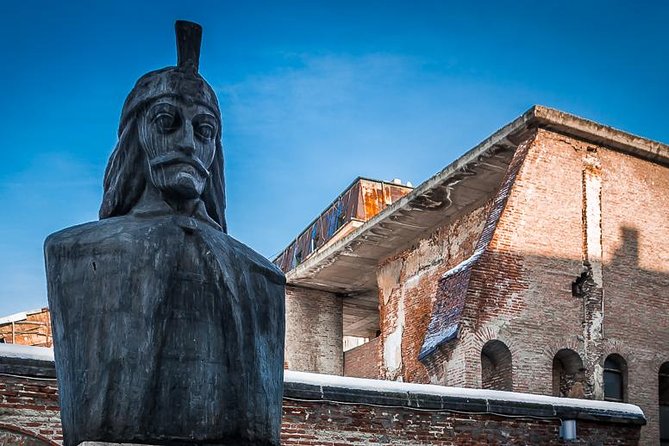
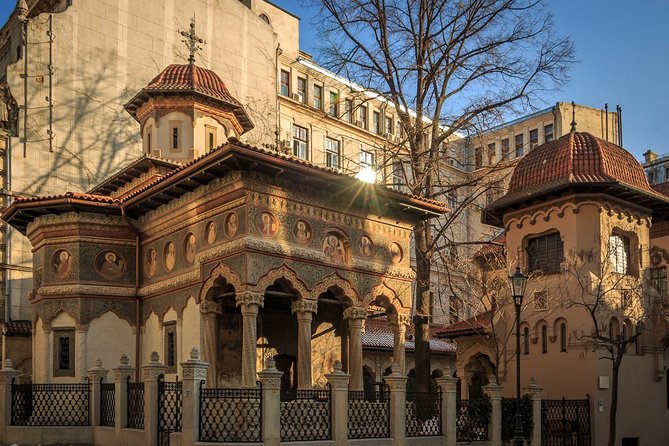
This is where the tour shifts from political monuments to human-scale city life. The Old Town segment starts at the Princely Court from the 16th century, with parts that can still be visited. The tour also highlights a Dracula connection, referencing why Dracula’s statue guards the area. Even if you know the story already, it is a fun way to make the site memorable.
Then you move to Manuc’s Inn, described as the last caravanserai of South-Eastern Europe. It is framed as an architectural wonder among inns from that period. This matters because it gives you a reason to look past the tourist energy. You learn to see the building as a historical hub for movement, trade, and travelers.
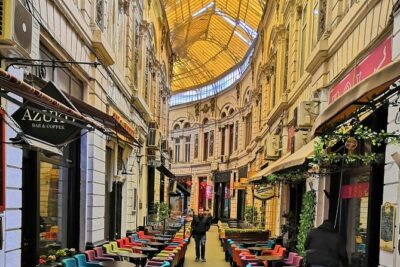
From there, the itinerary continues into Lipscani Street, one of Bucharest’s key commercial districts, stretching from the Middle Ages to the early 19th century. The tour places it on the timeline, so you understand why this area feels like a layered neighborhood rather than a single-age “old town theme.”
You also get a particular detail that helps you picture the place instantly: the small square with the Capitoline Wolf statue feeding the twins Remus and Romulus. That kind of icon makes it easier to remember where you are, because it feels like a symbol you can anchor to.
The walk includes a stop at Caru cu Bere, a famous historic venue in the area. Even if you do not plan to eat during the tour (meals are not included), it is still a good pause point to take photos, reset, and let your guide point out where to go next for snacks or a drink later.
This whole Old Town portion runs about one hour. It is long enough to feel like you actually touched the neighborhood, not just walked its border. If you are walking in summer heat, this is also where you will appreciate having already handled the heavier monument stops first.
Palace of Parliament: The Heaviest Building and the Human Stories Around It
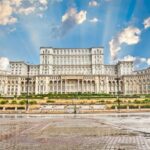
The finale is the Palace of Parliament, the kind of building that makes your brain pause. This is where the tour focuses tightly on how communism shaped the city and Romania as a country. You also get context around Nicolae Ceaușescu, and you hear construction-related stories explained in a way that connects the building to how people experienced that era.
One line you cannot miss here is that it is described as the heaviest building in the world. Whether you care about that superlative or not, it signals the intent behind the architecture: power made visible, at huge cost.
Your guide uses local understanding to explain the implications of the communist period for Romanian people. That is the part that makes this stop feel more than “look at big building, done.” You leave with a clearer sense of why this monument is still discussed and why it still affects how people talk about the past.
This stop is about 30 minutes, and admission is free as part of the tour package. Still, do not assume photography is unlimited. A photo or video tax is not included, so if you plan to film or shoot a lot, budget for that kind of fee at the site.
If you love political architecture and can handle big civic monuments, this is the highlight to stay energized for. If you prefer small churches and quiet streets, you might find it overwhelming at first. Either way, the guide’s framing is what helps you make sense of it quickly.
Price and Value: Is $112.29 Worth It?
At $112.29 per person, you are paying for a focused private experience, not just a stroll. The best value angle is how the tour packages what often costs extra time or money on your own: hotel pickup and drop-off, a licensed English guide, and bottled water.
There is also a smart mix of included and free stops. Ateneul Roman has an admission ticket included, while other stops on the route are free. That matters if you are trying to build a budget that does not turn into surprise ticket after surprise ticket.
Another value factor is that it is private. For many people, the cost difference from a group walking tour is justified by two things: less time spent waiting, and more time spent asking questions. The reviews strongly point to this, especially the quality of answers and the way the guide responds to what you want to know.
What about the “private tour” drawback? You will not get an offhand group conversation. You will get your guide’s attention and your own pace, which is great for clarity, but it means you will need to speak up if you want your route personalized within the given stops.
My practical advice: if Bucharest is a quick stop for you and you want the key city center storyline without planning a whole day, this price can feel fair. If you have lots of time and you enjoy building your own route, you might compare it to free self-guided options. But you are still likely to spend that savings in time, transport, and figuring out what matters.
How to Get the Most Out of It (Without Overplanning Your Day)
This tour is timed tightly, which is good. It also means you should show up ready to walk. Wear comfortable shoes with solid grip, and bring a layer in case the weather shifts.
Since it is about city center highlights, I recommend thinking of it as two storylines running in parallel. One is political history: Revolution Square and the Palace of Parliament. The other is street-and-neighborhood identity: Calea Victoriei and Old Town Lipscani. When you keep that in mind, every stop clicks faster.
You should also plan your expectations for the guide. The value is not just the facts. It is how the guide helps you notice details, especially when you ask follow-up questions. If your interest is art, statues, or symbolism, this tour is a good place to ask what things mean. Even in areas not described as “art stops,” the guide can connect the visuals to the broader story.
If you want photos, give yourself a minute at each stop for a quick shot, then listen first. The timing is tight, so chasing the perfect photo before you understand what you are looking at can leave you with lots of images and less meaning.
Who This Tour Fits Best
This private walking tour fits best if you fall into one of these categories:
- You have limited time and want a clear Bucharest highlights loop in about three hours
- You prefer a guide who can answer questions in English and adapt to what you care about
- You want both political context and city atmosphere, not just one or the other
- You like architecture and street-level details, especially on Calea Victoriei and in the Old Town
It is less ideal if you have very low walking tolerance or if you want to spend long stretches inside buildings. Most stops are brief and focused, with around 30 minutes each except Old Town at one hour.
Should You Book This Private City Center Tour?
Yes, I would book it if you want to understand Bucharest fast, without wasting half a day on planning. The hotel pickup and drop-off alone makes it easier, and the private guide makes it more than a checklist walk.
Book it especially if your must-see list includes Revolution Square, the Parliament area, and the Old Town streets around Lipscani. You will get a guided storyline that helps the city feel connected instead of random.
Skip it only if you have plenty of time, you enjoy building your own route, and you are happy reading history in your own pace without a live guide.
FAQ
How long is the Walking Tour of Bucharest City Center?
It lasts about 3 hours.
Is this a private tour?
Yes. Only your group participates.
What is included in the tour price?
Hotel pickup and drop-off, a licensed English speaking guide, bottled water, and an admission ticket included at Ateneul Roman.
Are any of the other stops ticketed?
Some stops list admission as free, including Calea Victoriei, Revolution Square, the Royal Palace area, Old Town, and the Palace of Parliament.
What is not included?
Photo or video tax, meals, and travel insurance are not included.
What should I expect for walking and fitness?
It is for travelers with a moderate physical fitness level.
What time does the tour operate?
The listed opening hours are 8:00 AM to 4:00 PM, Monday through Sunday.
When should I cancel to get a full refund?
You can cancel for a full refund up to 24 hours in advance of the experience start time.
More Tours in Bucharest



More Tour Reviews in Bucharest
More Bucharest Tours in Bucharest
Just added from Bucharest


Walking Tours, compared.
 ★ 4.9City Highlights Guided Walking TourFrom $211,482 reviews
 ★ 5.0Bucharest Highlights Walking TourFrom $21469 reviews
 ★ 4.9Ghost Stories & Romanian Mythology Walking TourFrom $35287 reviews
 ★ 4.9Guided Walking Tour with Romanian SnackFrom $45228 reviews
 ★ 5.0Best of Bucharest | Private Walking TourFrom $314199 reviews
 ★ 5.0Walking Tour- Delightful Bucharest (Highlights, Stories, Sights)From $22145 reviews
 ★ 5.04h Bucharest Private Tour (2h by Car and 2h Walking in Old Town)From $10090 reviews
 ★ 5.0Bucharest 3-hours Walking Tour (Small Groups)From $5485 reviews
Browse the lists this tour appears in