
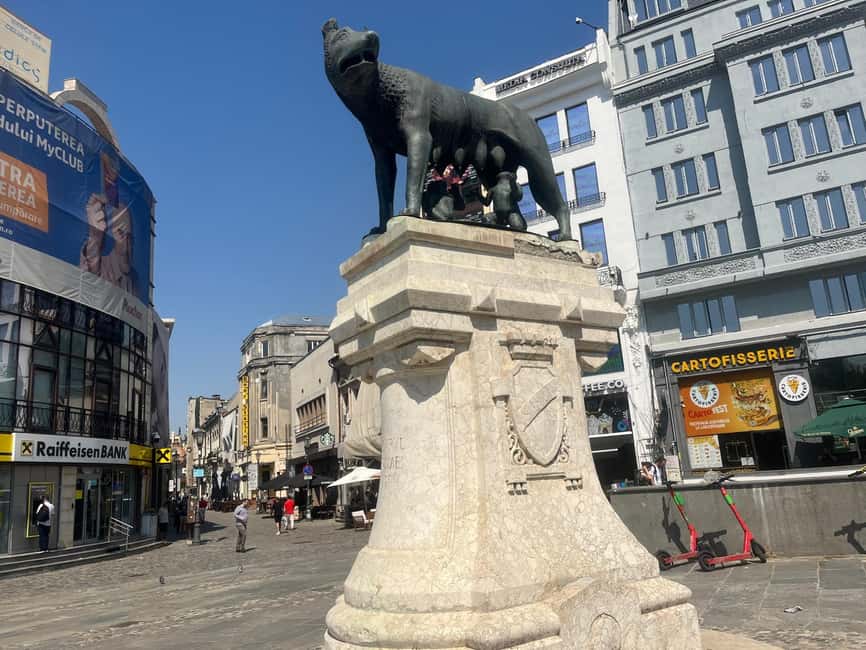
REVIEW · WALKING TOURS
Bucharest: Walking tour with Italian speaking guide for small groups
Bucharest makes sense on foot. This 3-hour small-group walk uses an Italian-speaking guide to turn landmark stops into clear stories of the city’s past and present.
What I like most is the small-group pace and the Italian-language guidance that keeps the details understandable as you move.
One consideration: you will be walking a fair bit in central Bucharest, so pack comfortable shoes and plan for uneven sidewalks.
Key highlights at a glance
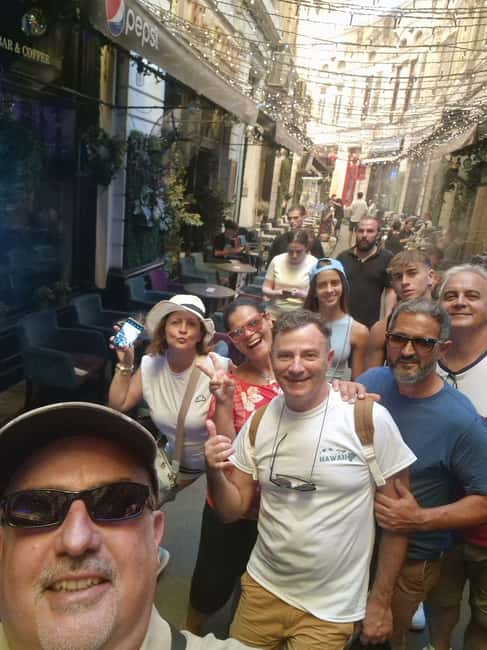
- Caru’ cu Bere kicks off the tour in the right mood, so you start with local atmosphere, not just instructions.
- Italian-speaking guide, small-group setting, which makes it easier to ask questions and follow along.
- Old Town priorities stay practical, including Lipscani area highlights and fast, focused looks at key sites.
- Revolution Square and the Romanian Athenaeum give real context, linking architecture to the end of the Ceaușescu era.
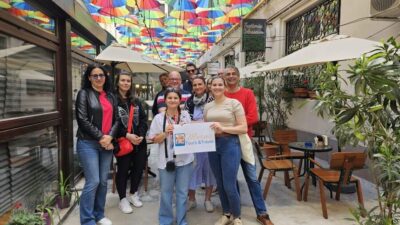
- Photo stops are built in, especially Umbrellas Street and Cărturești Carusel.
Elsewhere in Bucharest, and up the valley
- Bucharest: Dracula’s Castle, Peles Castle, & Brasov Old Town★ 4.5 · 17,858 reviews
- Bucharest: Dracula Castle, Peles Castle & Brasov Old Town★ 4.6 · 10,891 reviews
- Bucharest: Dracula’s Castle, Peleș Castle & Brașov Day Trip★ 4.5 · 5,919 reviews
- Bucharest: Palace of Parliament Tickets and Guide★ 4.3 · 3,182 reviews
Why This Bucharest Walk Works in About Three Hours
This tour is built for people who want structure without feeling rushed. You get a guided route that strings together the places that most visitors see, but with context you might miss if you go solo.
What really helps is the format. It is a small group walking tour, and that matters in Bucharest because you are moving through busy streets and quick turns. Instead of waiting around, you keep moving, and each stop has a clear reason to exist in the story.
And yes, you start in a spot that feels unmistakably Bucharest. Caru’ cu bere is a well-known landmark, and it sets a fun tone before you head into monasteries, inns, passages, and squares.
Starting at Caru’ cu Bere, Then Into Old Town and Lipscani Street
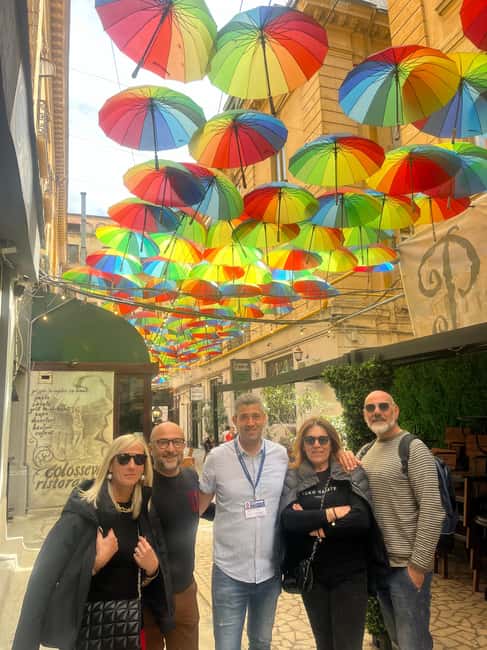
You meet at Caru’ cu bere on Stravopoleos Street 5. The guide waits in front and is easy to spot with a professional identification card, so you do not waste time hunting.
From there, the route pushes you into the Lipscani Street area, the Old Town section famous for nightlife. Even if you are not chasing late-night energy, it is a smart starting point because you get the mix of historic streets and everyday city life quickly. I like that you are not only seeing buildings from the outside, you are learning what to look for and why those corners mattered.
Expect short guided moments and quick visits at several highlights. This style works well when your goal is to orient yourself fast, then later return to the spots that you like most.
Stavropoleos Orthodox Monastery and Manuc’s Inn: Two Contrasts in One Walk
A major early stop is the Stavropoleos Orthodox Monastery. Even with a brief visit, it tends to make people slow down, because monastery spaces often feel quieter than the street outside. The guide’s job here is key: you are not just looking, you are hearing what the monastery represents in the wider Bucharest story.
Next up is Manuc’s Inn. This is one of those places that rewards attention to details. Inns in Bucharest are more than old lodging buildings, they are tied to commerce, travelers, and the way the city has hosted people coming through it for centuries.
The best part of pairing these two stops is contrast. Monastery first, inn second, and suddenly you see Bucharest as more than a single vibe. It is religious life and everyday movement, both written into stone.
National Bank and Royal-Era Architecture Along Calea Victoriei
As the walk continues, you shift from Old Town energy toward the more formal face of Bucharest. One key stretch is Calea Victoriei, often described as Bucharest’s most elegant boulevard. It is lined with historic buildings, fashion stores, and places to eat, which makes it a good place to understand how the city wants to be seen.
Then you visit the National Bank of Romania. With a guided look that is short but focused, you get a chance to connect architecture to power and finance, which is hard to do on your own. This stop is useful if you like learning what institutions looked like in their physical form, not just in textbooks.
A practical note for you: this portion of the route is less about hidden corners and more about seeing the city’s “big picture” in a walking-friendly way. If you prefer your tour strictly photo-stops, you still get photos, but the emphasis is on understanding the look and feel of official Bucharest.
More of Bucharest on foot
Pasajul Villacrosse and Umbrellas Street: Small Details With Big Personality
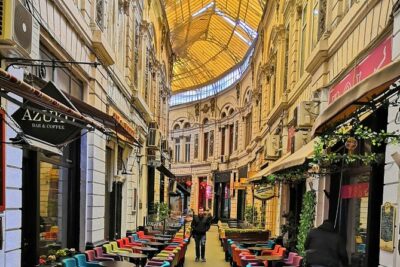
One of the more fun stops is Pasajul Villacrosse, a covered passage that feels like it belongs to another rhythm of Bucharest. Passages like this are great because they show the city’s in-between spaces, the corridors that connect streets while offering a different atmosphere underneath.
Then comes Umbrellas Street, a photo-friendly highlight with a playful look that contrasts nicely with the more serious sites around it. This is the kind of stop that can turn your camera roll into a real memory, not just another “I was here” shot.
The value here is balance. You are not only walking from monument to monument. You are also learning that Bucharest has personality in the smaller, more surprising places. Even if you only have limited time, these stops help you remember the city as a lived-in place, not a museum.
Revolution Square and the Romanian Athenaeum: From Dictatorship’s End to a Cultural Voice
If you want one “anchor” moment in the tour, it is Revolution Square. The guided explanation focuses on the end of Ceaușescu’s dictatorial regime in December 1989, and it helps you read the surrounding buildings as a timeline in stone.
What I like about this stop is the way the guide connects architecture to political change. You are not just standing in an open space. You are learning how different eras left their marks, including institutions and major cultural structures nearby.
From there, you move to the Romanian Athenaeum, one of the most recognizable symbols of Bucharest’s cultural identity. You get a guided visit focused on understanding why it matters and how it fits into Romania’s broader story. Even if you have seen photos before, hearing the context while standing near it changes how you look at the building.
If you are the type who likes your travel with meaning, this is the part you will talk about later.
Cărturești Carusel and the Art of a Quick Photo Break
Along the way, you get a stop at Cărturești Carusel, with time for photos. This works well because the tour does not overload you with nonstop sightseeing. It also gives you a break from walking while still adding something characterful and very Bucharest.
Short photo stops are not just “filler.” They give your brain time to reset between heavier sites like squares and historic civic buildings.
If you plan your own day after this tour, you might find it useful to note which photo stop or street corner you liked most. Those are often the places you will want to return to when you have more time.
Price and Group Size, Is $35 Per Person Good Value?
At $35 per person for a 3-hour walking tour, the value is in the combination: an Italian-speaking guide plus a route that covers multiple major highlights without you needing to map every turn.
You should think of it like buying time and clarity. If you try to stitch together these sites yourself, you can do it, but it takes research, planning, and constant re-orientation while you are walking. Here, you get the route and the explanations together.
The small-group element is where the price starts to feel fair. With fewer people, the guide can keep things moving while still giving you enough attention to understand what you are seeing.
Also, several guides have been mentioned positively in the feedback, including Filippo Di Cataldo and Giuseppe, with comments praising friendly delivery and strong historical explanations. That is exactly what you want from a tour like this, because language and clarity are half the experience.
The Walking Style, Timing, and What to Expect on the Streets
This is a walking tour focused on highlights, with each stop typically handled in a short, manageable window. That means you get to see a lot, but you do not linger for long inside every building.
For most people, that is a plus. Three hours in central Bucharest can fly by, and this format keeps you from spending the whole time in transit between sites. You also leave with a mental map, not just photos.
Wear shoes you can trust. The guide may send you down uneven sidewalks and through areas with street crossings. The tour is listed as wheelchair accessible, but you should still expect real street surfaces in the Old Town and around central landmarks.
One more thing: the tour rules include no alcohol or drugs, and no audio recording. If you like taking a quick video or making recordings, plan on sticking to what is allowed and focus on being present for the guide’s spoken explanations.
Who This Tour Suits Best, and Who Might Prefer Another Option
This tour is a great fit if you want a structured overview of Bucharest’s major districts, including Old Town, formal boulevards, and landmarks tied to Romania’s recent history. It also suits you if you specifically prefer an Italian-language guide and like hearing stories while you walk.
It may not be ideal for very small kids, since it is marked as not suitable for children under certain ages, including children under 2 years, under 3 years, and babies under 1 year. It is also not suitable for hearing-impaired people, so if you need accommodations, you will want to check other options.
If you are a hardcore architecture lover who wants long visits inside every building, you might find the shorter guided looks a bit brief. Still, you would likely use this tour as your first pass, then return on your own to whatever grabbed you most.
Should You Book This Italian-Language Small Group Bucharest Walk?
Book this tour if your priority is getting oriented quickly and leaving with a clearer grasp of how Bucharest’s streets, churches, squares, and institutions connect. For $35, you are paying for a guided route, quick visits, and Italian explanations that help you understand what you are seeing on the move.
Skip it or compare alternatives if you dislike walking, want long interior time at major sights, or need accessibility support beyond what is stated. Also, if you are traveling with very young children, double-check suitability based on your child’s age.
If you want one first tour in Bucharest that covers the highlights with stories you can actually use while exploring later, this is a smart choice. You will come away with a working map of the city, plus enough context to enjoy the details when you return.
FAQ
How long is the Bucharest walking tour with an Italian speaking guide?
The tour lasts 3 hours.
Where does the tour start and where does it end?
You meet the guide in front of Caru’ cu bere (Stavropoleos Street 5, Bucharest) and the tour ends back at the same meeting point.
What language is the guide?
The tour includes a live guide in Italian.
Is food included in the price?
No. Food and beverages are not included.
How much does the tour cost?
The price is $35 per person.
Is the tour wheelchair accessible?
Yes, it is listed as wheelchair accessible.
Are there age limits or restrictions for children?
The tour is marked not suitable for children under 2 years, under 3 years, and babies under 1 year.
More Tours in Bucharest




More Tour Reviews in Bucharest

More Bucharest Tours in Bucharest
Just added from Bucharest


Walking Tours, compared.
 ★ 4.9City Highlights Guided Walking TourFrom $211,482 reviews
 ★ 5.0Bucharest Highlights Walking TourFrom $21469 reviews
 ★ 4.9Ghost Stories & Romanian Mythology Walking TourFrom $35287 reviews
 ★ 4.9Guided Walking Tour with Romanian SnackFrom $45228 reviews
 ★ 5.0Best of Bucharest | Private Walking TourFrom $314199 reviews
 ★ 5.0Walking Tour- Delightful Bucharest (Highlights, Stories, Sights)From $22145 reviews
 ★ 5.04h Bucharest Private Tour (2h by Car and 2h Walking in Old Town)From $10090 reviews
 ★ 5.0Bucharest 3-hours Walking Tour (Small Groups)From $5485 reviews
Browse the lists this tour appears in