
REVIEW · WALKING TOURS
Bucharest: private and exclusive Italian walking tour
Bucharest looks different with an Italian guide. This 2.5-hour private walk connects the past and the future with a certified Italian guide, swapping generic stops for street-level stories in places most people miss. You can also set the tempo, since the route is flexible to your needs.
I really like the private, exclusive setup, because it feels geared to conversation, not a rushed group shuffle. I also like the stop choices, from Caru’ cu Bere to the Romanian Athenaeum, with side streets and passages like Pasajul Villacrosse adding texture.
The main drawback to consider is physical fit. It’s listed as wheelchair accessible, but it’s also marked not suitable for people with mobility impairments, and it’s not suitable for hearing-impaired people, so check first if you have any accessibility concerns.
Key things that make this tour worth your time
- Italian-only private guide with certified expertise and a story-first approach
- Flexible pacing so you can slow down for photos or ask questions
- Old Town to Revolution Square in one smooth arc, with practical time spent at each spot
- Architecture-led storytelling, not just names and dates
- Memorable Bucharest highlights, like Caru’ cu Bere and the Romanian Athenaeum, plus quieter corners
Elsewhere in Bucharest, and up the valley
- Bucharest: Dracula’s Castle, Peles Castle, & Brasov Old Town★ 4.5 · 17,858 reviews
- Bucharest: Dracula Castle, Peles Castle & Brasov Old Town★ 4.6 · 10,891 reviews
- Bucharest: Dracula’s Castle, Peleș Castle & Brașov Day Trip★ 4.5 · 5,919 reviews
- Bucharest: Palace of Parliament Tickets and Guide★ 4.3 · 3,182 reviews
A private Italian story walk, not a checklist
If you want Bucharest to feel like a real city, this format helps. A private guide means the walk is less about hitting landmarks and more about understanding why the streets look the way they do. You’re guided in Italian, and the pacing is designed to match you, whether you want more explanation or more wandering.
I like tours that treat buildings as clues. Here, the focus is architecture and the human stories attached to it, from religious sites to famous squares to elegant streets. And because it’s private, you can ask the obvious questions, or the not-so-obvious ones, without feeling like you’re slowing everyone else down.
Price-wise, $53 per person for 2.5 hours is in the midrange for a private guide. What makes it feel fair is that you’re not paying for one or two icons. You’re getting a connected route through multiple major areas, with short guided visits built in, so you leave with a sense of the city’s timeline instead of isolated photos.
Starting at Caru’ cu Bere, where Bucharest shows its face
You start at Strada Stavropoleos 5, in front of Caru’ cu Bere. The guide waits there with a professional identification card, and that matters more than you’d think. On a first walk in a city, it’s one less thing to manage.
Caru’ cu Bere is a classic Bucharest landmark, and you get a short guided introduction (about 10 minutes). Even if you only pass through quickly, it’s the right opening because it sets the tone. You’ll get a sense of how Bucharest presents itself: a city that learned to reinvent its image while still keeping old textures visible.
Then you transition into Old Town’s atmosphere, where you can shift from a landmark mindset into a neighborhood mindset. That shift is one reason this tour works well. It teaches you how to look, not just where to stand.
Stavropoleos Monastery, then Manuc’s Inn for the city’s older pulse
From Caru’ cu Bere, the tour moves to Stavropoleos Monastery, with a guided visit of around 15 minutes. Monasteries like this are more than pretty architecture. They help you understand Bucharest’s older layers, the religious roots of community life, and the way faith shaped local identity over time.
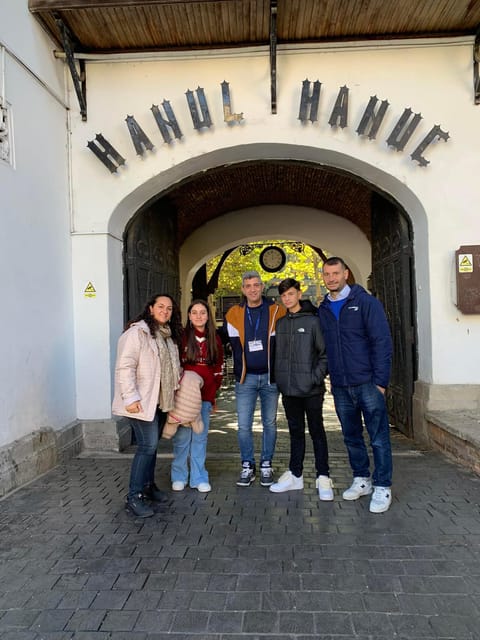
After that, you head to Manuc’s Inn (about 15 minutes guided). In a city tour, inns can feel like random stops, but here they make sense. They connect streets to trade and travel, showing how Bucharest functioned as a crossroads, not just a capital.
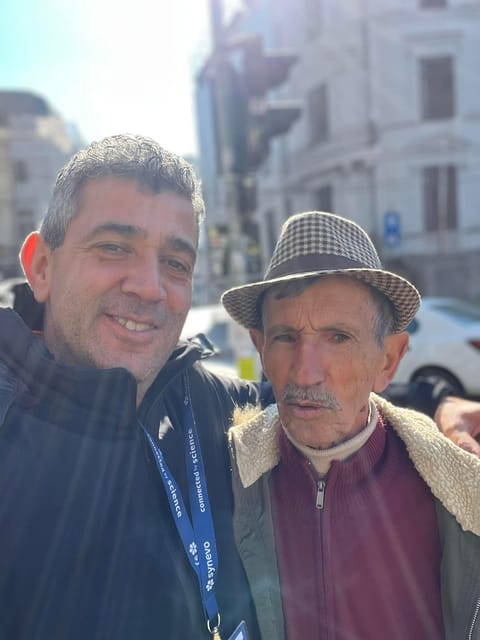
I also appreciate that the guiding style seems built around explanations you can actually use. In feedback, the Italian guide Filippo Di Cataldo, often referred to as Beppe or Giuseppe, is praised for precise explanations and for pointing out details that change how you see a place. That kind of guidance matters most in stops like this, where the value is in what you learn, not in a single photo angle.
A short stretch of street stories before the New Saint George Church
There’s a brief in-between segment where the tour keeps the rhythm moving from one story to the next. This is where you often hear the kind of commentary that helps you connect neighborhoods. It’s also practical. After a couple of guided visits, a short transition keeps you from feeling like you’re being lectured nonstop.
Next comes The New Saint George Church, with about 15 minutes for your visit. Churches often anchor cities in a way squares and boulevards cannot. Here, it helps you keep one thread of the story running while you move through a city that has changed governments, styles, and priorities over the decades.
If you’re traveling with someone who thinks architecture tours are boring, this church stop is usually a good turning point. It’s still visual, but it also invites context. You’ll likely come away thinking about why certain styles survived, and why others were replaced.
More of Bucharest on foot
Cărturești Carusel for photos, then Old Town’s bigger picture
You’ll stop at Cărturești Carusel for a photo moment (around 10 minutes). This is the kind of stop that breaks up the heavier historical sites without feeling random. It gives you a visual reset and a chance to capture Bucharest’s more playful, modern-cultural side.
Then the walk continues with Old Town, Bucharest, with a guided overview of about 10 minutes. Old Town is where you can feel Lipscani Street’s energy even during the day. The area is well known for nightlife, but the tour helps you see beyond that stereotype. You learn to connect the nightlife streets to the monasteries, banking buildings, and historic structures that give the whole area its character.
This section is also where you’ll get the most benefit from comfortable shoes and patience. The area is compact, but it’s still real city walking, with stops that require you to stand and look closely.
National Bank of Romania and Pasajul Villacrosse, style with a purpose
The National Bank of Romania is next for a guided look (about 10 minutes). It’s a perfect example of why guided architecture matters. Financial buildings tend to look impressive from a distance, but a guide can help you read what the building is saying, how it reflects periods of growth, and how that story fits into what you’ve already seen.
After that, you’ll visit Pasajul Villacrosse (about 10 minutes guided). Passages like this are where Bucharest feels like a city of micro-worlds. The value is in the shift from streets to covered corridors, from wide views to details. If you like wandering, this stop usually makes people happy because it’s built for slow looking.
I find passages especially useful on short walking tours. They add variety without adding distance. And because you only have 2.5 hours total, this kind of stop planning is smart.
Calea Victoriei and the Umbrellas Street, Bucharest in full fashion mode
Then the tour heads to Calea Victoriei (about 15 minutes guided walking). This boulevard is known for elegance, historic buildings, high-fashion storefronts, and bistros, and the guide uses that setting as a springboard for stories. It’s one thing to see a grand street. It’s another to understand what made it grand and why it keeps that aura.
Next comes The Umbrellas Street for a photo stop (around 10 minutes). You’re not there long, and you don’t need to be. The point is to capture a pop of visual whimsy within an otherwise story-heavy route. It also helps you remember that Bucharest isn’t only about monuments. It’s also about how people decorate, adapt, and make public space feel human.
Short photo stops can sound like filler, but here they act like punctuation. Without them, the whole tour can start to feel like a lecture. With them, it feels like a guided walk through moods.
Revolution Square and the Romanian Athenaeum, where dates start to mean something
Revolution Square is a centerpiece, with about 20 minutes guided. It’s tied to the end of Nicolae Ceaușescu’s dictatorial regime in December 1989. That means the buildings around you are not just scenic backgrounds. They become part of the story, showing Romania’s different historical periods through architecture and urban symbolism.
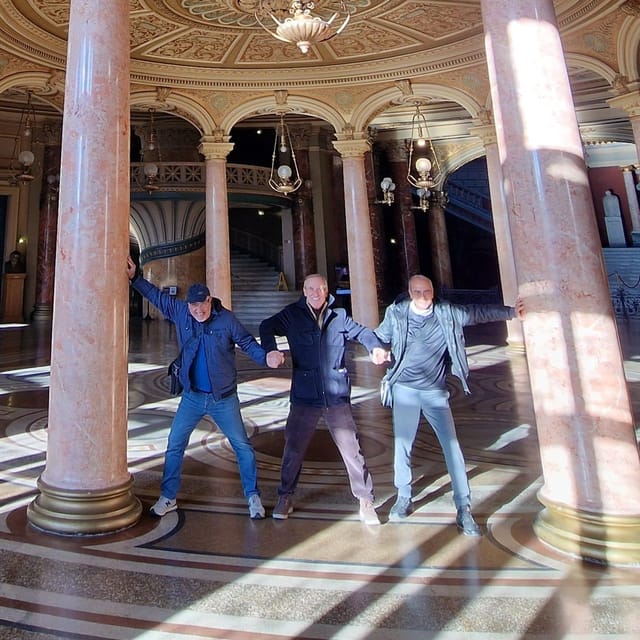
You’ll also get a guided look at the Romanian Athenaeum (about 15 minutes). This is the kind of building that’s famous for a reason, but a guide helps you understand why it stands as a cultural signal, not only a beautiful façade. The time spent here is short, but it’s enough to connect the square’s political shift to the country’s cultural voice.
What I appreciate is that the tour doesn’t treat these stops as isolated dramatic moments. It builds toward them. By the time you reach Revolution Square, you’ve already seen the religious and civic layers that make the later history feel grounded in place.
Weather proofing and pacing, what the best guides do
One practical reason this tour gets strong marks is how the guide handles real-world conditions. In feedback, Giuseppe adjusted well even during an intense day of rain, keeping the experience comfortable and engaging. That’s the difference between a tour that works on paper and one that works outside your hotel door.
Pacing also matters. The tour is structured around multiple short guided blocks, so you’re not stuck listening for an hour straight. At the same time, the route stays coherent. You’re moving from Old Town depth into grand civic space, so you’re not constantly reorienting yourself mentally.
This is also a good tour if you want something immersive but not exhausting. Two and a half hours is long enough to learn, but short enough to still enjoy the rest of your day in Bucharest on your own.
Price, inclusions, and what you should plan around
You pay $53 per person for a private Italian walking tour lasting about 2.5 hours. You’re not just buying a map and a direction. You’re buying a guide who can explain the meaning behind the architecture and the stories behind corners you might otherwise walk past.
What’s included is the private exclusive tour in Italian and a certified tour guide in Italian. Food and beverages are not included, and personal expenses are on you. So if you’re the type who wants a drink or a pastry after, plan it, don’t expect it to be built in.
The simplest planning tip is to schedule light afterward. With stops that include churches, squares, and architectural looks, your brain stays busy. Give yourself some easy time to digest what you learned.
Who this tour is best for
This is a great fit if you want to see Bucharest with context, not just speed. It’s especially strong for Italian-speaking travelers who prefer a private format and want a guide to shape the experience through explanation.
It’s also a smart choice if you care about architecture and urban stories, because that’s the theme tying the route together. You’ll likely enjoy the balance of major landmarks like Caru’ cu Bere and the Romanian Athenaeum, plus quieter, more intimate spaces like Stavropoleos Monastery and Pasajul Villacrosse.
If you have mobility limitations, you should double-check fit before booking. The tour is listed as wheelchair accessible, but it is also marked not suitable for people with mobility impairments, which is a sign to ask the provider how the route works in practice for your needs.
Should you book this Italian walking tour in Bucharest?
I’d book it if you want your first Bucharest experience to feel organized, personal, and story-driven. The private Italian guide format, the flexible pacing, and the mix of civic, religious, and street-level sites make it a good way to understand the city fast without turning it into a rushed sightseeing day.
I would not book it blindly if accessibility or hearing considerations are central for you. The tour is marked not suitable for hearing-impaired people, and its accessibility information is mixed, so verify details early.
If you can handle comfortable walking and you’re excited by architecture-led storytelling, this is a strong value. You’ll leave with a clearer sense of Bucharest’s timeline, plus a handful of places you’re unlikely to find on your own in a satisfying way.
FAQ
Where do I meet the guide for this Bucharest tour?
You meet the guide in front of Caru cu bere (Stavropoleos Street 5, 030081, Bucharest). The guide will be recognizable by a professional identification card.
How long is the Italian walking tour?
The duration is 2.5 hours.
What language is the tour guide speaking?
The tour is in Italian with a certified tour guide.
What is included in the price?
Included are a private and exclusive tour in Italian and a certified tour guide in Italian.
What is not included?
Personal expenses and food and beverages are not included.
What should I wear or bring?
Wear comfortable shoes, since the tour involves walking.
Is the tour wheelchair accessible?
The activity is listed as wheelchair accessible, but it is also marked not suitable for people with mobility impairments. It’s best to check directly with the provider based on your needs.
Is it suitable for hearing-impaired people?
No, it is marked not suitable for hearing-impaired people.
Can I cancel and get a refund?
Yes, there is free cancellation up to 24 hours in advance for a full refund.
More Tours in Bucharest





More Tour Reviews in Bucharest

More Bucharest Tours in Bucharest
Just added from Bucharest


Walking Tours, compared.
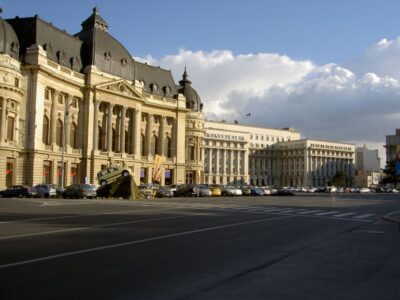 ★ 4.9City Highlights Guided Walking TourFrom $211,482 reviews
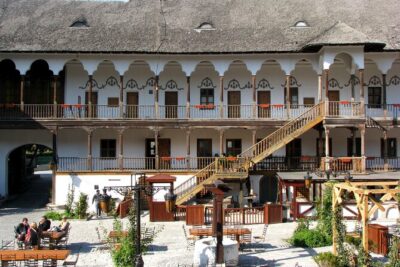 ★ 5.0Bucharest Highlights Walking TourFrom $21469 reviews
 ★ 4.9Ghost Stories & Romanian Mythology Walking TourFrom $35287 reviews
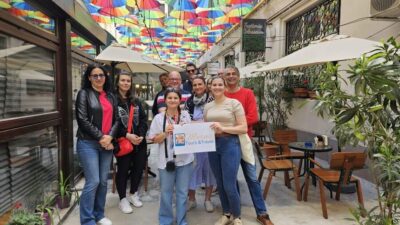 ★ 4.9Guided Walking Tour with Romanian SnackFrom $45228 reviews
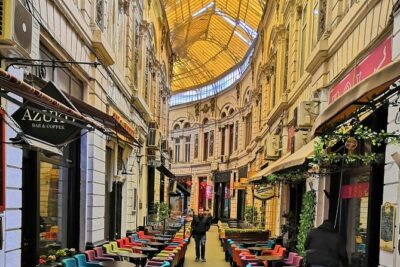 ★ 5.0Best of Bucharest | Private Walking TourFrom $314199 reviews
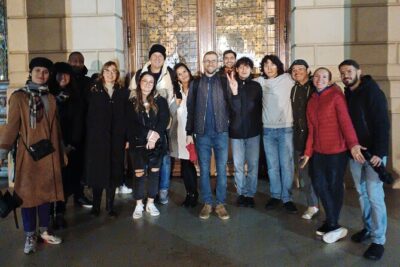 ★ 5.0Walking Tour- Delightful Bucharest (Highlights, Stories, Sights)From $22145 reviews
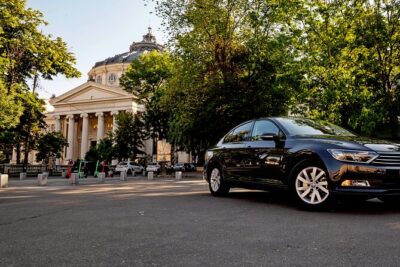 ★ 5.04h Bucharest Private Tour (2h by Car and 2h Walking in Old Town)From $10090 reviews
 ★ 5.0Bucharest 3-hours Walking Tour (Small Groups)From $5485 reviews
Browse the lists this tour appears in