
REVIEW · WALKING TOURS
Bucharest : Highlights & Hidden Gems Walking Tour
Two hours, and Bucharest makes sense. This tour uses a local guide to connect the city’s big landmarks with the everyday lanes around Lipscani, from old inns to grand palaces. I love the private and customizable format, so you can ask questions and shape the pace. I also love that the guide speaks English, French, or Spanish, with real examples like Alexandra, Augustin, Karim, Zoé, Irina, and Camélia.
One thing to consider: it is only two hours, so you might focus on what you can comfortably see and understand in that window. Also, food and drinks are not included, so plan for a coffee stop before or after.
Key takeaways before you go
- Private feel, not a packed herd: you book a format meant for an exclusive experience.
- Lipscani base with history built in: you start in the historic district around Str. Franceză 60.
- A tour that mixes trading, religion, finance, and politics: inns, passages, monasteries, palaces, and Stalin-era architecture.
- Cismigiu Park for a breather: you get a calm pause in the oldest park.
- Guides help with ticket planning: Alexandra, for example, helped with tickets for the Palace of the Parliament.
- Comfortable pacing with time for questions: multiple guides are praised for being engaging and helpful.
Elsewhere in Bucharest, and up the valley
- Bucharest: Dracula’s Castle, Peles Castle, & Brasov Old Town★ 4.5 · 17,858 reviews
- Bucharest: Dracula Castle, Peles Castle & Brasov Old Town★ 4.6 · 10,891 reviews
- Bucharest: Dracula’s Castle, Peleș Castle & Brașov Day Trip★ 4.5 · 5,919 reviews
- Bucharest: Palace of Parliament Tickets and Guide★ 4.3 · 3,182 reviews
Starting in Lipscani, then walking Bucharest with a human guide

I like tours where history is not just read off a plaque. Here, you walk through the city the way locals would explain it, with a guide who can answer the normal questions you have while you are looking at buildings. You meet at Str. Franceză 60 in the Lipscani district, which is a smart base because it is central and close to other major sights.
The biggest practical win is that the tour is private and customizable. That means you are not stuck with a rigid script, especially if you want more time on a building style, or you care more about one period of Romanian history than another. Guides leading in different languages include English, French, and Spanish, and the group size approach is designed so you are not competing for attention.
Wear shoes you actually like. This is a walking tour, and you will cover enough ground to feel like you moved around, not just stood for photos.
Cismigiu Park, a calm reset in the middle of the story
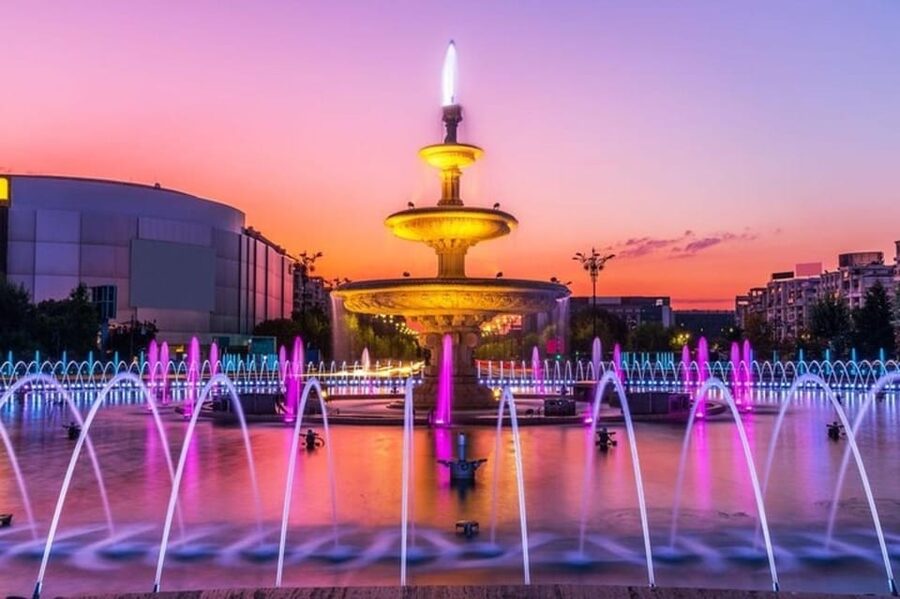
Your route includes Parcul Cismigiu, a park stop with time for photos and a guided walk. Even if you are not a serious park person, it works as a break from architecture overload. You get a change of scene, plus you can ask questions while you are not constantly looking up at facades.
I also appreciate that this park stop is not treated like an afterthought. It is part of the arc of the tour, tying into Bucharest’s idea of resilience and the softer side of city life. If you are visiting in hotter weather, the park moment can make the whole experience feel more manageable.
Potential drawback: if you prefer strictly indoor sights, the park is going to be your outdoor pause. The flip side is it helps you keep energy up for the more intense landmark stops.
Macca-Vilacrosse Passage, where commerce shaped the city
Next comes Macca-Vilacrosse Passage, a spot that helps explain Bucharest through movement and trade. A passage is one of those places where the city shows you how people used to get around, buy things, and pass through everyday life.
The tour gives you time for photos and a guided visit, so you are not just staring at an entrance. You get context for why these corridors mattered, how they connect to the city’s mercantile past, and how Bucharest’s commercial identity shows up in the built environment.
Why I like this stop for first-time visitors: it is easy to miss if you only chase the headline monuments. A passage like this gives you a street-level understanding of the city, and it is the kind of place you remember later when you are walking through other neighborhoods.
CEC Palace and the BNR Palace, finance and power in architectural form
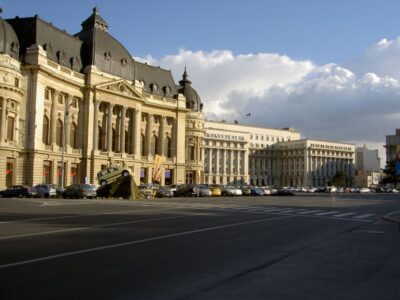
Palatul CEC is one of the key stops on the tour, with time for photos, a guided visit, and sightseeing. You are looking at a major landmark tied to the city’s financial evolution. Even if your brain is not wired for banking history, a guide can translate what the building represents in simple terms.
This section matters because it connects the dots. Bucharest is often described in terms of political changes, but money and institutions shape what cities build and how they look. Seeing the CEC Palace in the same walk as other power-related architecture gives you a fuller picture of how the city functioned.
The experience also includes the BNR Palace as part of the walk, positioned around that same theme of financial development. If you like understanding how different layers of history stack up, this is the moment where it starts to feel like a single storyline instead of separate stops.
Possible consideration: some parts of these big buildings are easier to appreciate from outside, depending on access and timing. The upside is that you still get the meaning behind the architecture, not just the photo.
More of Bucharest on foot
Stavropoleos Monastery, Orthodox art you can actually notice
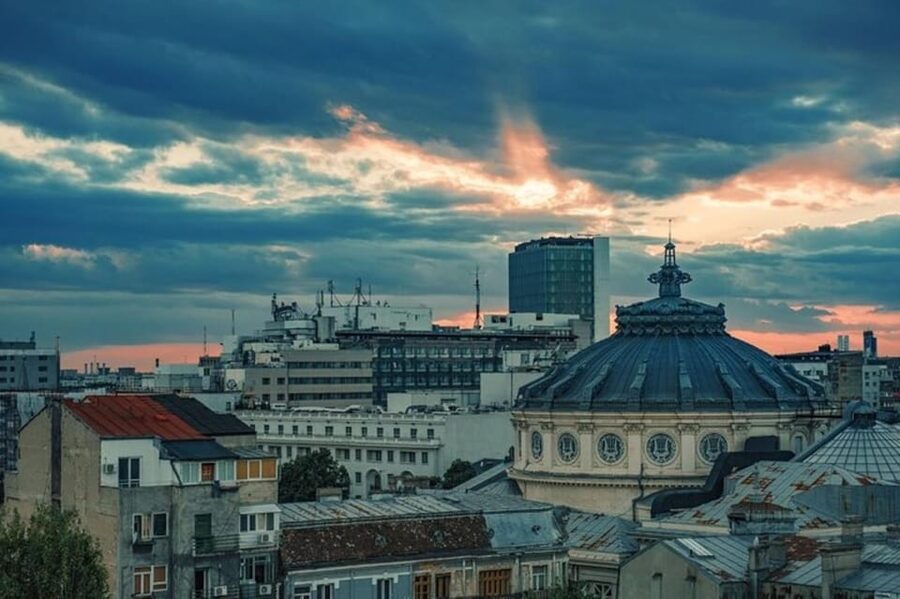
Stavropoleos Monastery is the religious and artistic centerpiece in the walk. You get photo time, a guided visit, and time to look around with context. The tour frames it as an Orthodox culture highlight, and you can see why once you are there, because the atmosphere is different from the commercial and civic stops.
I like this stop because it slows you down. A monastery visit changes your pace. You stop treating the tour like a checklist and start paying attention to details, like how the space feels and how religious tradition is built into the setting.
If you want culture without needing a full museum ticket day, this is a good choice. It is also one of those stops that makes the guide’s storytelling feel grounded, because you can match the explanation to what you see in front of you.
Hanul Gabroveni and Manuc’s Inn, Bucharest’s trading past in real spaces
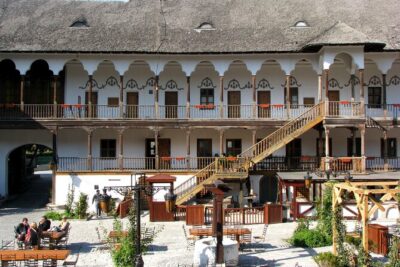
This is where the walk gets particularly memorable for people who enjoy old-city textures. Hanul Gabroveni is described as a relic of Bucharest’s mercantile past. You get time for photos, a guided visit, and sightseeing, which matters because these older sites can look like background if nobody explains what you are looking at.
Then you reach Manuc’s Inn, a historic starting point in the tour’s theme, tied to the city’s origins and trading heritage. Even when you are not a history nerd, inns like this help you understand how a city operated before modern transportation and shopping habits took over.
Here is the value: you stop thinking of Bucharest as only palaces and politics. You see how people traveled, traded, and did business, and you get a sense of how commerce influenced the streets that exist today.
If you are tight on time, this part also works well because it is compact and visual. You get history you can feel with your eyes.
Palatul Regal and Sala Palatului, politics written into the skyline
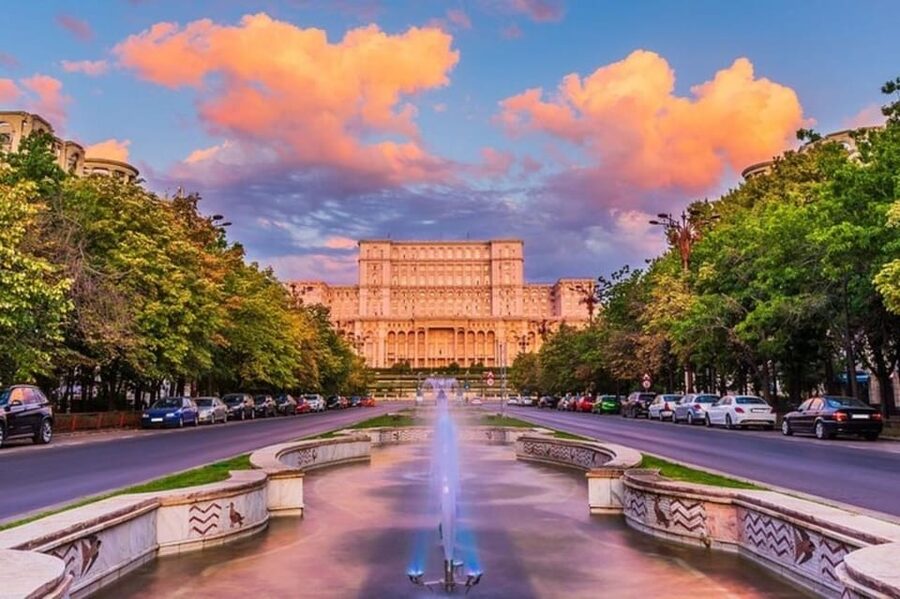
Bucharest’s political transformation is a central thread in the walk, and you see it through major architectural landmarks. The experience includes the Palatul Regal or Royal Palace, framed as a witness to national change, plus Sala Palatului, described as imposing Stalin-era architecture.
I like that the tour does not treat these sites like isolated wow-factors. It ties them back to the larger story mentioned in the experience, monarchy to communism to democracy. That simple through-line helps you organize what you see, so it does not blur together.
Practical tip: these are “look and interpret” stops more than “sit and linger” stops. So if you are the kind of traveler who likes to understand symbolism, you will probably enjoy this section more than you expect.
How the guides make it work, and how to use the time well
What stood out across the guide experiences is how much energy goes into being helpful in the moment. Guides such as Alexandra are specifically praised for practical help with tickets for the Palace of the Parliament. That is a real advantage, because that attraction often needs a bit more planning than a casual photo stop.
Guides like Augustin, Karim, Zoé, Irina, and Camélia are also described as attentive, warm, and engaging. The consistent theme is not just giving facts, it is making sure you can ask questions and still enjoy the streets around you.
So here is how you can get more from the walk:
- Come with 2 to 3 questions. For example, you might ask how to connect what you see today to where you should go next.
- Tell your guide what you care about most, architecture, food, history, or daily life.
- Ask for one or two follow-up recommendations right after you leave each major stop. Timing matters, because your mind is already in that zone.
The tour being wheelchair accessible is also a useful detail if mobility is a concern. If you have accessibility needs, it is worth bringing them up early so the route can fit you.
Price and value: $29 for two hours, what you are really paying for
At $29 per person, this walking tour is priced like a smart introductory day rather than a big production. The real value is not only the sights. It is the guide’s ability to stitch the city together into one story, while also giving you practical advice for the rest of your visit.
If you compare the cost to what you would spend alone on a half-day of transit and admissions, the math often works out better with a guide. You also get help booking tickets for desired visits. That can matter a lot if you want to add something major later, like the Palace of the Parliament.
Also, paying for a guide is paying for context. Without that, many landmark buildings turn into impressive backgrounds. With a good guide, you know why they were built, what they represent, and what to look for when you are walking around after the tour.
Possible drawback on value: if your priorities are mostly interior visits with long ticket times, two hours may not feel like enough to get everything you want. The tour is designed as a highlights and context walk, not a full-day museum program.
Getting the most out of the walk without burning energy
Two hours sounds short until you remember how much you can learn in a guided, paced walk. Still, keep expectations realistic. This experience is built around a set of major stops and key themes: parks for breaks, passages and inns for trading, monasteries for culture, and big palaces for political shifts.
To enjoy it more, plan your day so you are not rushed afterward. If you leave the tour and immediately run to something far away, you will miss that “everything clicks” moment that makes this type of walk worth doing.
If you are traveling with family, or you simply want an easy way to orient yourself, this tour is a strong starting point. The Lipscani meeting area also makes it easier to branch out afterward, since the district connects to the Old Town area and major museums nearby.
Who should book this Bucharest highlights and hidden corners walk
Book it if you want a first pass through Bucharest that actually connects the dots. It is especially suitable for:
- First-time visitors who feel overwhelmed by the number of landmark options
- People who like architecture and symbols, not just sightseeing photos
- Travelers who want local guidance and a shortlist of what to do next
- Anyone planning at least one major ticket attraction who wants help organizing it
Skip it if your schedule is extremely tight and you can only do a quick single-site stop. Also skip it if you dislike walking. You can do it, but the format is built for feet and street-level viewing.
Should you book it? My recommendation
Yes, I think this is worth booking for most people doing Bucharest for the first time. The private and customizable setup, the English/French/Spanish guide options, and the way the tour moves from trade spaces to religious culture to finance and political architecture create a strong sense of what Bucharest is, not just what it looks like.
If you want a shortcut to understanding the city and leaving with clear next steps, this is a good choice. Just plan for comfortable walking shoes and make sure you eat before you start, since food and drinks are not included.
FAQ
Where do I meet for the tour?
You meet at Str. Franceză 60 in the historic Lipscani district.
How long is the walking tour?
The duration is two hours.
Is the tour private?
The experience is described as private and exclusive, with no one else in your group.
What languages are available for the guide?
The tour is offered with English, French, and Spanish speaking guides.
Is the tour wheelchair accessible?
Yes, the tour is listed as wheelchair accessible.
Is public transport included?
Walking is included, and public transport is included unless you select an option that changes that.
Is food or drink included?
No, drink or food is not included.
More Tours in Bucharest




More Tour Reviews in Bucharest

More Bucharest Tours in Bucharest
Just added from Bucharest


Walking Tours, compared.
 ★ 4.9City Highlights Guided Walking TourFrom $211,482 reviews
 ★ 5.0Bucharest Highlights Walking TourFrom $21469 reviews
 ★ 4.9Ghost Stories & Romanian Mythology Walking TourFrom $35287 reviews
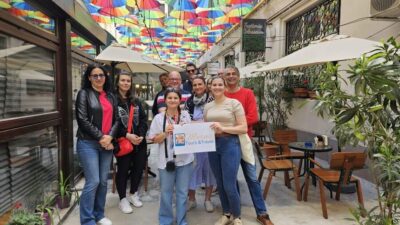 ★ 4.9Guided Walking Tour with Romanian SnackFrom $45228 reviews
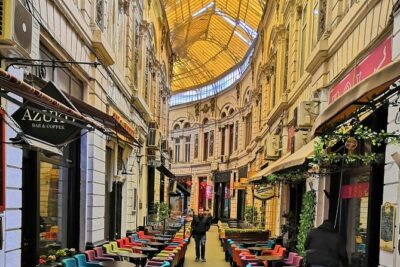 ★ 5.0Best of Bucharest | Private Walking TourFrom $314199 reviews
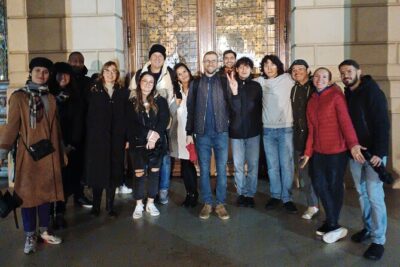 ★ 5.0Walking Tour- Delightful Bucharest (Highlights, Stories, Sights)From $22145 reviews
 ★ 5.04h Bucharest Private Tour (2h by Car and 2h Walking in Old Town)From $10090 reviews
 ★ 5.0Bucharest 3-hours Walking Tour (Small Groups)From $5485 reviews
Browse the lists this tour appears in