
REVIEW · WALKING TOURS
Best Walking Tour of Bucharest’s City Center – 2.5 hours
Bucharest tells its story on foot. This 2 to 3 hour walk through the center connects royal-era landmarks with the Revolution of 1989, with an English guide and a small group capped at 14. It is a great way to get your bearings fast, because the stops are close enough that you actually feel how the city changes block by block.
I also like that several church and monastery entrances are built into the experience, so you spend more time listening and looking and less time figuring out tickets. The pace works well when you want more depth than a bus stop-and-point style tour.
One drawback to consider: there have been reliability concerns, including no-shows or last-minute cancellations in some cases. If your schedule is tight, I recommend checking your confirmation and staying ready to pivot if plans change.
Key points you should care about
- Royal Romania plus 1989 at walking distance: you connect architecture to politics, instead of seeing buildings in isolation.
- Church entrances included: you get inside key Orthodox sites without extra hassle.
- Small group feel (up to 14): easier questions, more attention, and a calmer pace than large tours.
- Byzantine spirituality in the Old Town: the tour focuses on the “why” behind the icons and church design.
- Manuc’s Inn stop for lunch planning: a natural place to grab food and keep your day flowing.
- Finish near the Romanian Atheneum: a strong landmark to cap your morning or afternoon.
Elsewhere in Bucharest, and up the valley
- Bucharest: Dracula’s Castle, Peles Castle, & Brasov Old Town★ 4.5 · 17,858 reviews
- Bucharest: Dracula Castle, Peles Castle & Brasov Old Town★ 4.6 · 10,891 reviews
- Bucharest: Dracula’s Castle, Peleș Castle & Brașov Day Trip★ 4.5 · 5,919 reviews
- Bucharest: Palace of Parliament Tickets and Guide★ 4.3 · 3,182 reviews
Ateneul to Old Town in 2-3 Hours, with Royals and Revolution
This is the kind of walking tour that makes Bucharest feel understandable. In a short time, you’ll move from grand civic architecture to the Old Town’s Orthodox detail, then land in the story of the December 1989 Revolution. Instead of just naming streets, your guide frames how power shifted, and why monuments and churches were built the way they were.
The duration, 2 to 3 hours, is also a sweet spot for your first day. You get enough context to start spotting patterns on your own afterward, without turning your day into a marathon.
Meeting at Manuc’s Inn, a Built-In Old Town Warm-Up
Your start point is Manuc’s Inn (Hanul lui Manuc) on Str. Franceză. It is one of those places that instantly sets the tone: old walls, a historic function, and a setting that makes you think of Bucharest as a crossroads city, not just a capital.
What I like about starting here is that it gives you a story anchor early. You hear how this inn connects to a wealthy boyar and the wider Russian and Ottoman world, which helps your later stops make more sense.
If you have lunch on your mind, this is also convenient. There is a natural “stay or return” logic for grabbing something nearby without disrupting the rest of the walk.
Romanian Atheneum Stop: French-Style Facade and Monarchy Stories
You’ll spend time at the Romanian Atheneum, Bucharest’s modern Romania symbol. The architecture is the big visual reason to stop, because it carries a very French flavor while still feeling unmistakably Romanian. Even if you do not go inside, the outside is worth your attention.
Here’s the value piece: the guide ties the Atheneum and the surrounding area to the monarchy and Romania’s kingly eras, including Carol I, Ferdinand I, Carol II, and Michael I. That makes the building feel like more than a pretty facade. It becomes part of the national narrative.
One practical note: entry at the Atheneum can depend on whether it is open, and the experience includes a visit if it is available. Still, admission details can vary, so it is smart to double check what you are covered for before you arrive.
University Squares and Carol I’s Footprint
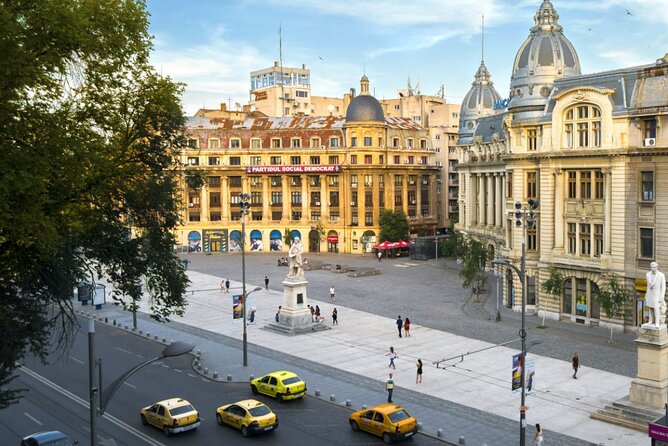
Next, you head toward the Central University Library area, Biblioteca Centrala Universitara. The key detail here is that the building was erected by Carol I, the first Romanian king. That link matters, because it shows how education and culture were tied into the same state-building mindset as monuments and palaces.
In front, you’ll see Carol’s equestrian statue. This is one of those stops where you get a quick visual lesson: kings weren’t just rulers, they were branding campaigns in stone and bronze. It is not just a statue for photos, your guide connects it to the monarch’s public image.
Expect short time here. This is a “glance and understand” stop, so it works best if you are paying attention and asking a question or two.
More of Bucharest on foot
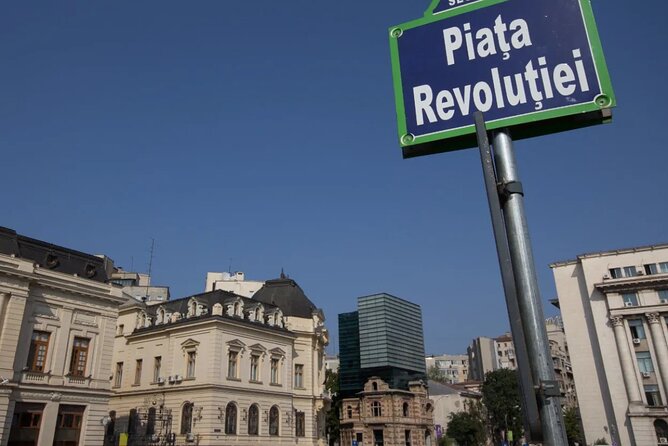
Revolution Square, The Potato Obelisk, and Kilometer 0 of Democracy
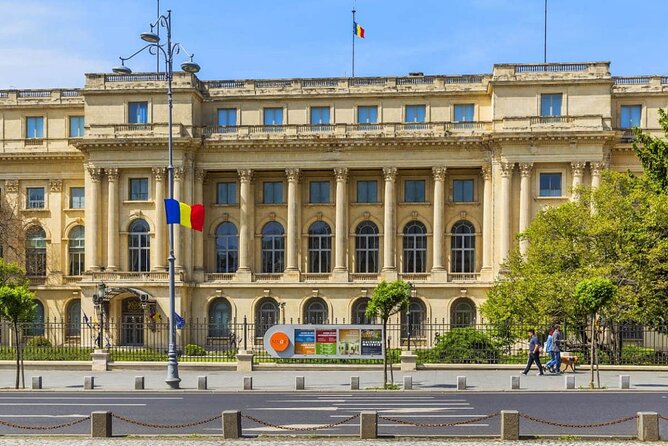
Then the tour turns sharper and more emotional. You’ll reach Memorialul Renasterii, an obelisk also known as The Potato. It was made after the December 1989 Revolution, and it sits right in the area tied to the uprising. Your guide explains what happened in the final days of communism and how young people fought against the regime.
What makes this part powerful is the location. It is not a museum room story. It is a public square, so the political reality of the time feels immediate. You’ll also hear about the statues placed in the square, which keep certain people in the city’s memory.
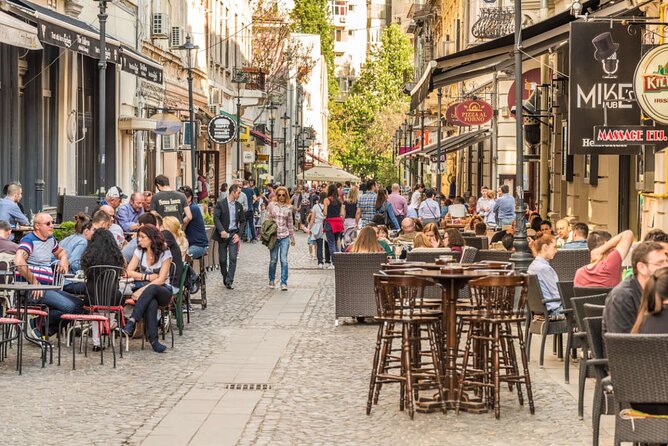
From there you’ll pass landmarks tied to civic identity, including the University Square area where you can see Kilometer 0 of democracy, a symbol of the 1989 revolution. The tour then continues with a stroll in the Old Town, which is exactly the right shift after heavy political context. Your eyes need a change, and churches offer that.
There is also a mention of a monument erected by the Russian community in the early 1900s. It is brief, but it adds another layer to Bucharest’s identity as a city influenced by neighbors near and far.
Byzantine Bucharest: Stavropoleos Monastery and the Iconic Style
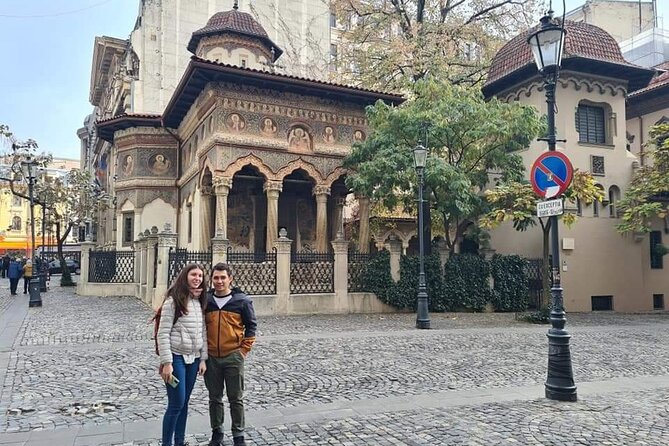
When you get to Stavropoleos Monastery, you’ll feel the Old Town’s personality instantly. It is small and almost jewel-like, which is why people remember it. The architectural style you’ll notice is Byzantine, and the tour uses this stop to explain why Orthodox Christianity shapes so much of Romanian spiritual life.
This is also a practical stop for photos. Look up at the details, but also notice how the space feels enclosed compared with the wider boulevards around it. That contrast is part of what you are learning on this walk.
The guide will also help you connect what you see here with the painted monasteries you might find in Bucovina. Even if you never go further, this stop gives you a visual reference point.
Churches of the Old Town: White Princess and the Princely Court Feel
Next comes Biserica Sf. Dumitru Posta, nicknamed the White Princess of the Old Town. That nickname hints at what you’ll likely notice: it is meant to look distinguished and clean, even inside an area full of older stone and weathered facades. The tour treats it as more than a pretty church stop by adding context about its history.
Then you move toward Muzeul Curtea Veche, the Old Princely Court Museum. The important detail here is time depth. The site contains historical testimonies dating back to the 13th century, and Wallachian rulers resided here starting in the 14th century. You’ll also hear about Vlad the Impaler ruling Wallachia from this area for a period.
Even if you do not go deep into museum rooms, this is a key “scale” stop. It gives you a sense that Bucharest did not start with modern kings and boulevards. It stretches back into the Wallachian era where power was personal, local, and physical.
Close by is Biserica Sfantul Anton – Curtea Veche. This church is highlighted for its importance in Romania’s history, and you also get time to take in the atmosphere and beauty inside. In practice, this is where you feel the tour’s Orthodox focus most strongly, because the interior is doing its job, storytelling through design and decoration.
Manuc’s Inn for Lunch, Then Optional Views at Unirii
You end the densest part of the walk at Manuc’s Inn again, because it’s both historic and practical. The tour presents it as the oldest inn and restaurant in town, and the story centers on a rich and cunning boyar who supposedly shook the Russian and Ottoman empires. Whether you treat that as legend or history, the takeaway is how Bucharest operated in wider networks.
There’s also a direct lunch suggestion here: this is a good restaurant area, and it is smart to plan ahead if you want a sit-down meal. If you are hungry, this stop is your friend.
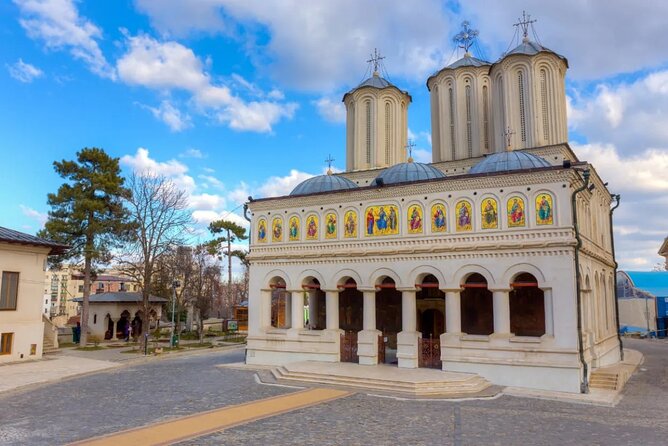
After Manuc’s Inn, you have optional choices depending on time and energy. One option is an extra view from the distance from Unirii Square. Another option is the Patriarchal Cathedral, which you can enter if you choose. The cathedral is described as a sacred space full of paintings and decorations, and the hill location next to Unirii Square makes it feel like a different mood from the Old Town lanes.
Price and What You Actually Get for $54.77
At $54.77 per person for about 2 to 3 hours, you are paying for three things at once: a guide, a focused route through meaningful sites, and included entry costs for specific churches and monasteries. That is usually where walking tours earn their keep, because the time is tight and the context is hard to piece together on your own.
If you were trying to recreate this day solo, you would likely spend more time hopping between spots and more mental effort figuring out what connects. Here, the connections are the product. You are buying a guided line from monarchy to education, from Revolution Square to Orthodox spirituality.
Included extras also help. The experience lists a souvenir, plus a Romanian Atheneum visit if it is open. It also specifically includes entrance to churches and monasteries such as Stavropoleos Monastery and St. Anthony, and it notes St. Demeter Church as part of the covered sites. The church and monastery entries are the value win, because they remove the guesswork.
The biggest thing not included is the obvious one: food and drinks. If you plan on eating during the walk, treat Manuc’s Inn as your timing anchor.
Practical Tips So Your Walk Feels Effortless
This tour is built for a city-center pace, so pack for comfort and short distances between stops. Wear shoes that handle cobblestones and uneven Old Town streets. You will be walking often, and the stops are not long enough for a slow pace that eats up time.
Use the short stop times to your advantage. When you reach each church, look for one detail to remember: the Byzantine style cues at Stavropoleos, the inside atmosphere at Curtea Veche’s churches, or the “White Princess” identity at Sf. Dumitru Posta. If you try to capture everything, you miss the point.
Language is English, and the tone sounds story-driven. Guides are likely to connect the monarchy and the Revolution to what you see in front of you, including references tied to Romania’s leaders such as Carol I and others. In past runs, guides like Cristina and Maria, and Nicolae, have been mentioned for strong storytelling and careful attention in the center.
Finally, since there have been some reliability issues reported, be smart. If your visit is only one day, keep your schedule flexible after the tour. Have a backup plan for the Atheneum area, and consider timing your own museum visits for later if your route depends on everything arriving on time.
Should you book this Bucharest city center walking tour?
I think you should book it if you want an efficient first-day overview that goes beyond big photos. The blend of monarchy landmarks, Orthodox churches with Byzantine style, and a clear line to the December 1989 Revolution sites is a strong combo for people who like context as much as scenery.
You should be more cautious if your schedule is rigid or you cannot handle last-minute changes. The main risk is not the route, it is whether the tour runs as planned. If that would ruin your day, keep something backup-related nearby.
If you do book, treat it like a guided foundation. After the walk, you’ll be much better at wandering the Old Town on your own, because you’ll know what you are looking at and why it matters.
FAQ
How long is the Best Walking Tour of Bucharest’s City Center?
It runs about 2 to 3 hours.
What does the tour cost?
The listed price is $54.77 per person.
Is the tour offered in English?
Yes, it is offered in English.
Is the group size small?
Yes. It is listed as a private tour experience, with a maximum of 14 travelers.
Where do I meet and where does the tour end?
You start at Manuc’s Inn (Hanul lui Manuc), Str. Franceză 62, București 030167, Romania, and you end at The Romanian Athenaeum, Strada Benjamin Franklin 1-3, București 010287, Romania.
What is included in the price?
Included items are a souvenir, a visit to the Romanian Atheneum if open, and entrance fees for churches and monasteries such as St. Anthony, Stravropoleos Monastery, and St. Demeter Church.
What is not included?
Food, drinks, and other expenses are not included.
What is the cancellation and refund policy?
You can cancel for a full refund if you cancel at least 24 hours before the experience’s start time. Free cancellation is available per the policy. If the minimum number of travelers is not met, you will be offered a different date or experience, or a full refund.
More Tours in Bucharest


More Tour Reviews in Bucharest
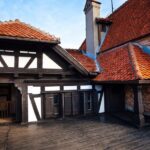
More Bucharest Tours in Bucharest
Just added from Bucharest


Walking Tours, compared.
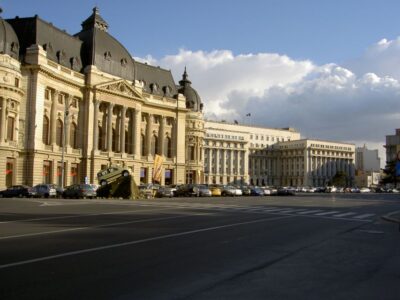 ★ 4.9City Highlights Guided Walking TourFrom $211,482 reviews
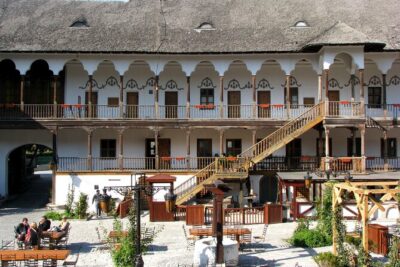 ★ 5.0Bucharest Highlights Walking TourFrom $21469 reviews
 ★ 4.9Ghost Stories & Romanian Mythology Walking TourFrom $35287 reviews
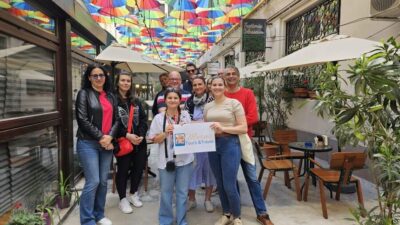 ★ 4.9Guided Walking Tour with Romanian SnackFrom $45228 reviews
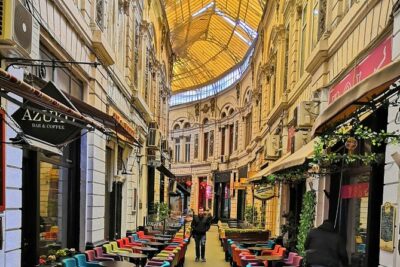 ★ 5.0Best of Bucharest | Private Walking TourFrom $314199 reviews
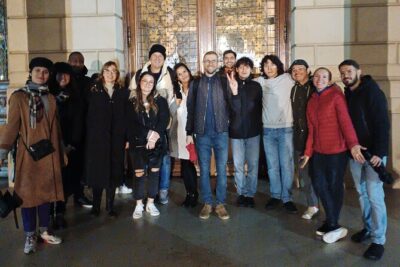 ★ 5.0Walking Tour- Delightful Bucharest (Highlights, Stories, Sights)From $22145 reviews
 ★ 5.04h Bucharest Private Tour (2h by Car and 2h Walking in Old Town)From $10090 reviews
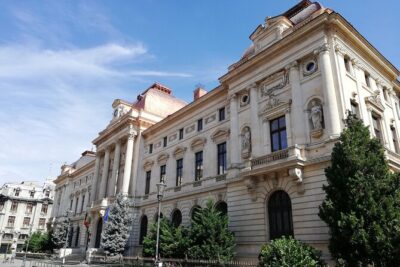 ★ 5.0Bucharest 3-hours Walking Tour (Small Groups)From $5485 reviews
Browse the lists this tour appears in