
REVIEW · 7-DAY EXPERIENCES
7 days Private Romania Grand Tour from Bucharest
One week, three Romania worlds, zero map stress. This private route ties together Wallachia, Transylvania, Maramures, and the painted monasteries, with an air-conditioned minivan and a local guide explaining how everything connects. I love the private pace, with pickup and drop-off that save you from day-by-day planning. I also love the UNESCO stops, because they give you a real sense of why Romania’s Christian architecture is so distinctive. One possible drawback: entrances and on-site fees are not uniform, so you should expect a few paid stops and budget for tips.
The value is in the logistics. You get hotel pickup and drop-off, a driver/guide, and transport by private vehicle, plus six nights of accommodation and six breakfasts. Add a mobile ticket to the mix, and your biggest job is just showing up, on time, with good walking shoes.
Given the weather dependency, this is a trip to plan with a calm mindset. If conditions turn rough, your dates may shift, but the tour is designed to keep moving across big distances without constant rebooking.
Key things to know before you go
- Private, guided rhythm keeps stops efficient, without feeling rushed.
- Air-conditioned minivan makes the long drives between regions feel manageable.
- UNESCO and folk architecture show up from wooden churches in Maramures to painted monasteries in Bucovina.
- Dracula-linked towns are included in a way that also teaches the real history behind them.
- Site fees vary by stop, so a little budgeting helps.
- Single-room supplement applies if you want your own room.
Elsewhere in Bucharest, and up the valley
- Bucharest: Dracula’s Castle, Peles Castle, & Brasov Old Town★ 4.5 · 17,858 reviews
- Bucharest: Dracula Castle, Peles Castle & Brasov Old Town★ 4.6 · 10,891 reviews
- Bucharest: Dracula’s Castle, Peleș Castle & Brașov Day Trip★ 4.5 · 5,919 reviews
- Bucharest: Palace of Parliament Tickets and Guide★ 4.3 · 3,182 reviews
The route that links Wallachia, Transylvania, Maramures, and Bucovina
This is the kind of Romania trip that works because it groups places that actually make sense together. Instead of bouncing around random highlights, the journey moves across regions with different languages, faiths, and architectural styles, and your guide helps you notice the differences.
I like the “from monastery to town to landscape” pacing. You get spiritual architecture, medieval cities, craft stops, and then big-view nature moments like the Bicaz Gorges and Red Lake. The mix keeps it from turning into a checklist.
You will also get Dracula references, but the bigger win is the context. Sighisoara, Bran Castle, and the way Vlad Dracula is discussed are treated as part of a wider regional story, not just costume-tour entertainment.
Bucharest pickup and private transport, the part you feel every day
Starting in Bucharest is convenient, especially when the route is long. Hotel pickup and drop-off means you avoid the awkward “where do I meet the driver” dance, and private vehicle transport helps you keep energy for sightseeing.
On this kind of tour, comfort matters. Long transfers across Romania can be tiring if you’re doing them yourself. Here, the air-conditioned minivan and a driver who knows the route reduce stress and let you use the time for orientation with your guide.
The private setup also helps if you have questions. Want to understand why a church tower looks the way it does, or why fortified towns developed? You can ask in real time, and you do not need to wait for a group to catch up.
Day 1: Cozia Monastery and Sibiu’s medieval squares
You start with Cozia Monastery in the Olt Valley, a 14th-century Wallachian monument tied to Mircea Il the Old. This is the kind of stop that rewards slow attention, because you can see layers of history in the Armenian decorations on the façade and the richly frescoed interiors.
The practical upside is the timing. It is a short visit block, so you get a strong first impression without burning half the day before lunch.
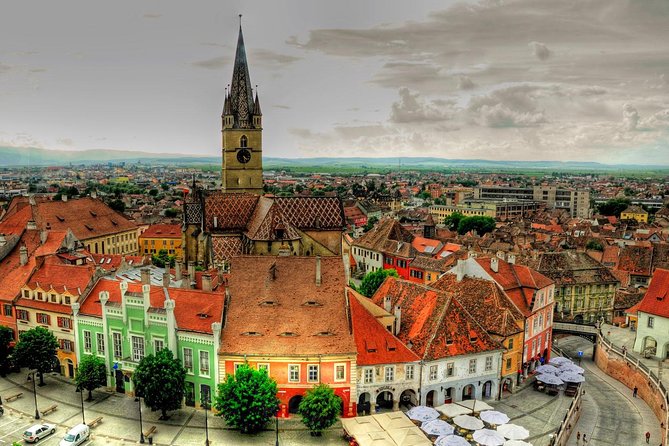
Then you move to Sibiu, one of those Transylvanian cities that feels planned for wandering. I love how the city’s story shows up through living religious variety, with Catholic, Orthodox, and Protestant monuments that reflect centuries of coexistence between Romanians and Saxons. If you like places where architecture doubles as a cultural timeline, Sibiu delivers.
Sibiu’s three main squares, Big Square, Small Square, and Huet Square, help you get your bearings fast. You also see towers and 15th-century bastions, plus museums and the famous houses with the eyes. The gothic evangelical church adds another layer, because it shows how different faith communities shaped the skyline.
One consideration: Sibiu is a walking city, and you will likely spend time on uneven old-stone streets. Comfortable shoes pay off here.
Day 2: Alba Iulia, Turda Salt Mine, and Cluj-Napoca’s church and monuments
Day 2 begins in Alba Iulia, a key historical spot because Great United Romania was made there on December 1, 1918, right after World War I. Even if you only know the headline version, the place matters. It is a “why the map changed” moment that grounds the rest of the trip.
Next comes Salina Turda, the Turda salt mine. This stop is a big reason people sign up, because it turns geology into entertainment. You go down about 400 feet and then enter an underground space with an amphitheater, a bowling alley, an underground lake with paddle and row boats, and even a Ferris wheel.
It is not just a dramatic setting. It is also a good break from constant sightseeing. If you enjoy unusual museums or engineered spaces, this will feel memorable.
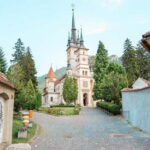
After that, you reach Cluj-Napoca, where St. Michael’s Church is a highlight. It has seen the passage of several cults, and it sits behind a statuary complex representing King Mattia Corvino and his closest soldiers. Cluj also has a university that holds lectures in several languages, and it is an important center for Hungarians.
That mix matters. Cluj feels like a modern city with deep roots, so it complements the older medieval stops.
Tip for planning: Turda is active and sometimes cooler underground. Bring a light layer, then wear it under your comfortable walking clothes.
More private days in Bucharest

Day 3: UNESCO wooden churches in Şurdeşti and Maramures
Maramures is where the trip’s tone shifts to a slower, craft-and-architecture focus, and Day 3 makes that clear. You start at Şurdeşti, a UNESCO-listed wooden church. It is described as the tallest wooden church in Europe for a period, with a tower of 54 m and a total height of 72 m, until a taller monastery church was built.
What I like about this stop is the specific architecture details you are guided to notice. It has a double-eaved roof with two superposed rows of arches above the porch, described as unique in the region. The Greek Catholic church of the Holy Archangels was built in 1721 from oak logs by a carpenter named Toma Macarie.
Then the itinerary moves to Barsana Monastery, another UNESCO-related Maramures stop. The complex is recently constructed and functions as a convent with sixteen nuns. The Maramures Region heritage designation exists to protect stylized wooden architecture and its dramatic vernacular, so this is not “just another church.” It is part of why the area is protected.
A different kind of local tradition follows in Vadu Izei. You will see the Romanian valtoare, a whirlpool mechanism used to wash laundry and rinse items using fast mountain-stream water. It is explained as a medieval-origin device, sometimes called the world’s first natural washing machine by an academy that tracks records.
You are not going to forget this image. It takes the abstract idea of traditional life and makes it physical.
Shoes matter again. Maramures stops often involve short walks on uneven surfaces, and you want to keep your feet happy.
Day 4: The painted monasteries of Bucovina and black ceramics in Marginea
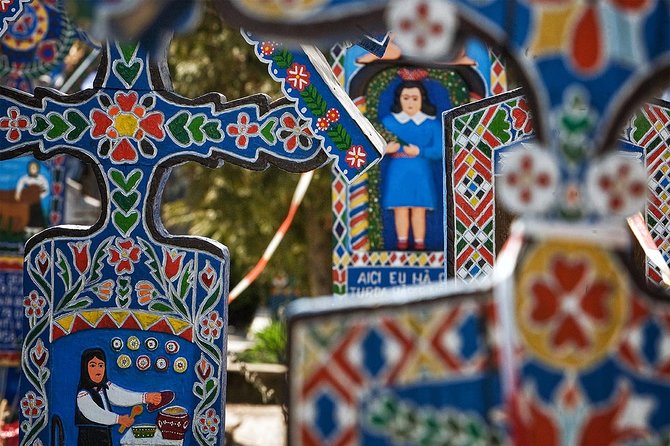
Day 4 is built around the painted monasteries of Bucovina, plus a craft stop that gives your day a human scale. First is the Merry Cemetery in Săpânţa, called Cimitirul Vesel. Over 800 wooden crosses carry life stories and the details of what people lived through, displayed with bright images and annotated with limericks.
This is one of those places where you feel a strange mix of sadness and clarity. The humor and color do not erase mortality, they make remembrance feel personal. If you want a cultural stop that goes beyond “look at the building,” this is it.
Then you visit Moldoviţa Monastery, founded by Pietro Rares in the 16th century. The interiors and exterior frescoes are the focus, and your guide helps connect the paintings to the larger religious and artistic tradition.
Next is Sucevita Monastery, founded by the Movila brothers in the 17th century. This one is described as mixing Gothic and Byzantine elements into a Moldovan architectural style, with frescoes on the northern façade protected by walls that were never demolished. That protection angle matters, because it explains why the paintings are still so visible.
After the monastery sequence, you get a workshop stop at Ceramica neagra in Marginea. Black ceramic is the signature here. You can enter a workshop, watch working phases of ceramic pots, and also buy typical Bucovina items like painted eggs and decorated pieces using the traditional Romanian technique.
Then the itinerary includes Manastirea Voronet, one of the famed painted monasteries in the region. If you have ever seen photos of blue tones and dramatic fresco compositions, this is the stop those images usually come from.
A planning note: painted monasteries are visually intense. Give yourself time to stand back and look, then step closer. Your guide will likely help you frame what you are seeing so it does not turn into “pretty paintings,” but into stories.
Day 5: Bicaz Gorges, Red Lake, and arriving in Sighişoara
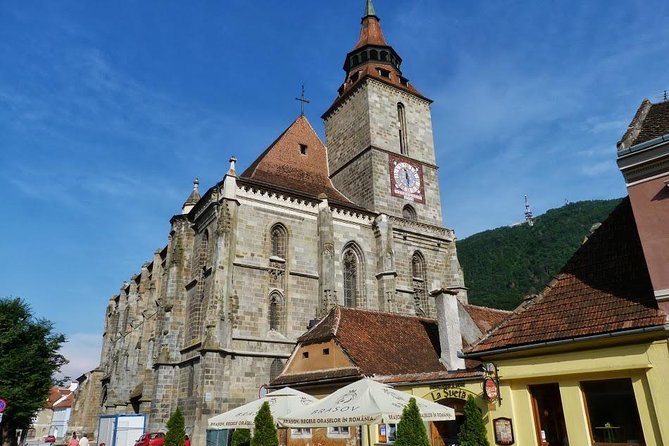
Day 5 begins with a short stop in Piatra Neamţ. It is a ski resort, but the visit focuses on the citadel founded in the time of Stephen the Great in the 15th century, plus an 18th-century synagogue. The setting matters too, because you have mountains around the city and lush vegetation in the view.
Then you head toward Bicaz Gorges. This is one of the trip’s most “look at that” moments. The road runs through cliffs and a stream, and the landscape has a strong emotional impact described as thrilling. Along the gorge there is a market with typical handicrafts and souvenirs, which helps you mix sightseeing with quick browsing.
Next comes Red Lake, a natural barrier lake formed following a landslide. A detail you may remember: trunks of trees are still present in the lake, giving it a particularly evocative atmosphere. You also hear legends tied to the lake’s name, which adds a storytelling layer to the scenery.
Finally, you arrive late evening in Sighişoara, Vlad Dracula’s birthplace. Even with limited time that first evening, it sets up the next day’s focus on the medieval core.
Wear layers for this day. Gorge weather can shift quickly, and even if you do not stay long, you will want comfortable clothes for viewpoints.
Day 6: Sighişoara’s UNESCO center, Bran Castle, and Brasov’s German-style core
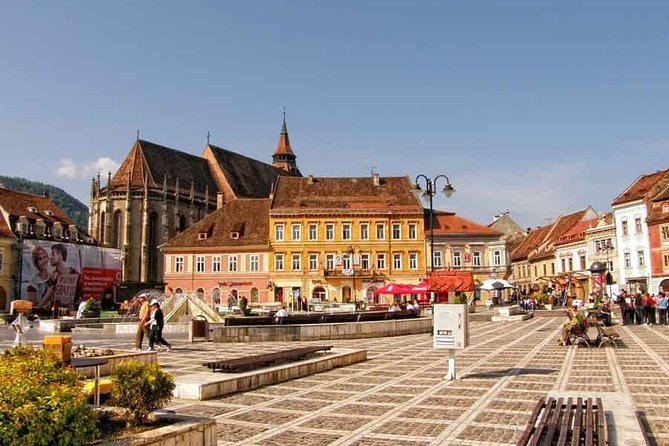
Day 6 starts with Sighişoara’s historic center, which is UNESCO listed. You will see the Clock Tower, and you walk through streets and churches that reflect a multicultural, multi-confessional city. The itinerary also notes Vlad Dracula being born here in 1431, so the Dracula thread stays anchored to a real place.
This is a great day to pause and take in the street scale. Fortified towns often feel smaller than modern cities, and when you walk slowly, you start understanding how defenses and community life shaped daily movement.
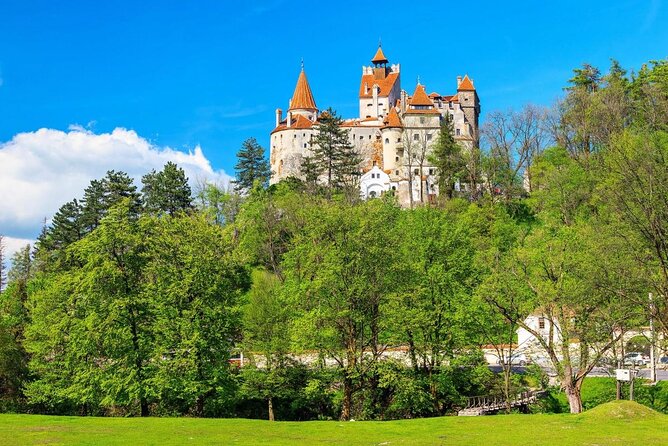
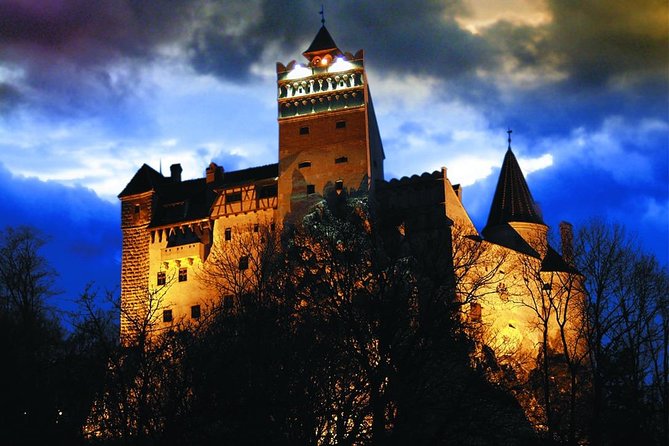
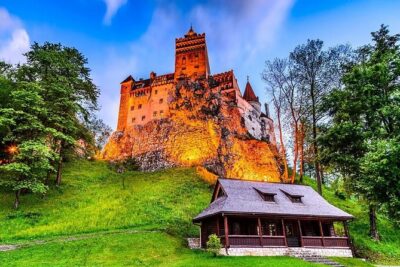
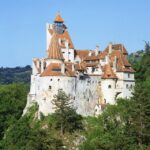
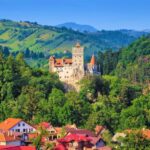
Next is Bran Castle, often called Dracula’s Castle. Bran in the Middle Ages sat on the border between Wallachia and Transylvania, so the stronghold was essential for defensive control between the regions. The castle visit is not only about folklore, it is about why people built fortifications where they did.
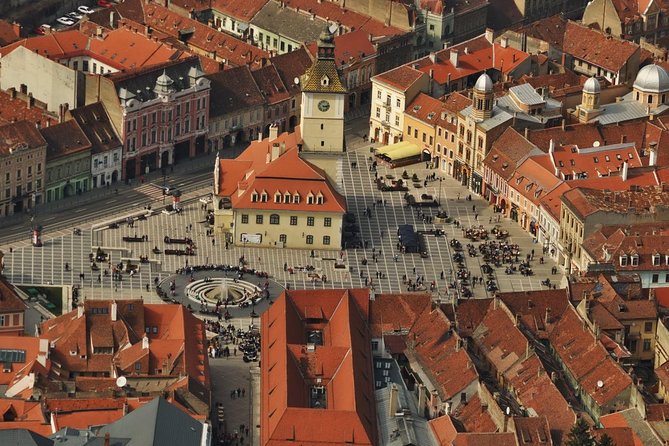
Then you reach Brasov. Brasov is described as a once-entirely fortified town, with German architecture influence, plus Gothic, Baroque, and Renaissance elements. You visit the First Romanian School, located in the Schei district, a place inhabited exclusively by Romanians. The itinerary also includes medieval entrances through Catherine’s Gate and Schei Gate, with Schei Gate described as the last of the 19th century. The Black Church rounds it out.
If you like places where layers from multiple eras coexist, Brasov is satisfying. It feels like a working city, not just a museum.
One consideration: this day involves more stops close together. Keep water handy and snack timing smart, because you may not have long breaks between segments.
Day 7: Peles Castle, then Bucharest panoramas before you fly out
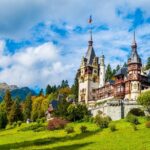
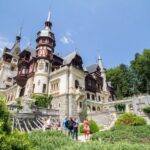
You close with Peles Castle, the summer residence of King Charles I of Hohenzollern, with German origins. The castle is designed by a Czech architect and is described as one of the most modern castles in Europe for its time, built between the 19th and 20th centuries.
I like how the guide experience focuses on variety. Each room has a unique style, different from other rooms, and one highlight mentioned is the Florentine room, where the atmosphere is described as typically Italian and Renaissance.
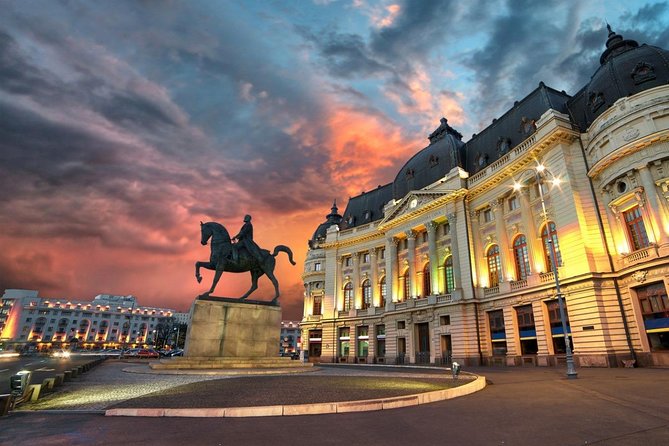
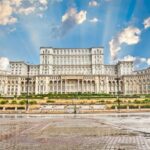
After that, you return to Bucharest for a panoramic tour. You will see Triumph Arch, the Atheneum, Revolution Square, and Parliament Palace. It is a good capstone because it shifts the tone from medieval and church architecture to national-scale monuments.
Because this is your last day, it helps that the Bucharest segment is short, about 30 minutes. You finish feeling like you saw a lot, without ending with a full day of extra walking.
Price and value: what you are really paying for
The price is $1,719.59 per person for the private tour. On paper, that is not “cheap.” In practice, what you pay for is time saved and stress reduced over long distances.
You get a private driver/guide and transport by private vehicle. You also get hotel pickup and drop-off and breakfast included for six days, plus accommodation for six nights according to the included list. The tour summary also mentions seven nights and entrance fees included, but the detailed inclusions list says entrance fees are not included. Because of that mismatch, I recommend you confirm the exact number of nights and how entrance fees are handled when you book.
What you can count on: the heavy lifting is taken care of. You do not have to organize separate tickets for each region, find reliable drivers, or worry about getting to early morning starts. That value hits hardest if you are traveling solo with a limited number of days, or if you want to focus on sites rather than logistics.
Also plan for a single-room supplement of 150 euro if you need your own room, payable locally in cash or credit card. And tips are listed as not included, so leave room in your budget.
Lastly, this experience is designed around having a minimum number of travelers and good weather. That is normal for road-heavy itineraries, but it is worth knowing so you do not feel surprised by date adjustments.
Best fit: who will enjoy this most, and who should think twice
This tour is a strong fit if you want a guided overview across multiple Romanian regions and you like architecture, towns, and cultural context. It also works well for people who want private pacing, because you are not stuck with a large group’s tempo.
It is also a good choice for first-timers. You cover Bucharest, Transylvania, Maramures, Bucovina, and the nature highlights in between. If you are more interested in a focused single region, you might prefer a shorter specialty trip to go deeper with less transit.
If you have limited mobility or you do not enjoy walking on older streets, the trip is still described as most travelers can participate, and the private minivan helps a lot. But you should still expect some walking at each town stop.
If your dream trip is only Dracula folklore with zero architecture or church focus, you may find yourself doing more “cultural interpretation” than “just spooky castles.” The Dracula elements are there, but they sit inside a broader learning theme.
Should you book this Romania private grand tour?
I would book it if you want Romania with a guide, not Romania with a map app. You get strong cultural anchors like Cozia Monastery, UNESCO wooden churches in Maramures, the painted monasteries of Bucovina, and then the big recognizable end points of Bran Castle and Peles Castle.
I would think twice if your budget cannot flex for site-by-site entrance fees and tips. Because some stops list admission as not included, your final total can creep up.
Also, be honest about your style. If you love variety and you want to see a lot in seven days with minimal planning, this route fits. If you prefer slow living in one area, you might enjoy a different plan more.
FAQ
What time does the tour start?
It starts at 9:00 am.
How long is the private Romania grand tour?
It is approximately 7 days.
Is pickup and drop-off included?
Yes, hotel pickup and drop-off are included.
Is this a private tour?
Yes. Only your group will participate.
What is included in the price?
It includes driver/guide, private tour, transport by private vehicle, hotel pickup and drop-off, and accommodation and breakfast (listed as 6 nights and 6 breakfasts).
Are entrance fees included?
Entrance fees are not listed as included in the general inclusions, and some stops are marked as admission not included while others are marked as free, so you should expect a mix.
What happens if the tour can’t run due to weather or minimum travelers?
The experience is non-refundable, but if it is canceled due to poor weather you will be offered a different date or a full refund. If it is canceled because the minimum number of travelers is not met, you will be offered a different experience or a full refund.
More Tours in Bucharest

More Tour Reviews in Bucharest
More Bucharest Tours in Bucharest
Just added from Bucharest


7-Day Experiences, compared.
 ★ 5.04×4 Driving Experience at Flying Altitudes – 7 DaysFrom $2,05413 reviews
 ★ 5.07-Day Private Tour of Transylvania from BucharestFrom $2,84813 reviews
 ★ 5.0Amazing Romania – Seven day private tour from BucharestFrom $2,9307 reviews
7-Day Romania Tour -Transylvania and Painted ChurchesFrom $1,7087 reviews
 ★ 5.0Transylvanian weekFrom $2,1667 reviews
 ★ 5.07 Days Private Guided Tour in Romania from BucharestFrom $2,4804 reviews
 ★ 5.0Discover Medieval Transylvania Small Group Tour – 7 daysFrom $1,6184 reviews
 ★ 5.07-Day Dracula Tour in Romania from Bucharest including ‘The Ritual of Killing of a Living Dead’From $1,6853 reviews
Browse the lists this tour appears in