
The best parts of Romania feel like a storybook here. You get two UNESCO World Heritage Sites plus Dracula lore, painted monasteries, and castle stops, all on a well-paced car route. I especially like how the itinerary links big-name legends with everyday religious life and local craftsmanship. One thing to plan for is the amount of time spent in the car between regions.
I also like the practical value: you get 6 nights in B&B-style stays, plus a driver/guide and all transport in an air-conditioned vehicle. The itinerary keeps admissions separate, so you can choose what to prioritize and avoid surprises. The main drawback is that many sights list admissions as not included, so you’ll want to budget for tickets on top of the tour price.
Key moments that make this tour worth your time
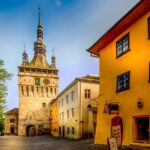
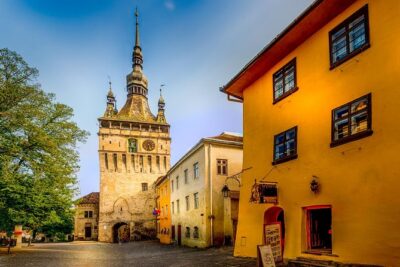
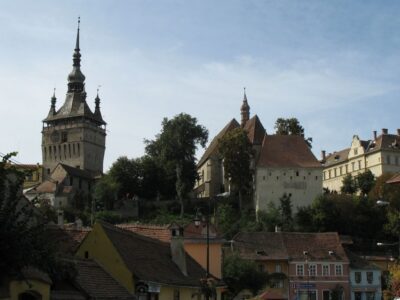
- Sighisoara, the inhabited medieval fortress, with Vlad Tepes birthplace and key landmarks like the Clock Tower
- Biertan Fortified Church, a UNESCO site tied to Saxon settlement and a special community function inside
- Bucovina painted monasteries (Voronet, Moldovita, Sucevita), where exterior fresco scenes are the main event
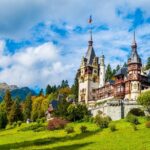
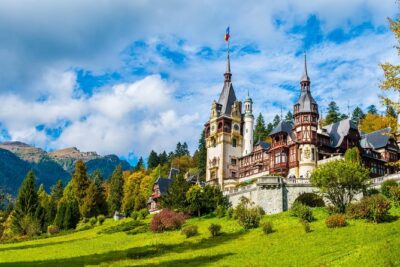
- Peles Castle in Sinaia, known for its well-preserved royal interior details and Wagner-themed art
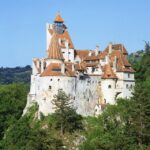
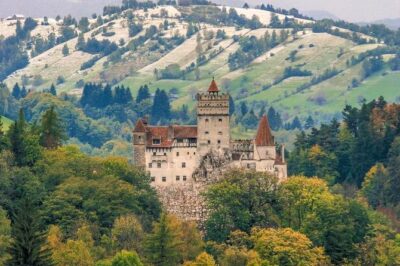
- Dracula culture at Bran, with the iconic hilltop castle view that fueled myths and legends
- B&B-style overnights, which makes early starts feel easier than rushing every day
Deeper into Transylvania
- Transylvania and Dracula Castle Full Day Tour from Bucharest★ 4.5 · 1,589 reviews
- Castles of Transylvania: Private Day Trip from Bucharest★ 4.5 · 248 reviews
- 2-Day Medieval Transylvania with Brasov,Sibiu and Sighisoara Tour from Bucharest★ 4.5 · 145 reviews
- 2-Day Transylvania from Bucharest: Brasov, Bran, Sighisoara★ 5.0 · 60 reviews
A 7-Day Romania Loop That Blends Legends With Real Life
This tour is built like a circle through Transylvania and nearby regions, starting in Bucharest and returning there. What makes it interesting is the mix: castles and Dracula inspiration one day, then the next day is monasteries with painted church exteriors and Orthodox practice in plain view. You see how people lived, prayed, built fortifications, and defended settlements, all without making you micromanage logistics.
You’ll move through several Romanian regions on a single route, so the story shifts as you go. Romania’s “big ticket” attractions are here, but the painted monasteries are what often slow everyone down because the art is outdoors, right on the walls, and made to be seen from up close.
Price and what you actually get for it
At $1,708.12 per person for a roughly 7-day experience, the value comes from what’s bundled and what’s left for you.
Included basics that matter:
- 6 nights accommodation on a BB basis (so breakfast is part of the deal)
- Driver/guide
- Transport by air-conditioned car/minivan/minibus
- Fuel and parking fees
Not included (so you can plan your budget honestly):
- Food and drinks (unless a specific meal is mentioned)
- Most admission tickets are marked as not included for key stops
That means the tour price covers the heavy lifting: getting you from place to place comfortably and keeping you on track. It doesn’t try to price in every ticket and every meal for you. For me, that’s a plus. You can spend money on the sites you care about most, and you’re not forced into a fixed “all entrances included” model.
Day 1 in Bucharest: quick orientation and the Palace of Parliament
Your day starts in Bucharest with an arrival meet and greet at Bucharest-Henri Coanda Airport. Depending on your arrival hour, you may also get a tour of Bucharest’s most important sights, which is a smart way to avoid feeling lost on day one.
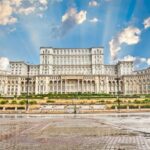
Then it’s time for the Palace of Parliament, listed as the main stop. This is one of those places where you really notice scale and design choices, and it helps you build a mental picture of modern Romania before the trip turns into Transylvania and older fortress towns.
Practical note: admission ticket is not included here. Also, if your flight arrives late, you might end up with less buffer time, so don’t pack the day with extra plans.
Day 2: Sinaia and Peles Castle, then Bran Castle for Dracula
Day two is all about the transition from Carpathian foothills into royal and myth territory.
Elsewhere in Bucharest, and up the valley

Peles Castle in Sinaia
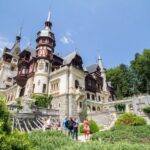
You cross the Southern Carpathians and head to Sinaia, which grew into a royal resort area with support from the Sinaia Monastery (1695). The star stop is Peles Palace, described as one of the best-preserved royal palaces in Eastern Europe.
What to expect once you’re there:
- Lots of ornament work, both outside and inside
- Elaborate wood sculptures and paintings
- A clear themed connection to Richard Wagner, through scenes representing his works
If you like architecture and crafted interiors, this is your kind of stop. It’s not just about walking through rooms. The palace details are part of why people remember it.
Admission is not included, so plan for that.
Bran Castle (Dracula’s Castle)
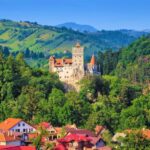
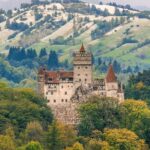
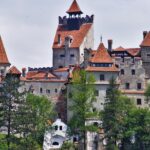
Next comes Bran Village and the hilltop Bran Castle, the one with the view that inspired myths and legends. Even if you treat Dracula as folklore, the location still does its job. Hilltop castles look dramatic because they’re built for both defense and presence.
Time-wise, you get about 2 hours. That’s enough to see the exterior and experience the castle vibe without feeling like you’re stuck in a long line for the entire day.
Again, admissions are not included.
Day 3: Brasov views from Tâmpa, then Agapia Monastery workshops
This is the day where the trip slows down a bit and starts to feel more local.
Brasov Historical Center
Brasov sits in central Romania, surrounded by the Southern Carpathians, and it’s a base point for trips around the region. Your stop focuses on Brasov’s old center, which is described as very well preserved.
Instead of only wandering at street level, you also get a strategy: you can best see the old city by taking the cable-car up to Tâmpa Mountain (995 m). The viewpoint approach is practical. It saves time and gives you context for the streets below.
Admission ticket is listed as free for this stop, which is nice if you’re trying to keep costs controlled. (You still might have options at the site, but the listing is clear that the stop is marked free.)
Agapia Monastery
After that, you head toward Gura-Humorului with a stop at Agapia Monastery, described as one of Romania’s largest nunneries. What makes this different from a “look and leave” monastery visit is that you can visit workshops where the nuns make items such as:
- painted icons
- handmade carpets
That means you’re not only seeing religious spaces, you’re also seeing the craft side of monastic life, and how skills get passed along inside the community.
Admission is listed as free here too, which makes it an easy add without ticket cost pressure.
Day 4: Voronet, Moldovita, Sucevita, and the art of painted monastery walls
If you want the most visually memorable day, this is it. Day four is devoted to Bucovina painted monasteries, and each one plays a different role.
Voronet Monastery
Voronet is the first stop. It’s said to have been erected in 1488, mixing Byzantine, Gothic, and local elements. The big attraction is the exterior fresco program, especially the famous Last Judgment scene, noted as unique in the whole world.
What I like about this kind of site is that it’s readable even if you don’t know Romanian. The figures, the layout, and the contrast between order and chaos are made for viewers, not only scholars.
Admission tickets are not included.
Moldovita Monastery
Then you go to Moldovita Monastery, reached via one of Romania’s beautiful roads through the Bucovina Mountains, with views from the Ciumarna Pass. Even if you don’t count the ride as a “sight,” the approach is part of why this region feels special.
The monastery was built in 1532, with a fortified quadrangular enclosure and painted church frescoes from 1537. One exterior wall detail is described as the Siege of Constantinople (AD 626), and the besiegers are depicted in Turkish dress, which the listing says keeps parishioners focused on a current enemy.
That last point is fascinating. It shows how religious art can function like communication for its time, not only decoration.
Admission tickets are not included.
Sucevita Monastery
The day finishes at Sucevita Monastery, where you learn about the Virtue Staircase. The description emphasizes contrast, angels ordered above and devil chaos below.
This is a stop you can spend more time on if you’re the kind of person who likes to look longer at paintings. The written themes give you a way to interpret what you’re seeing.
Admission tickets are not included.
Day 5: Bicaz Gorge, Red Lake, and Sighisoara at UNESCO pace
Day five is where the trip leans into Transylvania’s atmosphere.
You cross the Eastern Carpathians through Bicaz Gorge, and the listing explicitly connects the feeling of the area to the same realm described in Bram Stoker’s Dracula. Whether you’re a die-hard fan or not, gorges and rock scenery tend to create the mood people associate with Dracula.
Then you arrive at Red Lake, described as a mysterious realm where you are “in Transylvania,” passing through an area inhabited mostly by the Hungarian Szekler community.
Admission ticket is listed as free for this stop, which makes it a lower-pressure experience.
In the evening, you reach Sighisoara Medieval Town, which is UNESCO-listed and described as the only still inhabited medieval fortress in Europe. That wording matters. You’re not just touring ruins. People still live inside the citadel fabric, which changes how the streets feel.
Admission is listed as free for this evening arrival stop.
Day 6: Sighisoara Clock Tower, Church on the Hill, Vlad Tepes, then Biertan and Sibiu
This is a big day because it stacks medieval Sighisoara with Saxon fortifications and a walk in Sibiu.
Morning in Sighisoara
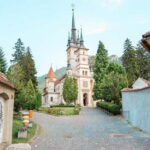
You start with an exploration of the Old Town of Sighisoara, including cobbled streets, burgher houses, and ornate churches. Your included sights are:
- Clock Tower
- Church on the Hill
- Dracula’s house, where Vlad Tepes was born in 1431
This is one of the cleanest “Dracula day” setups in Romania because it’s not only about a castle. It ties the legend to a place with real medieval structure.
Admission is not included for the Sighisoara morning stop.
Biertan Fortified Church (UNESCO)
Next is Biertan Fortified Church, another UNESCO site and an early German settlement in Transylvania. The fortified church is surrounded by three rows of fortifications and was built by German peasants. The listing adds that it was used for nearly 300 years as the residence of the Transylvanian Archbishop.
Here’s a detail I really like because it turns the visit from “cool building” into “human story.” One room was used for a long time as a reconciliation place for couples about to divorce, and the tour notes that you can hear the full story on spot.
Admission is not included.
Sibiu walking time
After Biertan, you get Sibiu Tourist Information Center as a starting point and then a leisurely walking tour described as covering old defense walls and towers, each belonging to a guild.
Admission is not included for this stop, but it’s a walking day component, which means it often comes down to how much you want to go inside museums versus just enjoy the streets.
Admission is listed as not included here.
Day 7: Sibiu’s Brukenthal Museum, Liar’s Bridge, Orthodox Cathedral, then Curtea de Arges to Bucharest
Your final day mixes cultural stops with a last heritage site before you drive back to Bucharest.
Sibiu highlights
You begin at Sibiu’s landmarks and museum area, including mention of:
- Brukenthal Museum, assembled by Baron Brukenthal, governor of Transylvania in the late 18th century
- the Evangelical Cathedral, completed in its actual shape in 1520
- an inside fresco of the Crucifixion on the north wall of the choir dating from 1445
- the Passage of Stairs linking Upper Town to Lower Town
- the Liar’s Bridge (1859)
- an Orthodox Cathedral described as Byzantine style and a replica of St. Sophia in Constantinople
Admissions are not included for this combined Sibiu segment.
This is a good way to end the trip because it gives you one last “Romania beyond castles” moment. Sibiu is less about one icon and more about layers of community life.
Curtea de Arges, then back to Bucharest
The day also includes Curtea de Arges Monastery, described as tied to the first capital of Wallachia and the old Princely Court. The listing says the monastery is the burial place for three of the four Romanian kings of the Hohenzollern dynasty.
Then you drive to Bucharest to finish the tour.
Admission ticket is not included for the Curtea de Arges stop.
Practical travel advice that will save your day
A tour like this works when you travel light and accept that you’re trading downtime for variety. Car days are part of the deal, since the route crosses from Bucharest to castles, then to Bucovina monasteries, then into Transylvania fortifications.
Here’s what I’d do to make it easier:
- Budget for admissions. The itinerary marks tickets as not included for several major stops like Peles Castle, Bran Castle, and multiple monasteries.
- Plan meals your way. Food and drinks are not included unless specified, so carry a flexible mindset and decide where you want to eat based on the day’s pace.
- Use the tour’s rhythm. You start around 8:00 am, so evenings are when you’ll want to reset. Breakfast at the B&B should help you do that.
- Keep your camera ready for exterior art. The painted monasteries are exterior-focused, so weather and light matter more than you might expect. If it’s cloudy or rainy, you’ll still get the details, just with different contrast.
- Expect a lot of windows. Not all “best moments” happen inside buildings. Many of your most memorable views are built into the drive route and viewpoints like Tâmpa.
Who this tour is best for
This itinerary is a good fit if you:
- want a structured route without planning buses and ticket time
- like mixing castle stops with religious art and Orthodox-era monasteries
- enjoy small-city walking time in places like Brasov, Sighisoara, and Sibiu
- want UNESCO coverage without creating a separate research project
It may feel intense if you prefer fewer days and more rest at each stop, since you’ll be moving across multiple regions and doing several key sights in one week.
Should you book it?
I’d book this tour if your goal is a high variety week in Romania, with UNESCO sites and the kind of painted monasteries that are hard to replicate on your own without extra coordination. The included driver/guide and transport remove the biggest friction points for first-timers.
Skip it or rethink if you’re trying to keep the total spend predictable. Since many admissions are not included and food is on your own, your personal add-on costs will vary based on what you choose to enter.
If you like structure, art-focused stops, and Dracula scenery done with real context, this is a strong choice.
FAQ
Where does the tour start and end?
It begins in Bucharest and ends in Bucharest.
How long is the tour?
The duration is listed as 7 days approximately.
Is pickup offered?
Yes, pickup is offered.
What is included in the price?
Included items are 6 nights accommodation on a BB basis, a driver/guide, transport by air-conditioned vehicle, and fuel and parking fees.
Are meals included?
Food and drinks are not included unless specified.
Are admissions included?
Admission tickets are listed as not included for many stops. Some stops are marked as having free admission.
What time does the tour start?
The start time is 8:00 am.
Is this a private tour?
Yes. It is described as private, and only your group will participate.
What ticket method do you receive?
A mobile ticket is included.
What is the cancellation cutoff for a full refund?
You can cancel up to 6 days in advance for a full refund, meaning at least 6 full days before the experience’s start time.
More Tours in Bucharest

More Tour Reviews in Bucharest
Transylvania, Further In

Just added from Bucharest


Transylvania Day Trips, compared.
 ★ 4.5Transylvania and Dracula Castle Full Day Tour from BucharestFrom $351,589 reviews
 ★ 4.5Castles of Transylvania: Private Day Trip from BucharestFrom $151248 reviews
 ★ 4.52-Day Medieval Transylvania with Brasov,Sibiu and Sighisoara Tour from BucharestFrom $120145 reviews
 ★ 4.8Transylvania: Dracula’s Castle and Birthplace TourFrom $175123 reviews
 ★ 5.02-Day Transylvania from Bucharest: Brasov, Bran, SighisoaraFrom $40960 reviews
 ★ 4.8Transylvania: Cultural Full-Day Trip by MinivanFrom $44157 reviews
 ★ 5.04-Day Private Tour in Transylvania from BucharestFrom $1,17548 reviews
 ★ 5.0Private Tour: Transylvanian Castles and Brasov’s Medieval Old TownFrom $19242 reviews
Browse the lists this tour appears in