
REVIEW · TRANSYLVANIA DAY TRIPS
Your rendez-vous with Europe’s past: time-travel to Maramures, Transylvania
Time travel, minus the maze. This private, car-based week across Maramures and Transylvania is interesting because it pairs iconic castles and medieval towns with working rural villages in the north. I especially like how the plan moves you from one UNESCO site to the next, without you having to figure out ticket logistics or routes day by day.
I also like the calm structure: pickup in Bucharest, a private driver, and a guide who can adjust the itinerary to your needs. A small consideration is that this is a nonstop geographic sprint, with long drives between regions, so you’ll want comfortable shoes and an open mind about packing in a lot of sights.
From the way guides and drivers run the day, the trip feels well-managed. In my experience with guides like Gelu and drivers like Vlad, the tone is warm, detail-focused, and paced with time for questions and photos, not just checklists.
Key highlights you will actually feel during the trip
- Private driver and guide, so you are not stuck translating signs or doing route math on the fly
- UNESCO wooden churches and fortified churches, with admissions handled so you spend time looking, not queueing
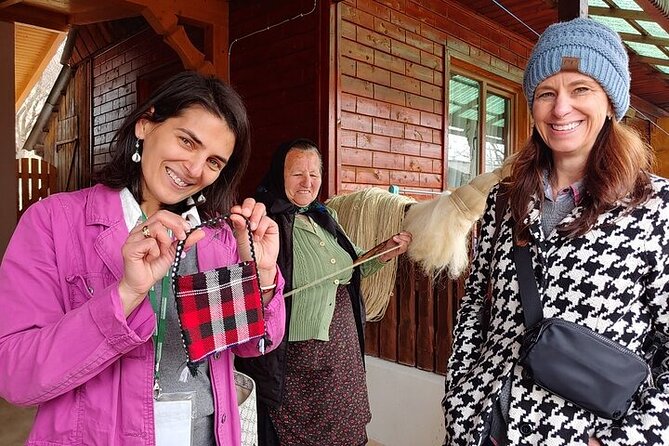
- Maramures village life in a real cottage stay, not just a quick photo stop
- Sighet prison memorial, a sobering stop that gives the whole region more emotional depth
- Fortress towns and Gothic landmarks in Transylvania, from Sighișoara to Brasov’s Rope Street
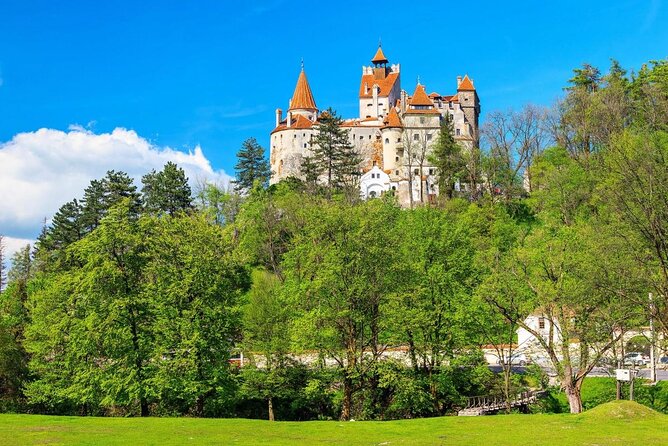
- Castle day done right, with Bran Pass scenery and then Peles Castle plus a Bucharest finale
Deeper into Transylvania
- Transylvania and Dracula Castle Full Day Tour from Bucharest★ 4.5 · 1,589 reviews
- Castles of Transylvania: Private Day Trip from Bucharest★ 4.5 · 248 reviews
- 2-Day Medieval Transylvania with Brasov,Sibiu and Sighisoara Tour from Bucharest★ 4.5 · 145 reviews
- 2-Day Transylvania from Bucharest: Brasov, Bran, Sighisoara★ 5.0 · 60 reviews
Why Maramures and Transylvania feel like two different worlds
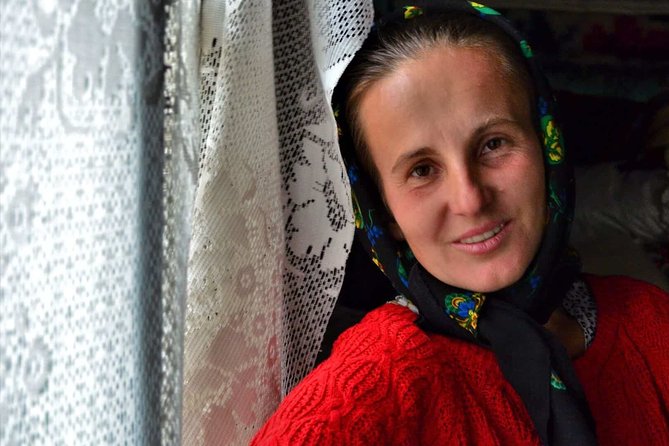
Even inside Romania, Maramures and Transylvania can feel like separate planets. Maramures leans hard into peasant traditions, wooden churches, and communities that still shape daily life around seasons and faith. Transylvania shifts you toward Saxon-influenced towns, fortified churches, and dramatic stone castles that people talk about in the same breath as Dracula.
That contrast is one reason this tour works so well. You do not just chase famous names like Bran or Brasov. You also see how Romanian culture survives in the details, from church design to village cemeteries.
And yes, you do get the classic sights too, but they come after you have the context to understand why people built, defended, and protected communities the way they did.
Private transport from Bucharest: the real value
This is a private tour using an air-conditioned vehicle, with private transportation throughout. That matters in Romania because distances between stops can be big, and rural roads do not always match what you expect from a map view.
You are also not waiting around for group logistics. Since it is private, you can keep the pace realistic. If you want more time at a viewpoint, or you want to ask follow-up questions about a fortress or monastery, the itinerary is built to allow that.
A practical bonus: the tour includes a mobile ticket, and many admissions are included or handled so you do not have to play ticket roulette with each stop.
Day 1, Wallachia starter pack: Cozia Monastery then Sibiu’s old-town climb
Your day begins with pickup in Bucharest (hotel or airport) and a scenic drive through the Olt River Valley. The first stop is Cozia Monastery, founded in 1388 by Mircea the Elder, a Wallachian prince and the grandfather of Vlad the Impaler. The appeal here is how fast the region connects medieval power to later legends.
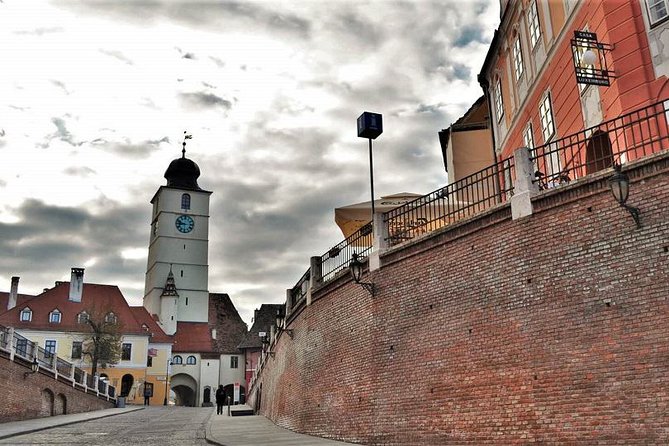
After about 30 minutes, you then head to Sibiu for a guided tour of the old city. What I like about Sibiu is that the sites are close enough to feel walkable, but there is still enough medieval texture that you can lose yourself in plazas and stairways. You climb the medieval stairs of the Council Tower for a great view, then stroll through Grand Square, Small Square, and Albert Huet Square (noted as dating from the 12th century).
You also visit major churches, including the Orthodox Cathedral and the Evangelical Church. The Orthodox Cathedral is described as having similarities to the Saint Sofia Basilica of Constantinople, which is a handy lens. It helps you look past style differences and spot shared architectural DNA.
Possible drawback for Day 1: it’s a full start. If you land late or are sensitive to driving early, plan for that long travel day rhythm.
Day 2: Alba Iulia fortress, Roman ruins, then Cluj-Napoca’s Matthias connection
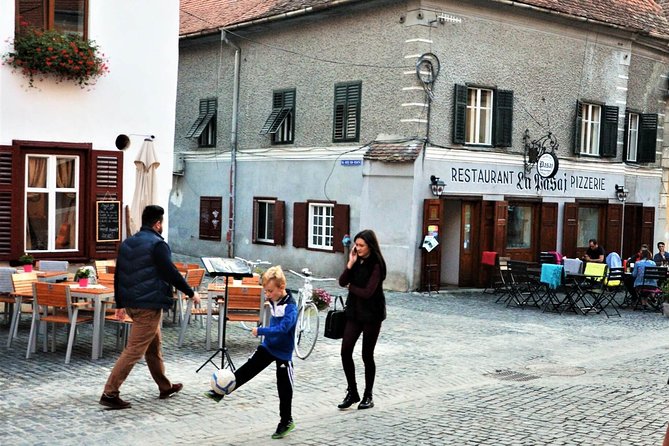
Day 2 goes straight into the “who ruled what, when, and why” layer of the region. Your first stop is Cetatea Alba Iulia at the Alba Carolina fortress. You walk the footsteps of John Hunyadi (Corvin), regent of Hungary and tied to Romanian ancestry, and also his son, King Matthias Corvinus.
Inside the fortress area you visit Saint Michael Cathedral, where Hunyadi was laid to rest. The construction started in 1004, which gives the building a deep time feel even before you read any explanations. You also see the Orthodox Coronation Cathedral and the ruins of a Roman castrum connected to the 13th Gemina Roman Legion.
Then you shift to Cluj-Napoca for a short guided city tour. This is the kind of stop that works even if you do not love big cities, because it is short and focused. The route is described as ending near restaurants or bars by the house where Matthias Rex, son of John Hunyadi, was born. That “finish near food” strategy is practical on a travel day, especially after hours of sights.
Consideration: if you prefer very slow city wandering, Day 2 might feel fast. The good news is that you still get guidance rather than just transit.
Days 3 and 4: Maramures UNESCO wooden churches plus Breb and Sighet
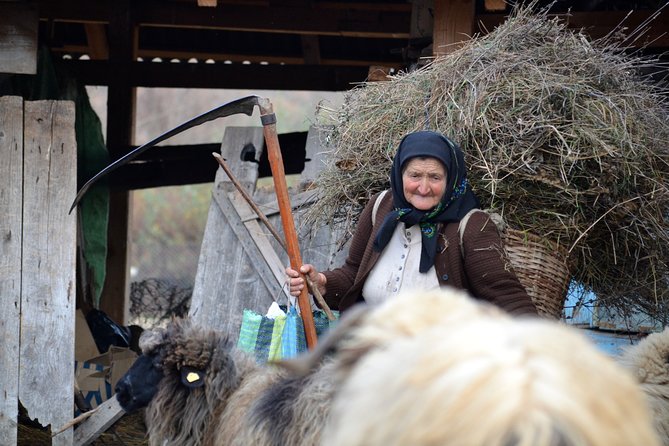
On Day 3, you head north toward Maramures, one of the last bastions of traditional peasant culture in Europe. Your first stop is Surdesti Wooden Church, a UNESCO World Heritage site built in 1766. It is a Greek-Catholic church, and it was once described as the tallest wooden church in the world. That fact alone helps you understand why people still treat these buildings like engineering marvels, not just quaint old structures.
Next you check in at a traditional cottage in Breb. This is not just a bed stop. It’s your chance to slow down and eat the way locals do, with time to enjoy the afternoon at a pace that the UNESCO rush usually does not allow.
Day 4 adds more spiritual and cultural layers. You visit Barsana Monastery, described as built in the early 1990s, but rooted in local tradition. It’s a reminder that “tradition” is not frozen in time. Then you go to Merry Cemetery in Sapânta, where a local artist started carving and painting vivid wooden crosses. The epitaphs are described as naive, joyful, and funny in tone, including a mother-in-law style story that turns death into a punchline about never stopping one’s complaining.
Then comes the emotional pivot: the Memorial of the Victims of Communism and of the Resistance in Sighet. The former Communist prison is converted into a memorial, and it explains that the regime targeted political, religious, academic, and cultural elites. The numbers given are heavy: 211 of the most important Romanian statesmen and respected intellectuals were imprisoned from 1950 to 1955. If you want your trip to feel more than scenic, this is the stop that gives it weight.
You end Day 4 with Desesti Wooden Church, another UNESCO-listed wooden church. This one is famous for its naive, well-preserved old picture, including a kind of folk visual storytelling that can hit you more than formal museum art.
Practical consideration: these days have multiple guided stops plus lots of walking around churches. If your knees are sensitive, bring supportive footwear and keep water handy.
Day 5: From Ieud’s wooden churches to Biertan’s fortified defense
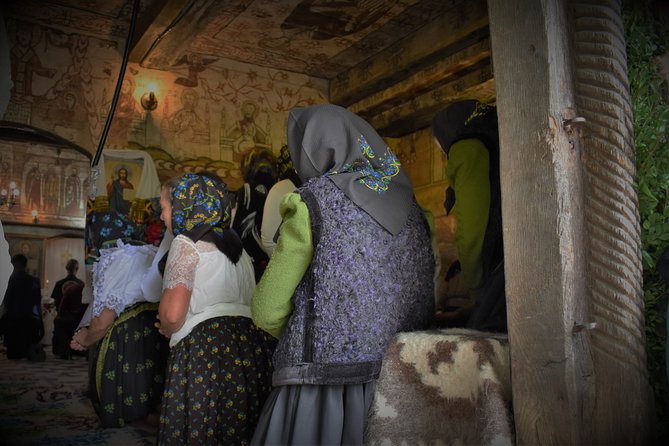
Day 5 is the bridge day, when Maramures starts giving way to Saxon-influenced Transylvania. The drive is long, but the tour builds in stops that keep your interest.
In Ieud village, you see two traditional wooden churches. The church on the hill is Orthodox and dates to the 17th century, and it is UNESCO listed. The church in the valley is Greek-Catholic and is described as slender and well-proportioned, earning the name The Wooden Cathedral. It was erected in 1718 after the last Tartars invasion in Maramures, with the local story including a 1717 defeat of the invaders led by a priest. It’s also noted as never painted, while hosting a rich collection of glass icons.
Then you move to Biertan Fortified Church, another UNESCO World Heritage site. This one is all about defense as well as faith. Built from 1486 to 1524, the church has defense walls and a beautiful nave ceiling. You also see tombstones of former bishops and notabilities, which helps turn the site into a place where you can imagine people as individuals, not just names in textbooks.
This is a good day for anyone who likes the practical side of heritage, how communities protected themselves and made worship work within walls.
Day 5’s evening in Sighișoara: medieval streets with Vlad connections
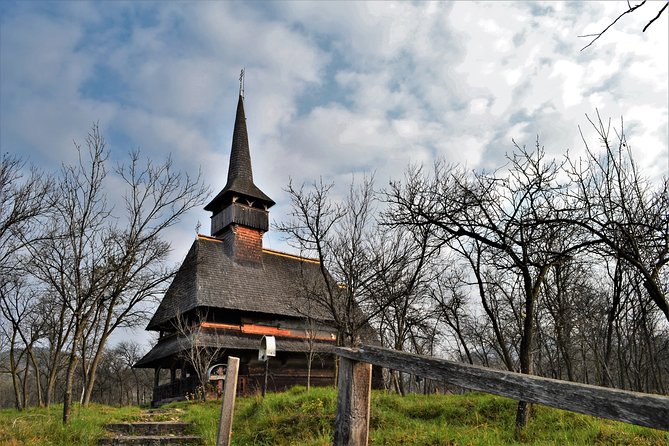
You finish the day in Sighișoara, visiting the medieval citadel, a UNESCO site. Your time is late afternoon into evening, which is when old towns usually feel most atmospheric.
The tour frames Sighișoara as the birthplace area of the famous Wallachian ruler Vlad the Impaler. Even if you are not obsessed with Dracula lore, this matters because it links legend to a real place people lived in, and that shifts the vibe from spooky to historical.
Possible drawback: if you need an early night, you might find yourself wanting to keep walking longer than expected. Sighișoara’s streets are the kind that reward slow wandering, especially after a long travel day.
Day 6: Saxon fortified churches near Viscri and Brasov’s Black Church and Rope Street
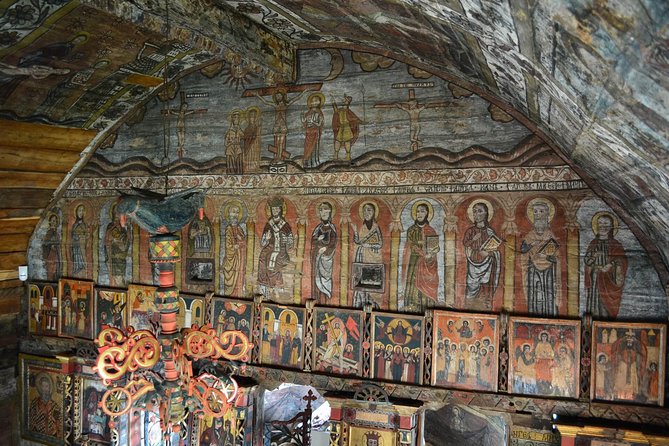
Day 6 leans into rural Saxon Transylvania, then ends in the city.
First you visit Viscri Fortified Church, and you also stop along the way for Saschiz fortified church. You are told that the region became a famous tourism attraction after Prince Charles fell in love with Viscri and bought an old Saxon household there, house number 163, a blue house built in 1753. That detail is useful because it explains why so many people now hear about these small villages.
The tour also notes that on the route, you can catch sight of Rupea fortress, one of Romania’s oldest fortifications, built over preexisting Roman and Dacian fortresses. That layering is exactly what you want from Transylvania: you are not only seeing castles, you are seeing how older civilizations got reused and rebuilt.
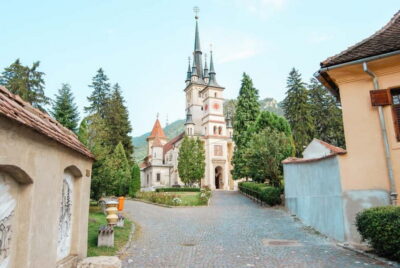
Then it’s on to Brasov Historical Center. Brasov is described as having grown from an initial fortress established in 1211 by the Teutonic Knights, later followed by German settlers. You check in, then visit Black Church, a 14th-century Gothic monument, plus the fortress fortifications, bastions, and towers. You also see Rope Street, noted as one of the narrowest in Europe.
If you like walking cities, Brasov gives you that mix of dramatic architecture and intimate street scale.
Consideration: this day includes both countryside and city time. If you want fewer driving hours, you might feel you are always transitioning, even though the sights are solid.
Day 7: Bran Pass to Peles Castle, then Bucharest’s Stavropoleos finish
Your final day is heavy on big names, but the tour helps you keep it grounded.
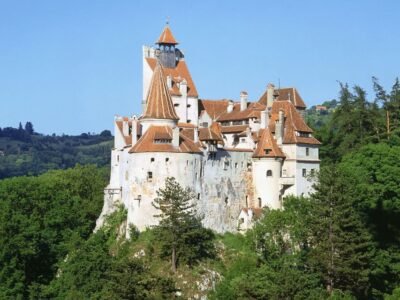
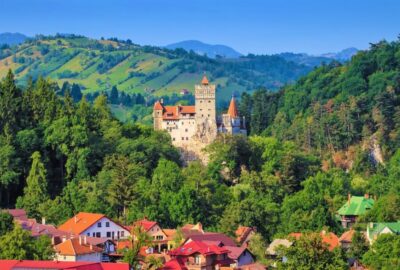
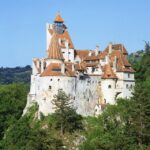
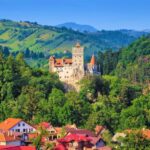
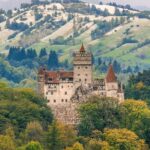
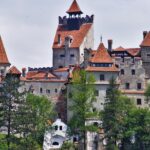
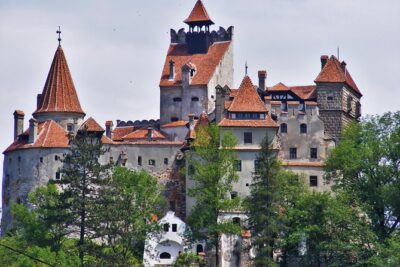
First is Bran Castle, often linked to Dracula legend. You also stop at Bran Pass, with breathtaking scenery at Piatra Craiului and Bucegi mountains. Even if you are not chasing horror stories, the mountain viewpoint gives you something the castle alone cannot: scale and atmosphere.
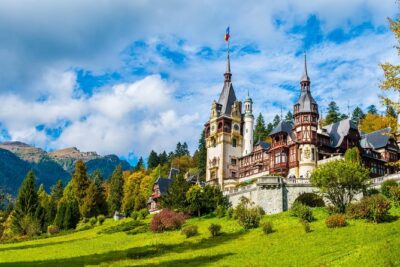
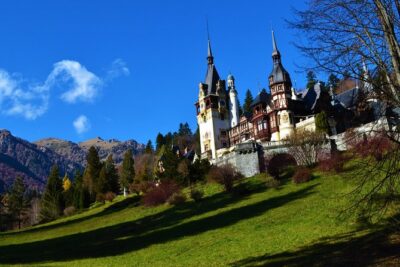
Next is Peles Castle in Sinaia, visited early afternoon. It’s described as built at the end of the 19th century and flamboyant, which is important context because it contrasts with its founder, the first King of Romania, Carol I, noted as sober and of German origins.
Then you end in Bucharest with Stavropoleos Monastery, described as an elegant church built in 1724, a monastery in the heart of the city. This is a smart finale because you are back where the trip started, with a quieter spiritual stop to let the week settle.
Price and value: what $2,185.67 covers, and what it doesn’t
At $2,185.67 per person, this is not a budget trip. So the real question is how much you remove from your workload.
What you get includes seven nights in 3-star superior hotels or guesthouses with breakfast, plus private transportation, an air-conditioned vehicle, all fees and taxes, and key meals. The tour includes two lunches and two dinners, while breakfasts are covered for all nights. Admissions are also described as organized for major stops, which can save time and hassle.
You do still need to plan for meals not included, and photo fees and flight tickets are not included. If you prefer a constant flow of meals on the calendar, those gaps could feel annoying. But if you like stopping for a casual bite while walking old towns, the flexibility can actually be a plus.
Value-wise, I think it lands well if you care about not driving yourself, not building a complex itinerary, and getting someone to explain what you are seeing. A week like this is expensive mainly because you are paying for time management, transport, lodging, and guided access, not just entry tickets.
Who should book this Maramures and Transylvania private tour
This works best for you if:
- You want UNESCO wooden churches and fortified churches without planning every ticket and route
- You like history that is explained, not history that you have to decode alone
- You care about both the postcard sights and the human side of the region, like Sighet’s memorial
- You want a trip where the guide can adjust the flow based on what you want more of
It might not be the best fit if you want slow travel with long, empty afternoons. The days are sight-forward, and you will spend serious time on the move, even with a comfortable vehicle.
Should you book it
If you want a week that feels like a guided time machine, with Maramures tradition in the north and Transylvania’s fortresses and castles in the south, I would book this. The biggest reason is simple: it saves you the planning burden and lets you focus on the sites, while keeping the pacing realistic with a private driver and guide.
My final tip: pack for comfort and be ready for driving days. If you treat the route as part of the experience, not just the gap between stops, this tour becomes more than a checklist. It becomes a story you can walk through.
FAQ
What is the duration and starting point of this tour?
The tour runs for about 7 days and starts with pickup in Bucharest (either your hotel or the airport).
What is included in the cost?
The price includes 7 nights of accommodation in 3-star superior hotels or guesthouses with breakfast, air-conditioned private transportation, all fees and taxes, and two lunches and two dinners. Some admissions are also described as included or free at specific stops.
Are admission tickets handled during the trip?
Yes. The tour describes admission as already organized for major sights, and each day lists which stops have admission included or free.
What meals are included?
Breakfast is included with your 7 nights of lodging. The tour also includes two lunches and two dinners, while other meals are not included.
Is this tour private?
Yes. It is a private tour/activity, and only your group participates.
What is the cancellation or change policy?
This experience is non-refundable and cannot be changed for any reason. If you cancel or ask for an amendment, the amount you paid will not be refunded.
More Tour Reviews in Bucharest
Transylvania, Further In

Just added from Bucharest


Transylvania Day Trips, compared.
 ★ 4.5Transylvania and Dracula Castle Full Day Tour from BucharestFrom $351,589 reviews
 ★ 4.5Castles of Transylvania: Private Day Trip from BucharestFrom $151248 reviews
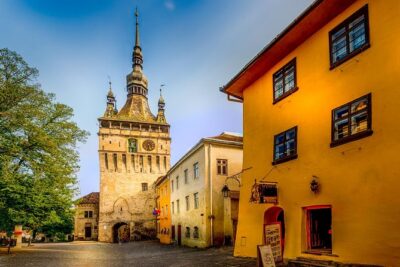 ★ 4.52-Day Medieval Transylvania with Brasov,Sibiu and Sighisoara Tour from BucharestFrom $120145 reviews
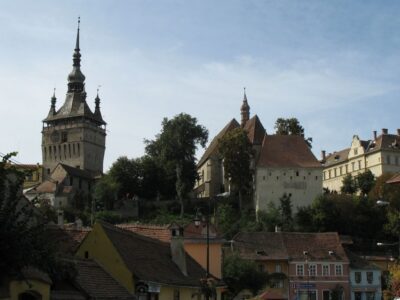 ★ 4.8Transylvania: Dracula’s Castle and Birthplace TourFrom $175123 reviews
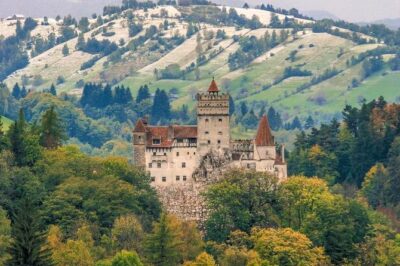 ★ 5.02-Day Transylvania from Bucharest: Brasov, Bran, SighisoaraFrom $40960 reviews
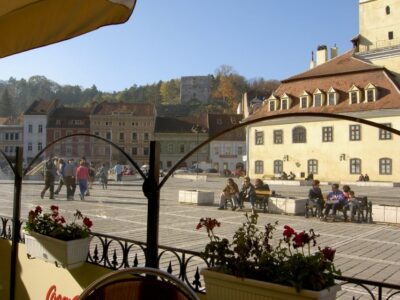 ★ 4.8Transylvania: Cultural Full-Day Trip by MinivanFrom $44157 reviews
 ★ 5.04-Day Private Tour in Transylvania from BucharestFrom $1,17548 reviews
 ★ 5.0Private Tour: Transylvanian Castles and Brasov’s Medieval Old TownFrom $19242 reviews
Browse the lists this tour appears in