REVIEW · BUCHAREST
Slavery in Romania Myths and Truths About Gypsies
Bucharest has a history you can’t get from selfies. This 3-hour walking tour connects Roma stories to major landmarks, names, and even an important memorial, mixing art, politics, and hard history into a route that makes the themes click. You also end in a craft shop that shows you what living culture looks like, not just what history books say.
What I love most is the way the guide, Mihai, ties it together with clear explanations and strong background, without turning it into a lecture you can’t follow. I also like that you start with the grand Romanian Athenaeum and then move through parks and schools, so you see how education, public life, and power all shape people’s lives. The group stays small, up to 15, which keeps questions possible.
One drawback to plan for: the tour covers several stops on foot, and the content includes WWII material tied to the Roma experience. If you prefer light sightseeing only, you might find the Holocaust memorial portion emotionally heavy.
Key Highlights You’ll Feel in This 3-Hour Walk
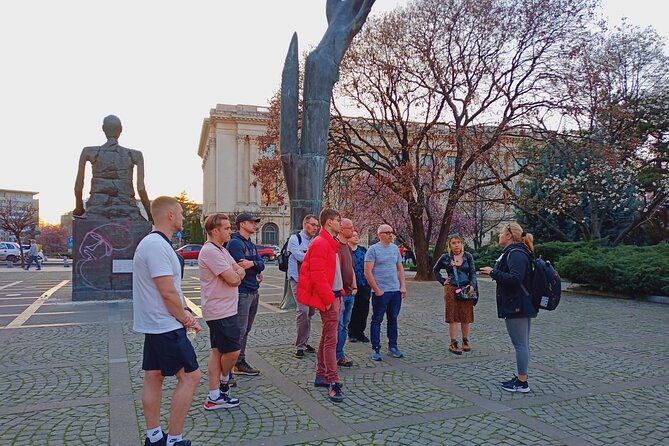
- Small group pace (max 15) that keeps the conversation moving and the walking manageable
- Mihai’s Roma history storytelling, clear enough that the time feels like it disappears
- Free entry stops at major sites, so your money goes more toward the guide and less toward ticket hassles
- Cismigiu Park walking segment, which gives you a calmer stretch between heavier topics
- Holocaust memorial stop, focused on the Roma experience during WWII, including what’s known as The Forgotten Holocaust
- Ending at Mesteshukar ButiQ [MBQ], where you can see handcrafted Roma work up close
Still deciding? These Bucharest trips come up again and again.
- Bucharest: Dracula’s Castle, Peles Castle, & Brasov Old Town★ 4.5 · 17,858 reviews
- Bucharest: Dracula Castle, Peles Castle & Brasov Old Town★ 4.6 · 10,891 reviews
- Bucharest: Dracula’s Castle, Peleș Castle & Brașov Day Trip★ 4.5 · 5,919 reviews
- Bucharest: Palace of Parliament Tickets and Guide★ 4.3 · 3,182 reviews
Starting at Teatrul Ion Creangă, You Get Oriented Fast
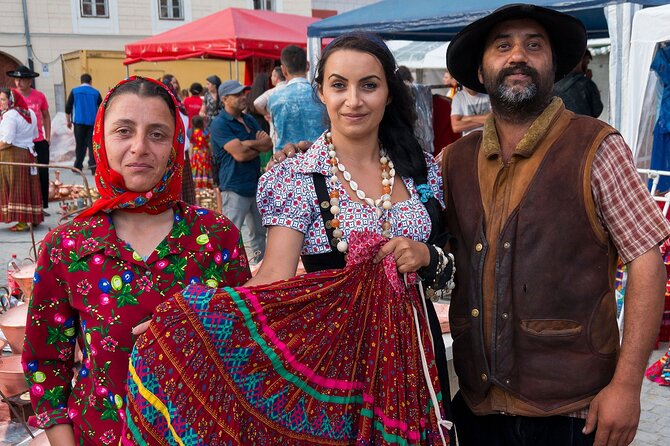
The tour starts at Teatrul „Ion Creangă” on Strada Piața Amzei 13, Bucharest. The meeting point matters here because you’re about to move through central Bucharest in a tight time window, about 3 hours total. Starting at a well-known theater keeps it simple, and you don’t waste time searching the streets like it’s a scavenger hunt.
Right away, you’ll know the structure of the walk: short stops, guided explanations, and then walking between each point. The guide uses the day like a storyline. That approach helps a lot when the theme is complex, since the route includes both civic landmarks and memorial space.
This is an English-language tour with a professional guide, and you’ll also get a mobile ticket. If you like to travel with minimal friction, that’s a win. You’ll likely have a cake snack included too, which is small but genuinely useful if your morning appetite is already negotiating with your brain.
Romanian Athenaeum: When Art Is Your First Clue
Your first stop is the Romanian Athenaeum, one of Bucharest’s biggest cultural landmarks. Plan for around 20 minutes here. The building is described as Romania’s House of Art, and the National Romanian Philarmonic calls it home, so you get a sense of national identity right away.
Why this first stop works for the tour theme: it reminds you that history is not only made by wars and laws. It’s also made by culture, institutions, and public visibility. Starting with a place tied to performance and national art helps you understand why later stops about politics, education, and memorials matter. People make choices in public spaces, and public spaces are not neutral.
Also, admission at this stop is free on the tour. That’s practical. You get a landmark experience without stacking costs on top of the tour price.
Iuliu Maniu Statue: Modern Romania Through a Human Name
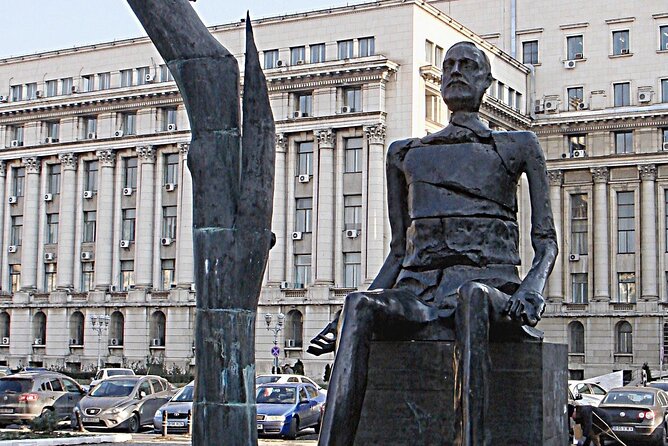
Next you’ll walk to the Iuliu Maniu statue, another short stop, around 20 minutes. Iuliu Maniu is presented as a key figure in Romania’s political life, and the tour specifically connects him to the story of Roma as well as the development of modern Romania.
This is one of those stops where the time feels short, but the takeaway can be big. When you see a named figure in the city, you start asking better questions: Who held power? How did official policy shape real lives? What did political leaders say and do, not just what did they believe?
The route uses stops like this to translate history into something you can point at. If you like guided walks where the city becomes your timeline, you’ll appreciate this part.
Admission is listed as free, so again, you keep your spending controlled while still moving through meaningful sites.
Palatul Stirbei and Barbu Stirbey: A 19th-Century Snapshot
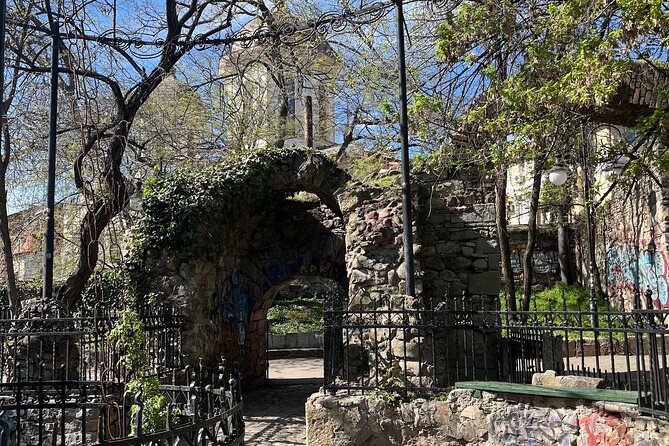
Then you reach Palatul Stirbei, also about 20 minutes. The focus here is 19th-century context, with Barbu Stirbey described as an important figure connected to rulership of Valachia. In other words, you’re not just looking at a building. You’re getting a moment from the period when social structures hardened and power was displayed through residences and public status.
This stop helps you understand why later themes about exploitation and persecution are not random. They come from long social systems, and those systems leave physical traces in cities. When you walk past grand historic homes, you’re seeing the kind of world where the rules were made by elites.
The tour keeps it relatively brief, so don’t expect a deep architecture seminar. But you will get enough context to make the building feel like part of the story rather than background scenery.
Cismigiu Parc Walk: A Calm Stretch With Purpose
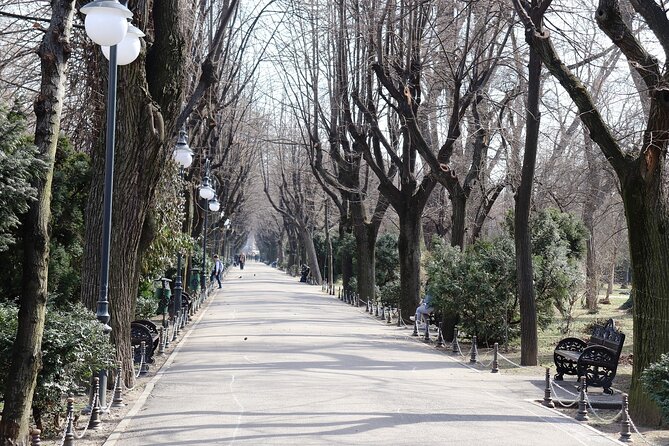
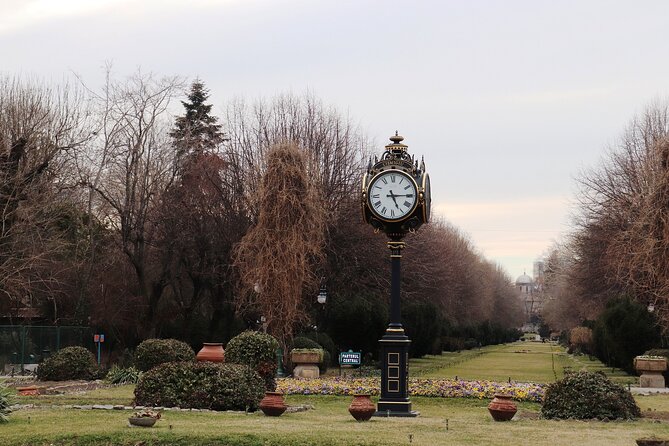
Cismigiu Parc is where the tour slows down and breathes. You’ll spend about 30 minutes here, and the walk is described as a relaxed stroll in the largest and most beautiful garden in the city. Expect several smaller stops along the way, including a famous high school, ruins of an old monastery, and viewpoints over the park.
This part is more than a break from pavement. It supports the tour’s education and social themes, and the park setting gives you room to absorb heavy topics without keeping your mind tense the whole time. You also get variety: open space, ruins, and viewpoints. That makes the walking feel more like moving through a living neighborhood than moving from one checklist item to the next.
Practical note: since this is a walking tour with multiple segments, wear comfortable shoes. Park paths can still be uneven, and you want your feet to be your friend, not your complaint department.
Admission is free for this segment, and the tour timing includes the walking time between stops, so you get a steady rhythm.
Gheorghe Lazăr National College: Education as the Key Theme
Right after the park, the tour stops at Gheorghe Lazăr National College, around 15 minutes. It’s described as the best quoted high school in the city, and it sits right at the entrance in Cismigiu Park.
Why I like this stop: education shows up as a practical theme. When societies control schooling, they influence opportunity, access, and long-term outcomes. You’ll hear the tour’s broader message tied to learning and institutions, and placing the school at the edge of the park makes the point feel grounded.
If you’re the kind of traveler who pays attention to public buildings, you’ll enjoy this. If you’re not, you can still listen for the context behind the institution name and what it symbolizes within the Roma-related story the guide is building.
This stop also has free admission on the tour.
Holocaust Memorial: The Forgotten Holocaust Stop You Should Not Skip
Then comes the emotional core. You’ll visit the Holocaust Memorial for about 15 minutes. The tour explains it as part of the rough story of Roma during WWII, and it refers to it as The Forgotten Holocaust. It’s described as the most impressive monument built in memory of the victims of the Holocaust in Romania.
This is not the kind of stop where you take photos and keep scrolling. Give yourself the minutes to actually read and absorb. You don’t need to become an expert on the spot. You just need to take in what the memorial is asking you to remember.
Also, this stop is valuable because it connects the broader Holocaust narrative to Roma history in Romania. That connection is exactly what many visitors often miss. If your goal is to understand the city and the country beyond the postcard version, this is the moment that pushes you past comfortable ignorance.
The tour lists admission here as free, so you can focus on the meaning rather than the logistics.
Piața Mihail Kogălniceanu: A Name That Links Writing and Power
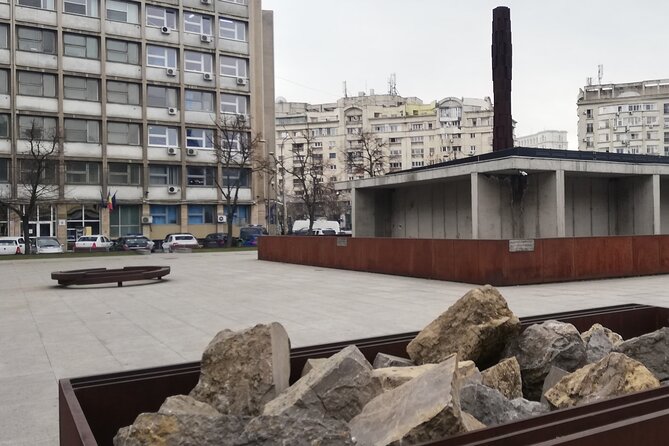
You then move to Piața Mihail Kogălniceanu for about 10 minutes. Mihail Kogălniceanu is presented as a famous politician and writer in Romanian history, and the tour says he was the first to write about Romanian Gypsies.
That “first to write” detail matters. Writing is not passive. It shapes how people get described and understood, and sometimes it’s where stereotypes gain official language. Having this stop after the Holocaust memorial gives you a contrast you can feel: one part of the route pulls you toward remembrance, and the other pulls you toward how narratives get created.
It’s short, but it’s a useful pivot. When a tour lets you see both the human impact and the written framing, you end up understanding how myths form and how they persist.
Mesteshukar ButiQ [MBQ] Craft Shop: Culture You Can Actually Hold
The tour ends at Mesteshukar ButiQ [MBQ] at Bulevardul Mihail Kogălniceanu 12, Bucharest. You’ll spend about 20 minutes there. This is described as a little shop with authentic pieces hand-crafted by Roma, and the idea is that you meet the reality of Roma culture and tradition through work made by Roma craftsmen.
Ending here is smart. Memorial stops can leave you feeling stuck in sadness. A craft shop gives you a different kind of closure: creativity, skill, and everyday culture. You’re not asked to buy, but you’re offered the chance to see what “tradition” looks like when it is alive and made by real hands, not frozen in time.
Also, your tour guides the flow toward this ending, so you arrive with context. You’re not just shopping. You’re finishing the story in a way that feels human.
Price and Logistics: Is $127.37 Worth It?
At $127.37 per person for roughly 3 hours, this tour sits in the mid-range for guided walking experiences in a European capital. Here’s why I think it can still feel like good value for the right traveler.
You get:
- a professional English-speaking guide
- a small group limit of up to 15 people
- a route that uses multiple major central landmarks
- free admission tickets listed for the stops
- a mobile ticket
- a included cake snack
In plain terms, you’re paying for interpretation and time, not just access. If you prefer tours where a guide connects dots for you, this price makes more sense. If you only want casual sightseeing, you could technically walk these areas on your own, but you’d miss the guided framing around Roma myths and truths and the WWII memorial focus.
One more practical point: the description says the remaining tour time is used for walking between stops. That means the tour is efficient, but it also means you should expect a bit of steady walking. You’ll want comfortable shoes and a calm pace with your own energy.
Who This Tour Fits Best (and Who Might Want a Different Plan)
This tour fits best if you:
- want to understand Bucharest through people, politics, and memorials, not only architecture
- care about Roma history and the difference between myths and documented reality
- like small groups where you can ask questions and follow a narrative
It might be less ideal if you:
- want a purely upbeat, light sightseeing day
- dislike sensitive subjects, even if handled respectfully
- prefer long museum time rather than short guided stops and walking segments
The emotional content is real, and the route doesn’t shy away from it. If you’re okay with that, the payoff is seeing the city become more than scenery.
Should You Book This Walk?
I’d book it if your goal is to learn while you walk and if you appreciate a guide who can explain difficult topics in a way that stays clear. The strongest signals are the guide’s solid grasp of Roma history, plus the fact that the route is full of specific places, not generic talk. Ending at Mesteshukar ButiQ [MBQ] is also a smart touch, because it brings you back to living culture rather than leaving you only with monuments.
Skip it if you want only light city strolling or if memorial-related history feels like too much for your travel style right now. Otherwise, plan for comfortable shoes, bring your questions, and give the memorial stop a few minutes of real attention.
FAQ
What is the price per person for this tour?
The price is $127.37 per person.
How long is the tour?
The tour lasts about 3 hours.
Is the tour offered in English?
Yes, it is offered in English.
Where does the tour start and end?
It starts at Teatrul „Ion Creangă” – Sala Mare, Strada Piața Amzei 13, București 030167, Romania. It ends at Mesteshukar ButiQ [MBQ], Bulevardul Mihail Kogălniceanu 12, București 030167, Romania.
What is included in the tour price?
Included: a professional English-speaking guide and a cake snack. You also receive a mobile ticket.
Are there admission fees at the stops?
The stops listed include free admission tickets.
What is the cancellation policy?
Free cancellation is available. You can cancel up to 24 hours in advance for a full refund, based on local time.