
REVIEW · PRIVATE
Private: RedPatrol Bucharest Contrasts Tour in a Vintage Car
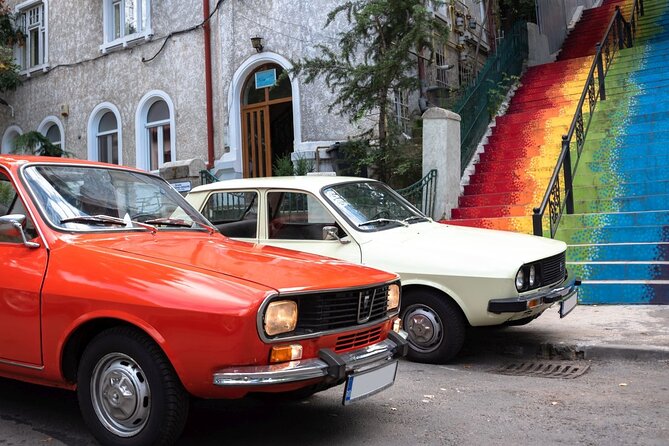
Bucharest changes fast, especially in a Dacia. This private RedPatrol tour links old royalty, communist-era planning, and today’s toughest neighborhoods, all from the back seat of a restored Dacia 1300/1310. I love how the route is built around clear social contrasts, and I also love the storytelling style of a real local guide in your car. One thing to keep in mind: it is a classic car with basic comfort, no AC, no ABS, and no GPS.
You get hotel pickup and drop-off across Bucharest, plus water in the car and a small personalized gift at the end. The tour runs about 3 to 4 hours, and it is designed so you can see big shifts in the city without spending the whole day in transport. In winter, the cars are heated, which matters a lot when you are looking out at neighborhood after neighborhood.
Key Highlights You Actually Feel
- Hotel pickup plus a fully guided circuit, so you are not mapping bus routes on the fly
- A vintage Dacia 1300/1310 ride (you ride, you do not drive) with restored safety compliance
- A contrast-focused itinerary that moves from royal areas to communist blocks to Ferentari
- Short, well-timed stops for photos and context, not long museum marathons
- Some entrance tickets are included, so you do not get surprised at every checkpoint
Elsewhere in Bucharest, and up the valley
- Bucharest: Dracula’s Castle, Peles Castle, & Brasov Old Town★ 4.5 · 17,858 reviews
- Bucharest: Dracula Castle, Peles Castle & Brasov Old Town★ 4.6 · 10,891 reviews
- Bucharest: Dracula’s Castle, Peleș Castle & Brașov Day Trip★ 4.5 · 5,919 reviews
- Bucharest: Palace of Parliament Tickets and Guide★ 4.3 · 3,182 reviews
Private Hotel Pickup and the Ride in a Restored Dacia
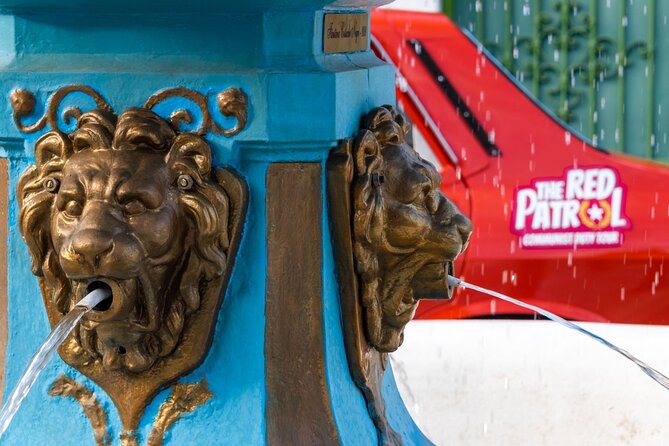
The biggest practical win is the door-to-door setup. You get picked up from your address anywhere in Bucharest, then you circle through the city in a small, focused format, not a crowded group bus situation. You are also not stuck figuring out where to park or which tram to take. You sit back, watch the city change, and let the guide connect the dots.
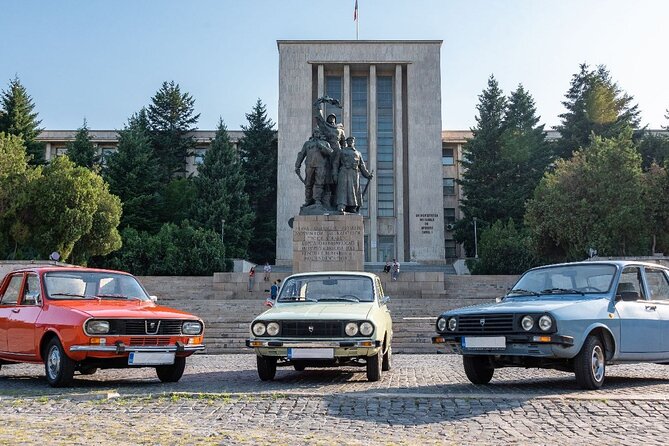
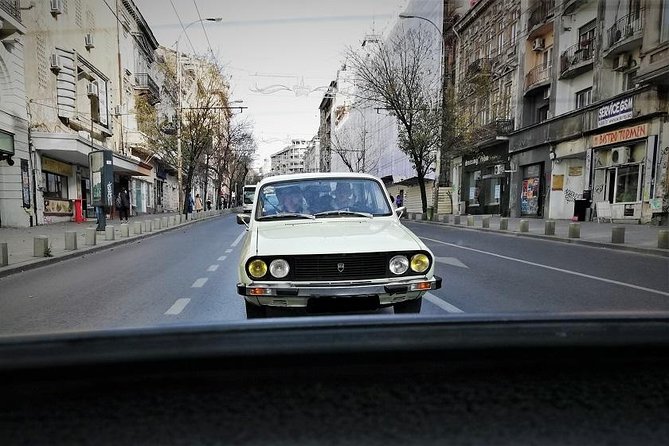
The car is the Dacia 1300/1310, a 70s to 80s classic. Your driver knows how to handle normal city traffic safely in a restored vehicle, and the cars are kept to current traffic safety regulations. Also, you will not drive the car. That is a good thing to know upfront, especially if you were picturing yourself behind the wheel like a movie scene.
If you care about comfort, keep expectations realistic. These classic cars do not include modern features like AC, ABS, GPS, or automatic gear drive. Winter is the one exception in your favor, because the cars are heated during cold months. If you travel in warm season, bring a light layer. If you travel in winter, dress for being outside around photo stops.
Why This Bucharest Contrasts Route Works
Most Bucharest tours pick a highlight, then they build around it. This one does the opposite. It uses the city like a timeline you can see in real space. You start with institutions tied to power and national identity, then slide into bourgeois neighborhoods, then hit communist-era working-class planning, then finish with the kind of post-social reality that makes Bucharest feel sharply divided.
That structure changes how you experience the city. Instead of asking, What is this building?, you start asking, Who was this built for, and who ended up living with the results? The guide’s job is to make those questions easy, with stories that connect architecture to everyday life.
It is also a smart length for first-time visitors. At about 3 to 4 hours, you cover a lot of ground while still keeping each stop brief enough that you stay fresh. And because it is private, your guide can pace the experience to your interests, whether you want more photos, more context, or more time at the market stop.
From Academia Română to Fântână, Revolution-Era Stops and Royal Beginnings
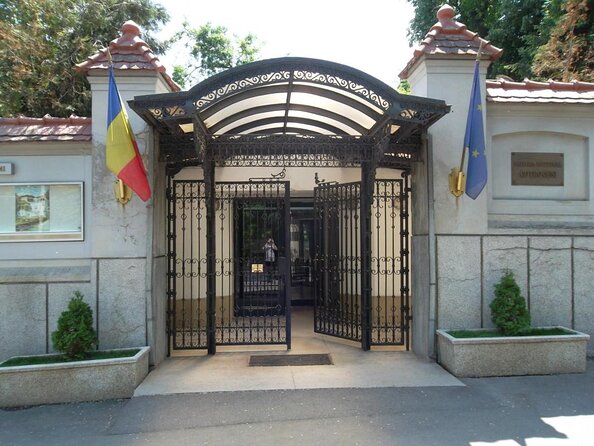
The opening stop is Academia Română, in the Uranus area. You get a focused look at the zone where Ceausescu-era plans for demolition in the 80s were halted by the Romanian Revolution. The value here is not just a name on a wall. It is a reminder that political power leaves physical scars, and sometimes it leaves incomplete projects too.
Right after that, you move to Fântână, described as a Bourgeoisie neighborhood that began in the 19th century. You get a brief presentation tied to the first Royal Palace of Romania. Even if you do not plan to read every plaque, this kind of starting point helps you understand why Bucharest looks the way it does in certain pockets. It also gives you a reference point for what comes later, when the city’s priorities shift again.
One practical note: some stops require extra tickets. For Academia Română, the admission ticket is not included. For Fântână, admission is free. So if you hate last-minute surprises, you may want to bring some cash or be ready to pay small entrance fees.
Cotroceni Palace Gardens and Drumul Taberei Blocks
Next comes Cotroceni Palace’s Gardens, tied to the first Royal Palace of Romania. The tour frames it as part of the Belle Époque era in Bucharest, and that matters because gardens and palace grounds are not just pretty. They signal a whole worldview, where the city was shaped for the elite and the rituals of power.
Then the tour shifts hard into Drumul Taberei (Park Camp Road). Here you see the working-class communist apartment block side of Bucharest. The stop includes the story of how a shopping mall was built on the ruins of a communist canteen. That single detail is a perfect example of the tour’s theme. New things can appear, but the old logic can still be visible underneath.
This portion is also where you notice the neighborhood rhythm. The guide’s stories help you see these places not as stereotypes, but as places that were built for specific social roles. You get a photo pause plus time for explanation, which is ideal if you are trying to decode what you are looking at.
More private days in Bucharest
Ferentari and Piața Rahova, the City’s Sharpest Contrasts
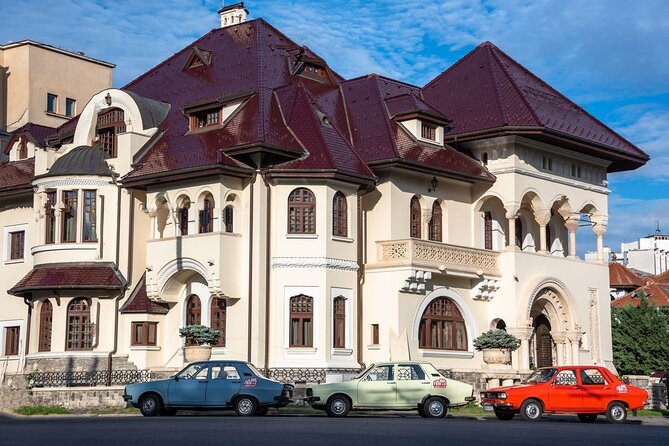
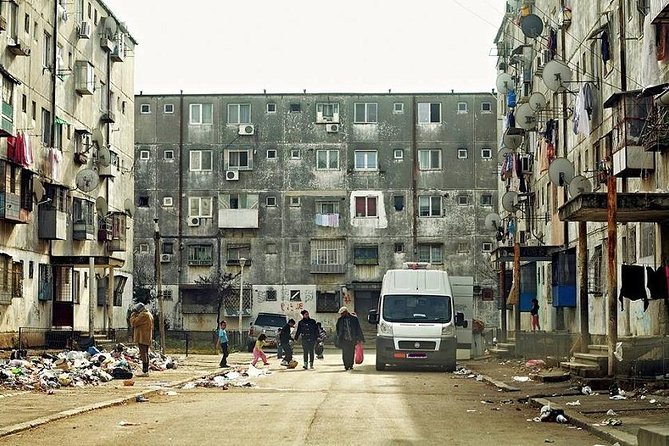
The itinerary gives you a deeper look at Ferentari, presented as a fallen industrial area built by communists in the 1970s. This is where the tour earns its name. The stories connect the industrial past to what happened afterward, when post-social change created a very different reality in the same urban fabric.
Then you move to Piața Rahova for more exploration of the Ferentari blocks. This stop is framed as a shift from workers’ area into what the tour describes as a city ghetto in the post-socialist 90s. Even if you already know the general history of Eastern Europe, it helps to see it through street-level detail.
There is also a peasant market stop here. That is a value add because it gives you a human scale moment. Buildings can be depressing or impressive, but markets force you to slow down, look at daily life, and recognize the continuity of people’s routines.
A balanced note: Ferentari is not a theme park. It is a neighborhood with challenges. The tour does not sugarcoat it, which is exactly why it feels honest. If you prefer only polished attractions, this might feel heavy. If you want Bucharest that reflects real life, it is a highlight.
The Rocar Factory Ruins and Broscuțe Park in One Sweep
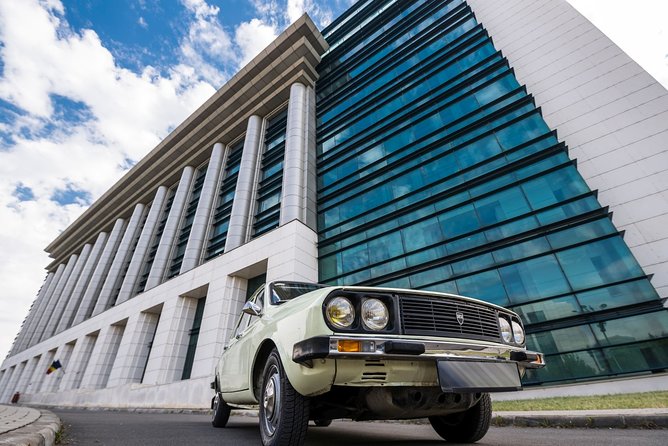
After the market and blocks, the tour moves into the industrial fallout story with Fosta Uzină Rocar. This is described as a ruined socialist-era area left abandoned after the collapse of socialist factories. You get a brief exploration plus stories about how the neighborhood rose and fell. This stop is short, but it hits a key concept: when an economic system changes, the physical city changes too, even if no one ever demolishes everything cleanly.
Then you go to Broscuțe Park, the Colonel’s Quarter, described as an early Soviet occupation era neighborhood. The presentation is about how life worked in Stalinist days in Bucharest. If you like your history grounded in place, this is where the tour ties together political control and daily living conditions. Parks and quarters may sound gentle, but in this context they are part of an occupation story.
Here, entrance tickets are indicated as included for Fosta Uzină Rocar and Broscuțe Park. That reduces uncertainty compared with the earlier stops where admission is not included. Still, the experience stays focused on what you see outside, not on a long paid-entry museum schedule.
Palace of Parliament: The World-Scale Building With a Neighborhood Story
The final big landmark stop is the Palace of Parliament. The tour calls it the biggest civil building in the world, and it frames the site inside a neighborhood of about 20 square kilometers that was completely rebuilt after complete demolition.
That framing matters because it changes the way you process the building. You are not only looking at size. You are also looking at displacement, forced transformation, and the way governments can erase a whole area to create a new symbol of power. The presentation aims to explain the neighborhood story alongside the House itself.
As with other stops, admission is not included for the Palace of Parliament. So plan your expectations for what you will experience during this specific tour window. You can still learn a lot from the exterior and the historical context, but if you want interior time, that may be a separate step.
Price and Time: Does This Tour Feel Like Value?
At $126.43 per person for about 3 to 4 hours, the price feels fair when you look at what is included. You get hotel pickup and drop-off from across Bucharest, plus a professional local guide and driver in your car. You also get water, a personalized gift, and winter heating on the cars. That combination is where value usually hides on short city tours.
You should also weigh the classic-car factor. Riding in a restored Dacia 1300/1310 is the experience hook. It also shapes your pacing. These cars do not feel rushed, and the whole tour has that half-day, street-level vibe.
Where costs can add up is admissions. Some stops are not included, some are free, and some include entrance. So if you want to budget tightly, think of the tour as a guided route plus a few ticketed entrances along the way, not as one all-inclusive pass.
A demand hint: this tour is booked far in advance on average. If you travel during peak season or on weekends, it is smart to book earlier rather than waiting.
What to Expect, Comfort Tips, and Who Will Love This Most
This is a private tour, so you are with your group only. That matters if you want more tailored pacing, less waiting, and a guide who can answer your questions without speaking over a crowd. It is also a good first Bucharest activity because it sets context quickly, especially if you are trying to understand how the city split into different social realities over time.
You should also know the participation boundaries. Pets are not allowed, and children under 10 are not allowed. The tour says most people can participate, which fits the short stop format.
For comfort, I recommend:
- Wear shoes that handle frequent walking during stops and photo moments
- Bring a light layer if you travel in shoulder season, since you will be outside at least briefly at each stop
- Have a small payment buffer for stops where admission is not included
If you love history but hate museum overload, this fits your style. If you only want postcard sights and polished neighborhoods, some stops may feel too real for your taste.
Should You Book RedPatrol Bucharest Contrasts in a Vintage Car?
Yes, if you want Bucharest explained in real neighborhoods, not just in big-name landmarks. The mix of royal context, communist-era planning, and post-social reality in Ferentari and Rahova creates a clear story you can carry with you after the tour ends.
Also, the private Dacia ride is not a gimmick. It makes the whole thing feel slower and more personal, and it gives you that lived-in perspective you cannot get from a standard van tour.
Skip it or book with expectations set low on comfort if you need modern car features like AC or if you dislike areas that include serious social challenges. Otherwise, this is one of the better ways to get your bearings fast and still leave feeling you learned something real.
FAQ
Is this tour private?
Yes. It is a private tour/activity, so only your group participates.
Do I get hotel pickup and drop-off?
Yes. Hotel pickup and drop-off are included, with pickup from all addresses in Bucharest.
How long is the tour?
It runs about 3 to 4 hours.
Is the tour offered in English?
Yes. The tour is offered in English.
Will I drive the vintage Dacia?
No. You will not drive the Dacia car. A professional local guide and driver handle the vehicle.
Are the cars heated in winter?
Yes. During wintertime, the cars are heated.
Are water and a gift included?
Water is included in the car, and you also receive a personalized tour gift.
Are entrance tickets included for every stop?
No. Some stops are listed as admission not included, while other stops show admission included or free. For example, admission is free at Fântână, and admission is included for Fosta Uzină Rocar and Broscuțe Park.
Are pets or children allowed?
Pets are not allowed, and children under 10 years old are not allowed.
More Tours in Bucharest




More Tour Reviews in Bucharest

More Bucharest Tours in Bucharest
Just added from Bucharest


Private, compared.
 ★ 4.5Castles of Transylvania: Private Day Trip from BucharestFrom $151248 reviews
 ★ 5.0Dracula’s Castle, Peles Castle and Brasov – Private Day Trip from BucharestFrom $199211 reviews
 ★ 5.0Best of Bucharest | Private Walking TourFrom $314199 reviews
 ★ 5.0Bucharest Panoramic Sightseeing – Private City TourFrom $101128 reviews
 ★ 4.0THERME “Take It Easy” Pack: Full Spa Access + Private TransfersFrom $118117 reviews
 ★ 5.04h Bucharest Private Tour (2h by Car and 2h Walking in Old Town)From $10090 reviews
 ★ 5.0Discover Bucharest: Private Highlights and Traditional Food TourFrom $14386 reviews
 ★ 5.0Dracula Castle, Peles Castle & Brasov-Private Tour from BucharestFrom $16580 reviews