
REVIEW · LIPSCANI & OLD TOWN WALKS
Bucharest Old Centre Tour
Bucharest makes sense faster on foot. This Old Centre tour is built around a local guide who connects streets and stone landmarks to the city’s changing eras, from Ottoman-era street life to the Wallachian power center. I love the hotel pickup and drop-off from selected central hotels, because it keeps your day flexible and your feet fresh for the walking.
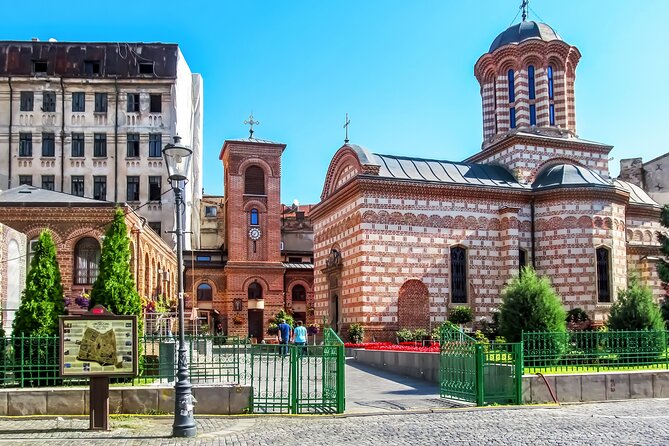
The other big win is the tight pacing. You get a 1 hour guided loop that hits the main visual anchors you would otherwise miss on a self-led wander, including the Princely Old Court, St Anton Orthodox Church, and Stavropoleos Monastery. One consideration: the route is on foot, and you will be walking across uneven stone, so bring sturdy shoes.
- Half-day friendly timing with morning or afternoon departures, so you can fit it around museums or dinner plans
- Selected hotel pickup and drop-off that saves you time in traffic-heavy Bucharest streets
- Princely Old Court and palace ruins that help you visualize how power moved through this area
- St Anton Orthodox Church explained as part of Wallachian ruler history
- Strada Lipscani as the Old Centre’s spine, where the guide makes the addresses matter
- Stavropoleos Monastery (1724) with context that turns a quiet building into a story
Why this Old Centre walk works in just one hour
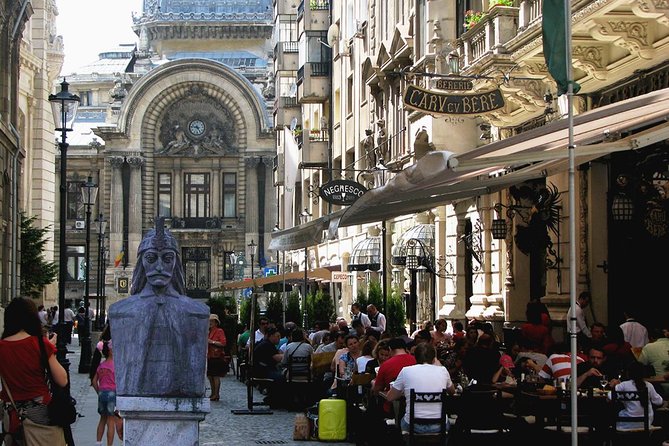
This tour is short on purpose. Instead of asking you to plan a whole day of research, the guide steers you along a compact route where buildings, street names, and church sites all echo the same idea: Bucharest grew in layers. That matters because the Old Centre can feel like a mix of different styles and time periods, and it is easy to miss the “why” behind what you are seeing.
At 1 hour, it also works as a primer. If you are arriving with only a few days in town, you get a quick mental map of where the key sites sit and what they connect to. I also like that it is a private tour, so you are not squeezed into a large group rhythm. That can make it easier to ask questions when something clicks, like an inn name you keep seeing on the street signs.
More of the Old Town on foot
- Bucharest: Dracula’s Castle, Peles Castle, & Brasov Old Town★ 4.5 · 17,858 reviews
- Bucharest: Dracula Castle, Peles Castle & Brasov Old Town★ 4.6 · 10,891 reviews
- Bucharest: Peles Castle, Bran Castle, & Brasov Old Town Tour★ 4.5 · 1,035 reviews
- Bucharest Pub Crawl in the Old Town★ 5.0 · 462 reviews
Start at the National Museum of Romanian History, then step into the Old Centre
The walk begins at the National Museum of Romanian History on Calea Victoriei 12. Even if you are not going inside, that location is a smart launching point because the area around it reflects how Bucharest’s center shaped itself over time.
From there, the tour moves you into the Old Centre, an area the guide frames as over 500 years old. You start hearing the stories attached to the street fabric itself, not just the major monuments. That is where the tour earns its keep. You get names you can picture on a map later, including the Princely Old Court and landmarks such as the Old Coffee House, Gabroveni Inn, Linden Tree Inn, and even the ruins of Șerban Voda Inn. You will also stop near St Anton Church, so you get an early sense of how church authority and old town life sit side by side here.
Practical tip: give yourself a little buffer before the tour starts. The meeting point is central, but you may still want time to get oriented, especially if you are hopping between hotel pickup and the start point.
Princely Old Court, old inns, and why street names feel personal
One of my favorite parts of this kind of walking tour is when it teaches you how to read the town. Here, the guide spends time on the Old Centre as a place where everyday stopping points mattered. That includes inns and coffee-house type landmarks that were built to host travelers, locals, and power players alike.
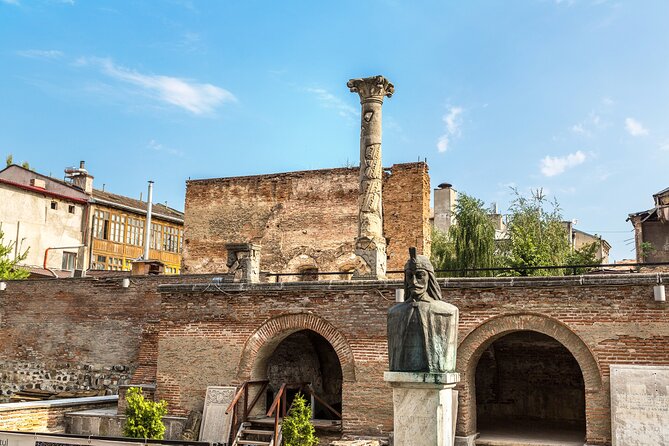
You’ll hear about the Princely Old Court, which sets the stage for why the surrounding area has so many “old” references. The guide also points you toward the ruined trace of Șerban Voda Inn, plus other references tied to the Old Centre’s former guest culture. Even if you do not catch every detail, you end up with a stronger sense that these were not random buildings. They were part of how people moved, met, and negotiated in earlier centuries.
This is also where the guide quality really shows. In at least one case I heard about, Alina stood out for being funny and passionate, and for showing how the guide’s background can translate into stories that make you rethink what you thought you knew about different eras. That kind of delivery matters on a short tour, because you are paying for clarity, not just movement.
St Anton Church and the Vlad the Impaler palace ruins you can actually picture
As you move along, St Anton Orthodox Church becomes one of the key stops. The guide explains it as the church of Wallachian rulers, and you start to see it less like a standalone building and more like a visible marker of political and cultural identity. When the church is framed this way, it is easier to understand why this part of Bucharest keeps showing up in the city’s story.
From there, you shift into the ruins of the Old Princely Palace, described as one of the oldest buildings in Bucharest and once a residence of Vlad the Impaler. Even without being inside a preserved structure, the guide helps you connect location to history, which is the main challenge with ruins anywhere. Instead of treating them like background texture, you learn what to look for and why that spot matters.
Possible drawback: because the tour is only about an hour, you will not get a slow, museum-style pace at each stop. If you love long photo breaks and deep architectural analysis, you might want to follow up on your own after the tour with a longer stop somewhere like St Anton or the monastery area.
National History Museum area and former Post Office building context
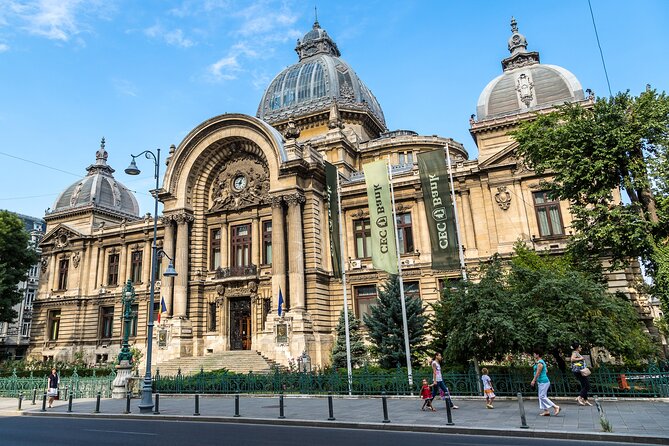
The route also includes the National History Museum of Bucharest area, along with the former Post Office building. Even if you do not enter any galleries, this is still useful. The guide gives you context that helps you place what you see in a broader story of communications, administration, and how Bucharest’s center evolved.
This is a good moment to let your brain catch up. By now you’ve heard about princely power, churches, inns, and ruins. Adding the museum and former post office area makes the pattern clearer: Bucharest keeps reusing central space, and the function of buildings changes over time. If you have ever felt lost in a city where old and new overlap, this section should help.
Elsewhere in Bucharest, and up the valley
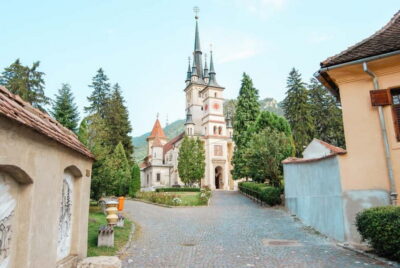
Strada Lipscani and the National Bank: where the city’s spine shows
Strada Lipscani is often described as the heart of Bucharest’s Old Centre, and the tour treats it that way. You get to walk this street with the guide connecting it back to what came before, so it feels less like a generic old-town lane and more like a main artery of the area’s activity.
Then you reach the National Bank and learn its interesting history, plus another reference to the ruins of the Former Șerban Voda Inn. This pairing matters. You see how the financial and administrative power of later periods sits near remnants of earlier life. Even without going inside, the guide helps you connect the modern grandeur to what the ground underneath used to represent.
For photo lovers, this is typically your most “street-level” moment, because you are walking and observing in motion. For everyone else, it is still the most clarifying stretch. You end up with a real sense of the Old Centre’s layout, not just a list of monuments.
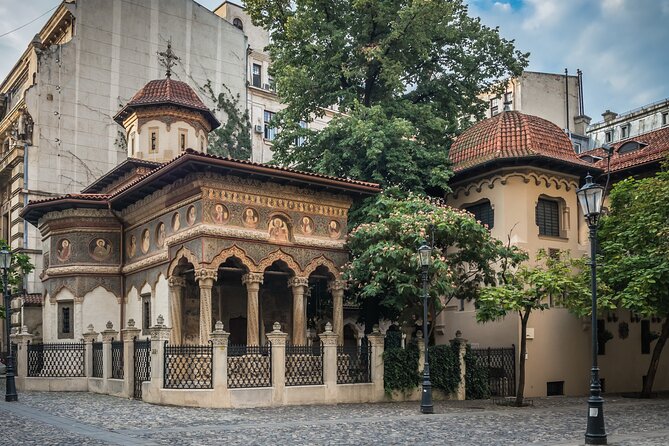
Stavropoleos Monastery built in 1724
The final highlight is Stavropoleos Monastery, built in 1724. The tour frames it as a place with fascinating history to discover, and the key value here is how the guide positions the monastery in the Old Centre story you’ve been building all along.
Monasteries like this often feel timeless once you are standing in front of them. But without context, it is easy to treat them as simply pretty or quiet. Here, the guide gives you a reason to look longer, to notice details, and to understand why this particular site earned its place in the city’s memory.
Practical tip: plan to slow down for a few minutes. This is the kind of stop where you want to stand still and absorb, especially if the rest of your day is packed.
Price and value for a 1-hour private guided loop
At $16.77 per person for an approximately 1 hour tour, the pricing is fairly approachable for Bucharest. The value comes from three things working together:
First, you are paying for a local guide who connects multiple sites into one storyline. Second, you get hotel pickup and drop-off from selected central hotels, which saves time and hassle you would otherwise spend figuring out transport. Third, the tour is private for your group, which can be a big deal in a short schedule, because you are not competing for attention.
If you are comparing this to doing everything on your own, the main question is: can you recreate the same connections quickly? Most visitors cannot. The guide role is not about showing you where to stand, it is about giving you a framework so those places start making sense.
Who this suits best:
- First-time visitors who want a fast orientation through Bucharest’s Old Centre
- Travelers who prefer a guide-led walk over self-guided museum hops
- Anyone who wants to see several key landmarks in a tight time window
Should you book this Bucharest Old Centre Tour?
I think you should book it if you want your Old Centre time to feel organized. This tour is strong for people who like guided walking, enjoy street-level history, and want their trip to start with context. The standout praise for the guides, especially Alina’s humor and the way she connects eras, is exactly what you want on a compact route.
Skip it or plan differently if you want long stops at one or two sites. The schedule is built for breadth in an hour, not deep independent lingering. Also, if you know your feet struggle on rough paving, plan ahead with good shoes and a slower walking pace.
If you fit the tour’s style, you will leave with a clearer mental map of Bucharest and a better ability to recognize what you are seeing the next time you walk these streets on your own.
FAQ
How long is the Bucharest Old Centre Tour?
It lasts about 1 hour.
What landmarks are included on the route?
You will visit or pass key spots including the Princely Old Court, St Anton Orthodox Church, the Old Princely Palace ruins, Strada Lipscani, Romania’s National Bank area, and Stavropoleos Monastery (built in 1724), plus areas connected with the National History Museum and the former Post Office building.
Is hotel pickup available?
Yes, hotel pickup and drop-off is offered from selected central hotels.
Does the tour offer different departure times?
Yes, you can choose between a morning or afternoon departure.
Where does the tour start?
The meeting point is the National Museum of Romanian History, Calea Victoriei 12, București 030026, Romania.
Where does the tour end?
The tour ends back at the meeting point.
Is a mobile ticket provided?
Yes, the tour includes a mobile ticket.
Is this tour private?
Yes, it is a private tour or activity, meaning only your group participates.
What is the cancellation policy?
Free cancellation is available up to 24 hours in advance for a full refund. Weather can affect the experience, and if it is canceled due to poor weather, you will be offered a different date or a full refund.
More Tour Reviews in Bucharest


More Bucharest Tours in Bucharest
Still in the Old Town? Keep Going


Just added from Bucharest


Lipscani & Old Town Walks, compared.
 ★ 4.5Dracula’s Castle, Peles Castle, & Brasov Old TownFrom $4017,858 reviews
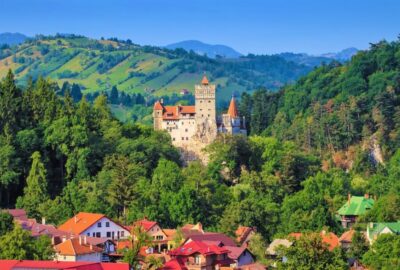 ★ 4.6Dracula Castle, Peles Castle & Brasov Old TownFrom $4010,891 reviews
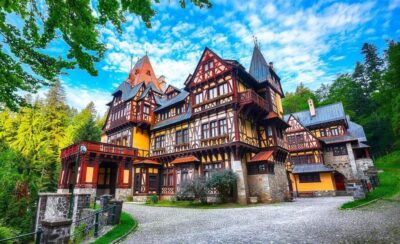 ★ 4.5Peles Castle, Bran Castle, & Brasov Old Town TourFrom $401,035 reviews
 ★ 5.0Bucharest Pub Crawl in the Old TownFrom $26462 reviews
★ 4.6Dracula’s Castle, Peles Castle, & Brasov Old TownFrom $31229 reviews
 ★ 5.0Bucharest Essential Tour: Old Town, Calea Victoriei & CommunismFrom $24142 reviews
 ★ 4.5Dracula’s Castle, Peles Castle and old town Brasov from BucharestFrom $119121 reviews
 ★ 5.04h Bucharest Private Tour (2h by Car and 2h Walking in Old Town)From $10090 reviews
Browse the lists this tour appears in