REVIEW · BUCHAREST
Best of Romania in 10 Days
Romania hits fast on this route. In 10 days, I like how it strings together UNESCO sights and iconic castle stops with hotel beds already lined up. The best part is the small group, but the road time between regions is real, so plan for long days and comfortable shoes.
What you get here is a “best of” sampler that still feels practical. You move by modern vehicle, you see real places with real meaning, and you get guided entry tickets for the major stops so your day does not hinge on last-minute logistics. One possible drawback: this is a tightly packed itinerary, so if you want lots of slow, flexible free time, you may feel slightly rushed.
Key things to know before you go
- Max 8 travelers, not a crowd: easier questions, better pacing, and fewer bottlenecks at popular sites.
- 9 nights in centrally located hotels: you sleep in good bases instead of constantly changing areas.
- Major entry tickets included: castles, monasteries, and set-piece attractions are covered.
- A route that covers Wallachia, Transylvania, and Bucovina: great if Romania is your first trip.
- Cable car and mountain road moments: short breaks in between big sightseeing days.
- Dinner plus daily breakfast (9): you can focus on sites without planning every meal.
Still deciding? These Bucharest trips come up again and again.
- Bucharest: Dracula’s Castle, Peles Castle, & Brasov Old Town★ 4.5 · 17,858 reviews
- Bucharest: Dracula Castle, Peles Castle & Brasov Old Town★ 4.6 · 10,891 reviews
- Bucharest: Dracula’s Castle, Peleș Castle & Brașov Day Trip★ 4.5 · 5,919 reviews
- Bucharest: Palace of Parliament Tickets and Guide★ 4.3 · 3,182 reviews
Why this 10-day Best of Romania trip makes sense for first-timers
This tour is built for one big problem: most people do not have unlimited vacation time. In a single trip, you get Wallachia’s royal legends, Transylvania’s fortified churches and famous castles, and Bucovina’s painted monasteries. It is not just “see a lot,” it is see the storyline of Romania in one arc.
I especially like that it keeps your travel day organized. Your pickup starts in Bucharest at 9:00 am, and you keep rolling with a modern vehicle instead of piecing together trains and taxis. If you prefer to spend your brainpower on what you are seeing, this format is a win.
Here is another reason it works: the sites are spaced so you are not staring at the same type of attraction for days. One day you are at a monastery with a famous myth, another day you are driving one of Romania’s most scenic highways, then you are underground at a salt mine theme park, then you are back in cities with walking tours and evenings to unwind.
Small-group touring with a max of 8 people
A group capped at eight changes how the day feels. You get room to ask questions, to hear the guide’s explanation without shouting, and to keep the pace from turning into a sprint. It also helps at stops where lines and tight lanes can form. With fewer people, you are more likely to keep momentum and less likely to lose track of where you are supposed to go next.
Your guide matters too. In a standout review, the guide named Emil was praised for history, local traditions, and even local jokes, plus being an excellent driver. I would take that as a useful sign of what this trip can offer beyond the checklists, as long as your group is ready for a day-by-day schedule.
Day 1: Curtea de Arges Monastery, Transfagarasan Highway, and Sibiu’s Piata Mare
Your trip starts with a road trip out of Bucharest toward Curtea de Arges Monastery. This is where Romanian legend meets stone. The monastery, built between 1512 and 1517, is strongly tied to the myth of Manole and the idea that creating something everlasting demanded sacrifice. If you like cultural context, this opening is a strong tone-setter.
Then you hit the big visual payoff: Transfagarasan Highway. The drive climbs through the Southern Carpathians in Romania’s Fagaras Mountains, reaching heights around 2,042 meters. Even if you are not a road-trip person, this is one of those rare drives where photos feel justified because the views are the point.
Your day ends in Sibiu with a walking tour through the historical center and time around Piata Mare. Sibiu is known for its long cultural life, and depending on season, it leans into festivals or Christmas markets. Practical tip: if you enjoy wandering, Piata Mare is a great place to get your bearings because it is central and lively in a way that does not require a long commute.
Day 2: Corvin Castle, Alba Iulia Fortress, and Turda Salt Mine
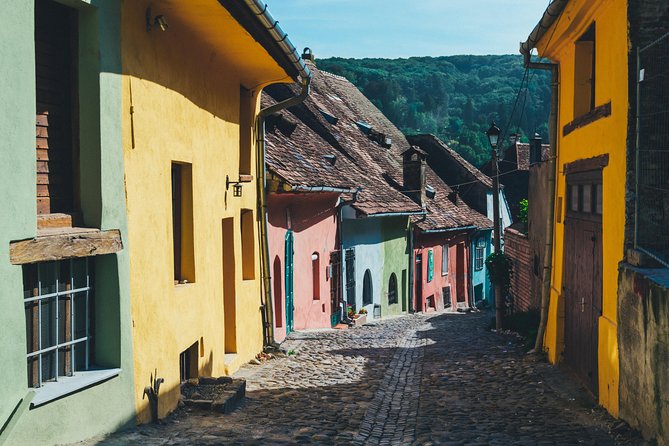
Day two swings into Transylvania’s power symbols. First up is Castelul Corvinilor in Hunedoara, also known as Hunyad Castle. It is one of Romania’s largest castles, and the atmosphere can be surprisingly charming, especially when you are there early enough to beat the busiest hours.
Next you travel to Alba Iulia for Alba Carolina Fortress. This is tied to a major historical event, the Union of Transylvania with Romania. The fortress itself was built in the Vauban style, and the scale matters because it was constructed by thousands of workers over many years.
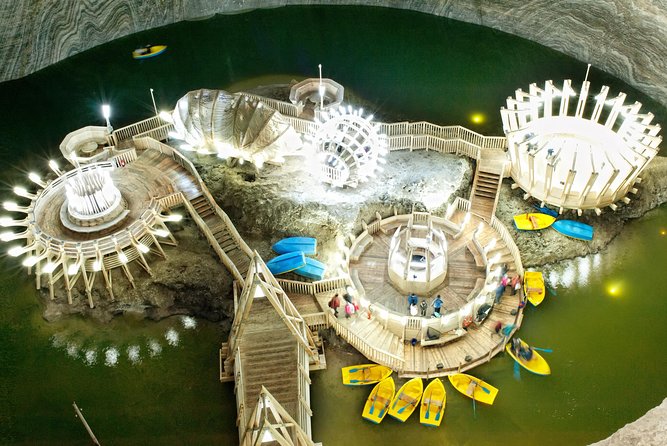
Then comes one of the most fun breaks from castles: Turda Salt Mine. You go underground to 13 floors, and the site is also built as an activity space, with features like a Ferris wheel, mini-golf, tennis, and a lake. It is a clever stop because it resets your feet after days of walking.
Your evening finishes in Cluj-Napoca with a walking tour of the Old City Center and free time near cafés and bohemian-style restaurants. If you want to taste local life without booking anything extra, that free time window is where you use it.
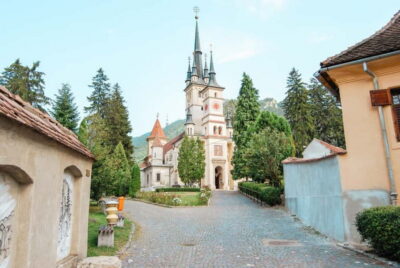
Day 3: Bucovina stopover in Bistrita, then Voronet Monastery
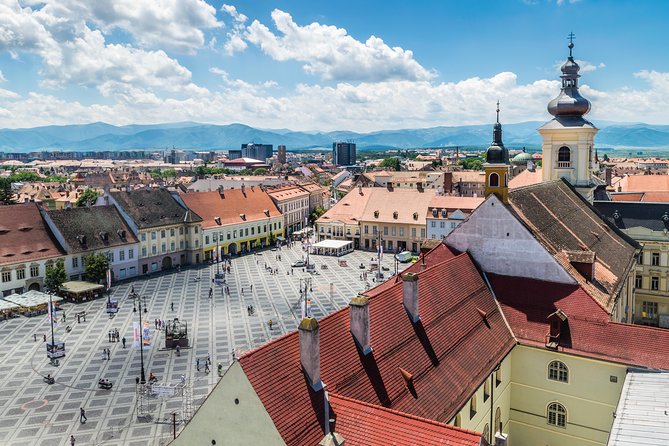
As the route turns toward Bucovina, you get a meaningful stop in Bistrita. There is even a tourism connection to Bram Stoker’s Dracula universe, with the character Jonathan Harker linked to Bistrita by story tradition. You are not going there for one object only, it is more of a quick reset before the monasteries.
Then you reach Voronet Monastery, one of the UNESCO Painted Monasteries of Bucovina. The key detail is the color, often described as the Blue of Voronet. When a monastery is known for a specific shade, it is worth paying attention, because it is the feature that gives the site its identity.
You also get a traditional Romanian dinner in the evening. In practice, that helps on a day when you have been driving and walking. It is one less meal decision, and it keeps the schedule moving.
Day 4: Moldovita and Sucevita Monasteries, then Iasi’s old streets
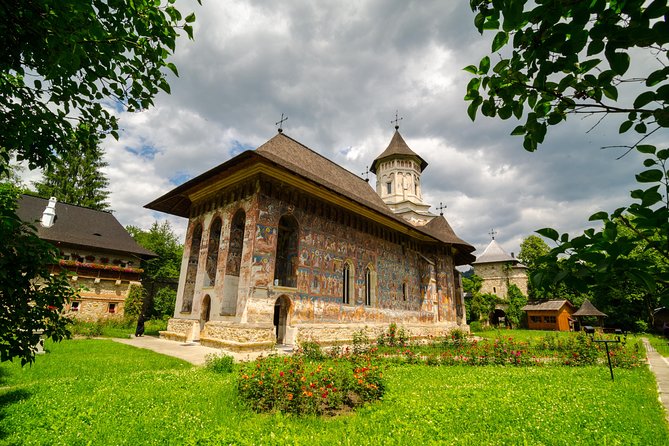
Day four is pure painted-monastery focus. You start with Moldovita Monastery, built between 1532 and 1537 and part of UNESCO listings. After that, you move to Sucevita Monastery, built in 1585, with its own legend about materials carried using a cart pulled by oxen.
These stops can feel similar at first glance, but that is where the guide helps. Even when you are seeing the same art category across multiple churches, each place has its own story and visual emphasis. You will also learn how these monasteries functioned as spiritual and cultural anchors for the region, not just as photos.
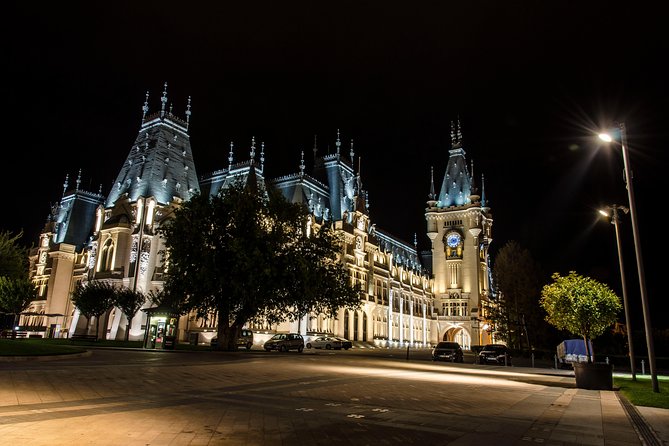
In the evening you reach Iasi for a short city tour and check-in. Iasi is Romania’s second-largest city, and it is tied to notable Romanian personalities. If you want an urban evening after rural monastery stops, this is a good transition.
Day 5: Neamt Fortress, then Piatra Neamt by cable car
From Iasi, you head to Neamt Citadel at Targu Neamt. This is tied to the reign of Peter I (1375 to 1391). Fortresses are different from castles because they often feel more military-practical, and they help balance the more legendary sites earlier.
Later you arrive in Piatra Neamt. You can ride a cable car, which is listed as free here, before checking in. That matters because it gives you a slightly different type of sightseeing from the street-level walking days. Practical idea: cable car moments tend to be time-sensitive, so if you have photo ambitions, keep your camera ready and avoid long wardrobe stops.
Day 6: Bicaz Gorges drive, Red Lake color, and Saxon fortified churches
Day six starts with scenery driving through Bicaz Gorges, then you reach Red Lake. The lake’s unusual color is tied to a fracture event in 1837 when storms damaged Mt. Ucigasu and blocked streams. Locals named it based on the reddish deposits. This is one of those stops where the story is not just trivia, it explains why the place looks different.
Then you head into Corund, a pottery center in Transylvania. The tour connects pottery with local trade, woodworking, and the clay pulled from a nearby stream. If you like crafts, Corund is a reminder that Transylvania is not just castles and legends.
Your afternoon shifts to Biertan Fortified Church, a UNESCO village with fortified Saxon churches. The Saxon colonists settled here in the 13th century, partly because the soil suited winemaking. This is a smart stop because it links architecture to the way people lived, not just the building itself.
Finally, you reach Sighisoara for the historic center. Sighisoara is known for having the last inhabited citadel in Europe, which sounds like a dramatic claim, but it becomes real fast when you see the shape of the old town around you.
Day 7: Viscri’s fortified church and Brasov walking tour
Day seven is a calmer, more village-feeling day. You stop in Viscri, a village that Prince Charles is said to have been charmed by. You visit the fortified Viscri Church, and you also meet women known for their culinary skills. Even if you do not share language details, the atmosphere here is more about community and tradition than spectacle.
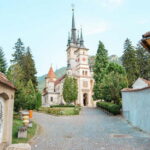
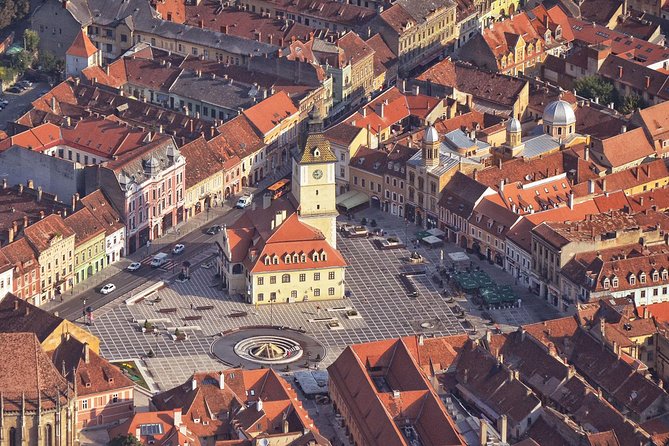
Then you move to Brasov for a walking tour through the historical center. Brasov is a great base city because it is walkable and you can do easy wandering afterward. I like this placement because by now you have had castles, mines, and monasteries, and Brasov gives you city energy to reset.
Day 8: Bran Castle and Peles Castle, with Dracula lore and real architecture
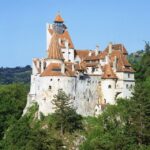
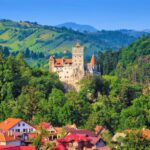
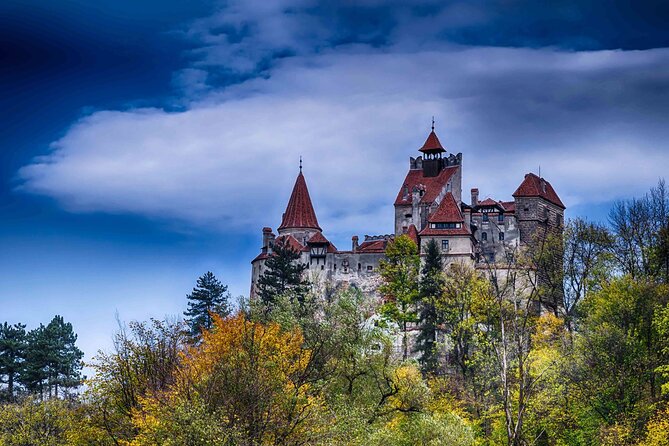
You start day eight with Bran Castle near Brasov. Bran has a long history, but it became famous as Dracula’s Castle through Bram Stoker’s Dracula. This stop is more about how the legend attached itself to place than it is about one specific historical claim. Still, it can be a fun lesson in how stories travel.
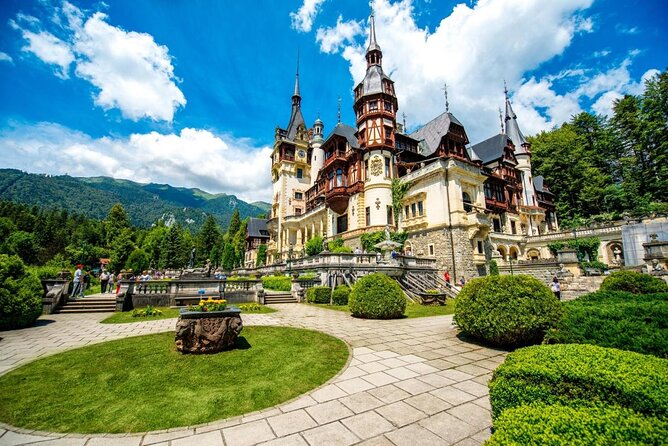
Then you go to Peles Castle in Sinaia. This is described as the first fully electrified castle in Europe, and it has major visual payoff: a large size, many rooms, and a collection-focused identity. It is also linked to European painting collections and an extensive weapon collection. If you like interiors and craftsmanship, Peles is often the kind of place that makes you slow down.
At night you return to Bucharest and get Old Town free time. Use it for an easy dinner or a short walk. After several long sightseeing days, this is the kind of downtime that keeps the trip enjoyable.
Day 9: Bucharest Palace of Parliament tour and the Village Museum
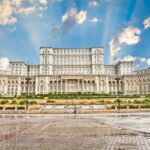
Bucharest day centers on one large, unforgettable building: the Palace of the Parliament. This is the second-largest building in the world, known historically as the People’s House, connected to Nicolae Ceausescu’s communist-era projects. You do a tour of the palace first, which helps because it gives context before you start wandering smaller streets.
Then you head to Bucharest Old Town for free time for lunch. This is your chance to do things at your pace, order what you feel like, and reset your energy.
Your final major stop is Bucharest Village Museum. It opened in 1936 and covers 14 hectares, with 380 monuments, 60,000 traditional objects, and 250,000 archived documents tied to traditional Romanian life. This is not just a place to look at houses, it is a way to understand how Romania’s rural culture became part of national memory.
Day 10: Airport transfer timing that keeps things simple
On the last day, you get transfer to the airport based on your flight schedule. This is one of those small pieces that feels big. After 9 days of moving, having the end handled means you can pack and leave without worrying about transport timing the way you might on an independent trip.
Practical value: included hotels, tickets, and what costs extra
At around $2,907.69 per person for a 10-day trip, you are paying for a lot more than transportation. The price includes 9 nights in centrally located hotels, a modern vehicle, airport pick-up and drop-off, entrance fees, a professional English-speaking guide, breakfast for 9 days, and dinner (as listed). For a trip that spans multiple regions with major sights, this bundled structure is usually where the savings come from compared to booking everything separately under time pressure.
What you should plan for beyond the inclusions:
- Alcoholic beverages are not included.
- Photography fees are not included (so if you care, ask before you assume).
- Room service, personal calls, and souvenirs are on you.
- Meals other than what is listed (besides breakfast and the included dinner) are not covered.
What I think makes this good value is that the itinerary avoids the “you must arrange everything yourself” problem. When the guide handles tickets and the transport is ready, your day stays focused on the sites, not on logistics. Still, bring realistic expectations: you will be moving often, and a few expenses like lunch in free-time windows should be planned.
Who this tour suits best, and who might want a different style
This is a good match if you:
- want a first Romania trip that covers Wallachia, Transylvania, and Bucovina in a single sweep
- like guided entry into major sites with explanations
- prefer hotels already chosen for you
- enjoy a mix of city walking tours and countryside monuments
You might want a different style if you:
- need lots of unplanned free time
- hate driving days between regions
- plan to spend hours lingering in each stop without a fixed schedule
Also, the tour notes you should have moderate physical fitness. Cable car riding and lots of walking are part of the rhythm, so comfortable shoes are not optional.
Should you book Best of Romania in 10 Days?
If you want an efficient, guide-led Romania sampler with small group size and key UNESCO and castle stops, I think this is an easy yes. The route makes sense for first-timers because it gives you a storyline, not just a list of landmarks, and the included hotels and entrance fees reduce stress fast.
Book it if you like structure and you are okay with a busy schedule. Pass or choose a slower itinerary if you want deep downtime between places. If you do book, pack for long days, carry a flexible attitude, and take advantage of the free time windows in Cluj-Napoca and Bucharest Old Town. That way, the trip feels like both discovery and breathing room, not just nonstop sightseeing.
FAQ
What time does the tour start and where do I get picked up?
The tour starts at 9:00 am. Pickup is offered from any hotel in Bucharest.
How many people are in the group?
This tour has a maximum of 8 travelers.
How many nights of accommodation are included?
You get 9 nights of accommodation included.
What meals are included during the trip?
Breakfast is included for 9 days, and dinner is included as stated in the included items. Meals not specifically listed are not included.
Is transportation included?
Yes. The tour includes transportation with a modern vehicle, plus airport pick-up and drop-off.
Are entrance fees included for the attractions?
Yes. Entrance fees are included for the sights listed in the program.
Can I request a single room?
If you want a single room instead of sharing a double room, you must pay a single supplement fee.
What level of physical fitness do I need?
The tour notes that travelers should have a moderate physical fitness level.
Is the tour refundable if I cancel?
Free cancellation is available. You can cancel up to 24 hours in advance for a full refund.
What language is the tour offered in?
The tour is offered in English.