

REVIEW · CITY TOURS
5h Bucharest City Tour by Car/Minivan – Small Group max 7 people
Bucharest hits hard in just five hours. This small-group city tour mixes major landmarks, meaningful memorials, and a surprise nature stop, all with hotel pickup and English guidance. I especially liked the way the route gives you real context for what you’re seeing, not just names and photos.
My second favorite part was the guide energy. In my experience, Sebastian was right on time, communicated clearly through WhatsApp, and stayed flexible when closures popped up. Only one thing to consider: the plan is intentionally fast, with many stops timed around quick photo windows, so you’ll want to save your longest museum time for the Village Museum (and maybe the Ateneul, if you’re paying).
Key things you will notice
- Max 7 people keeps the van from feeling like a bus and makes Q&A actually work
- Hotel pickup means you start in motion, not hunting for a meeting point
- Time-smart stops pair big monuments with lesser-seen cultural corners like Ferentari
- Natural Park break at Văcărești gives you a breather from streets and statues
- Two paid add-ons (Village Museum, and the Romanian Athenaeum) let you choose your spending
- Guide flexibility is built in, including adjustments if a museum is closed
Elsewhere in Bucharest, and up the valley
- Bucharest: Dracula’s Castle, Peles Castle, & Brasov Old Town★ 4.5 · 17,858 reviews
- Bucharest: Dracula Castle, Peles Castle & Brasov Old Town★ 4.6 · 10,891 reviews
- Bucharest: Dracula’s Castle, Peleș Castle & Brașov Day Trip★ 4.5 · 5,919 reviews
- Bucharest: Palace of Parliament Tickets and Guide★ 4.3 · 3,182 reviews
A 5-hour Bucharest ride, with hotel pickup that saves time
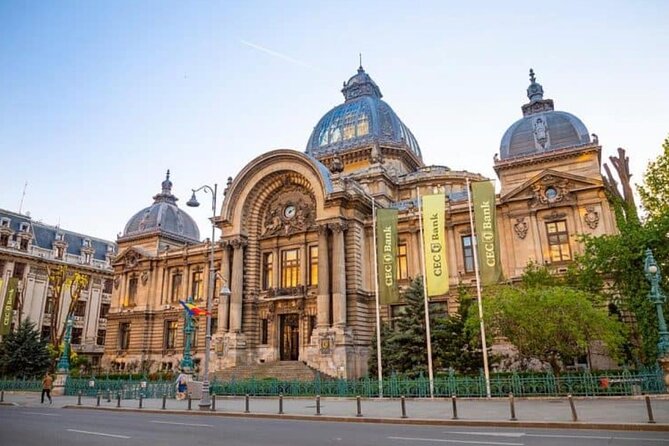
If you’re new to Bucharest, timing matters. You can easily burn half a day just getting oriented, then still miss the big visual anchors of the city. This tour is built as a practical orientation loop, starting with pickup and then moving by car or minivan so you spend your energy on sights.
The tour is about 5 hours total, and it’s set up for a small group of up to 7 people. That size makes a difference when you’re asking questions in English and your guide can answer without repeating everything to a crowd.
Small-group comfort: what max 7 actually changes
With a larger group, guides often fall into lecture mode and you end up watching from the back. Here, the small size keeps things conversational. I found it easier to catch little details, like why a building was designed a certain way or what a memorial is trying to communicate beyond the stone.
You also get a more human pace. The guide can shift timing if the street situation changes, and you get enough attention to ask, wait, or request a specific photo angle. If you’re the type who likes to understand what you’re looking at, this format supports that.
Palace of Parliament: the scale shock you can’t unsee
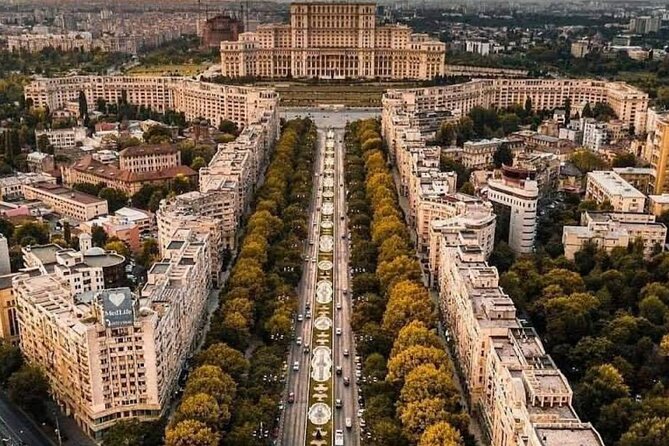
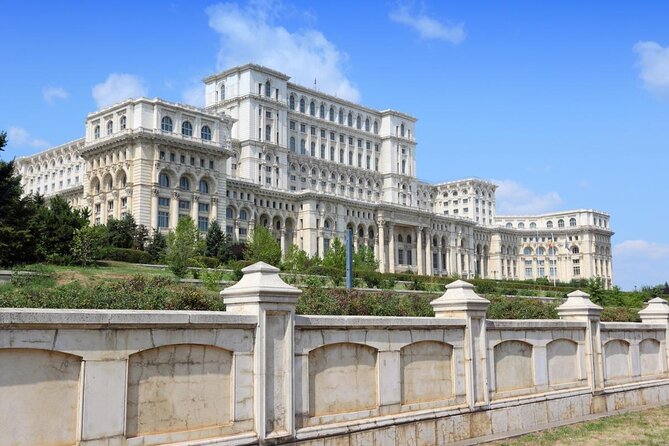
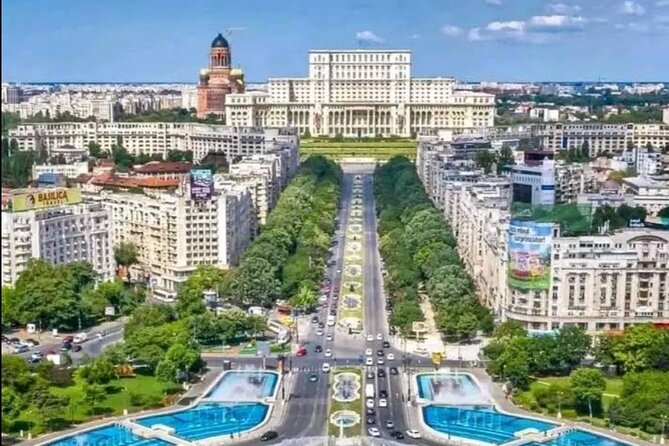
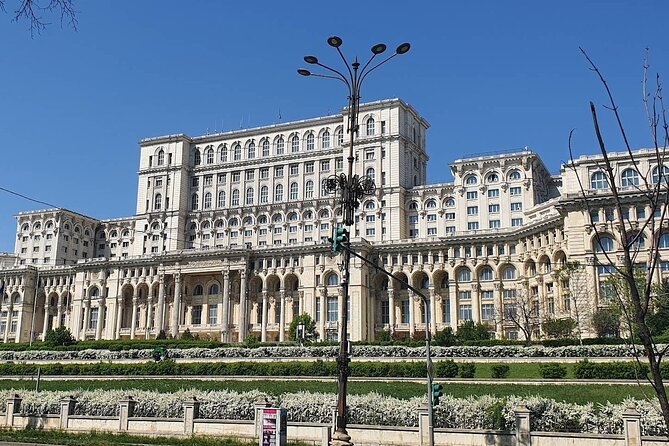
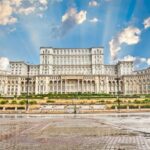
The tour’s first major stop is the Palace of the Parliament. It’s described as the heaviest building in the world, weighing about 4,098,500,000 kilograms, and that kind of number forces your brain to recalibrate before you even read the details.
Even if you don’t go deep into politics, the building works on a sensory level. The mass, the solemn atmosphere, and the sheer “this was built to last” feeling make it easy to understand why it remains one of Bucharest’s defining symbols.
A practical note: the stop is listed as 15 minutes, so think of it as a guided orientation stop. If you want slow time inside, you’d need to plan a separate visit for deeper exploration.
People’s Salvation Cathedral and Bucur Church: faith told through architecture
Next up is the People’s Salvation Cathedral, officially Catedrala Mântuirii Neamului. It’s still under development, with construction starting in 2010 and consecration in 2018. The architecture is described as Byzantine-inspired, which is exactly the kind of detail you’ll notice when you’re standing there, even during a short stop.
Then the route shifts to something quieter: Bucur the Shepherd’s Church (Biserica lui Bucur Ciobanul). This one is small, historic, and tied to local legend about Bucur, the shepherd said to have given the city its name. The church dates back to the 18th century, and it’s framed as one of the oldest surviving religious buildings in Bucharest.
If you like contrasts, this pairing is smart. The cathedral represents national identity expressed through monumental scale, while Bucur’s Church feels like a time capsule with a human scale.
Other ways round the city
Ferentari: how to see a tough neighborhood without turning it into a spectacle
Ferentari is a neighborhood in southern Bucharest with a reputation shaped by poverty and limited services. The tour doesn’t try to sell it as entertainment. Instead, it positions Ferentari as a place with a diverse, resilient community and ongoing efforts for social inclusion.
In a short 15-minute stop, you can’t and shouldn’t expect to “understand everything.” What you can do is stay respectful, keep your expectations grounded, and use your guide’s context to notice how neighborhoods are more than postcard scenery.
This is also a good reminder for your own planning. If you care about social issues and want a deeper look, you’ll likely want a dedicated neighborhood visit where time allows for thoughtful context.
Carol Park and the Tomb of the Unknown Soldier: communism to remembrance
Carol Park brings you to Parcul Carol, and the centerpiece is the monument with roots in the communist era. It was built in 1963 as a mausoleum for Communist leaders. After 1989, the site was repurposed, and since 2006 it serves as the Tomb of the Unknown Soldier, honoring Romanian soldiers who died in battle.
That change over time matters. You’re not just seeing a monument, you’re seeing how public memory gets rewritten after political shifts. The surrounding park setting also helps. Even in a brief visit, it feels less like a battlefield of information and more like a place to pause.
Unirii Square, University Square, and Revolution Square: Bucharest’s public memory in three acts
The tour then layers Bucharest’s civic spaces, and you’ll start to see how the city uses open areas for collective identity.
- Piața Unirii (Unirii Square) is presented as a major transportation, commerce, and tourism hub with wide open space and large fountains. It’s a connector square, useful for understanding how people move through the city center.
- Piața Universității (University Square) is tied to the 1989 Revolution and later demonstrations. It sits in a zone surrounded by major civic buildings, including the National Theatre and universities, which helps explain why it stays relevant.
- Piața Revoluției (Revolution Square) is the main 1989 Revolution site, surrounded by key buildings like the former Royal Palace and the Athenaeum. This stop reads like a thematic conclusion to the earlier civic square.
These three stops work best if you treat them like a timeline. You don’t need to memorize every fact. Just notice how each square communicates identity through space, monuments, and the way crowds gather there.
Ceaușescu’s Mansion (Spring Palace): the private life behind public power

Ceaușescu’s Mansion, also called the Spring Palace, is a striking stop because it reframes history through personal luxury. It’s described as the former residence of Nicolae Ceaușescu, kept secret during his rule and opened to the public in 2016.
The mansion is noted for opulent interiors, grand halls, a private cinema, and even a lavish indoor pool. Even if you only see part of the building during a short time window, the idea lands quickly: this wasn’t just political power. It was extravagance, protected and hidden.
If you want a deeper understanding of communist-era Romania, this is one of the stops that can genuinely change how you picture that period.
Muzeul Satului Dimitrie Gusti: where the city slows down
The big time investment on the tour is the Village Museum, Muzeul National al Satului Dimitrie Gusti. It’s an open-air ethnographic museum founded in 1936, with over 200 authentic houses, farms, and churches moved from different regions of Romania.
This is the stop where you’ll feel why the tour is structured this way. After Parliament and memorials, a place showing everyday rural life gives you mental breathing room and a better sense of national identity beyond political chapters.
The tour lists the Village Museum entrance fee as 40 RON (around €8.00 per person), and it is not included. Since your stop time here is listed as 1 hour, I’d treat this as your main add-on. If you skip it to save money, the tour can still work, but you’ll lose one of the most distinctive experiences.
Plan to wear comfortable shoes. Even without “hours and hours” of roaming, open-air museums involve more walking than you might expect from a city tour schedule.
Triumph Arch and the opera and concert venues that define central Bucharest
After the museum stop, you shift back to central monuments and arts architecture.
- The Triumph Arch (Arcul de Triumf) is described as built in 1922 to honor World War I soldiers, later rebuilt in granite in 1936, and standing about 27 meters tall. It’s also connected to national celebrations and military parades.
- The National Opera of Bucharest is listed as a premier opera and ballet theater, founded in 1921. Even if you don’t catch a performance, seeing the venue helps you understand why Bucharest has long wanted to be seen as culturally serious.
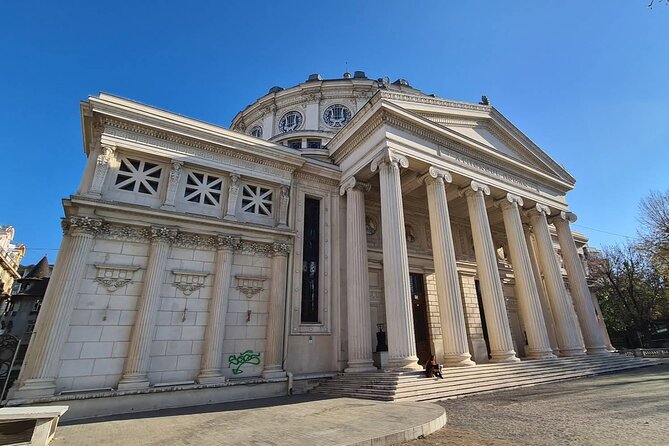
- Then comes the Romanian Athenaeum (Ateneul Roman), built in 1888 and famous for its neoclassical architecture and domed roof. It’s home to the George Enescu Philharmonic Orchestra and hosts classical concerts.
Important money detail: the Athenaeum entrance fee is listed as 15 RON cash only (about €3.00 per person), and it is not included. The stop time here is listed as 30 minutes, which suggests it’s intended as more than just a pass-by.
If you love architecture or classical music, this is often worth paying for. If you’re more monument-focused, you can decide based on your interests and budget.
Calea Victoriei: a classic street to carry into your evening plans
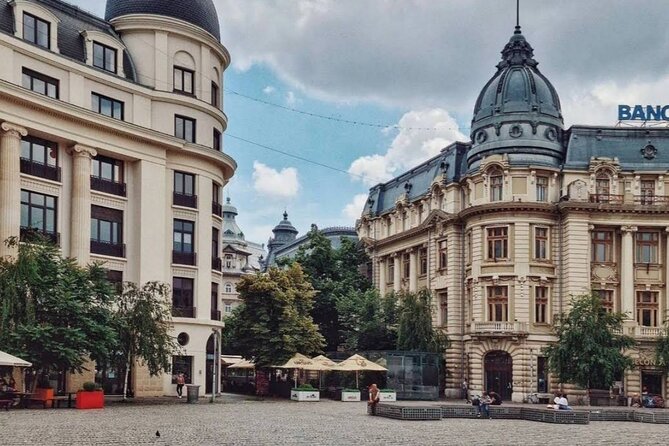
The tour ends with a stop along Calea Victoriei, one of Bucharest’s best-known historic streets. It’s lined with elegant architecture and a mix of museums, shops, cafes, and theaters.
This is a great final “orientation” move. You leave with a sense of where the city’s older core energy lives, and you can use that to plan dinner or a short walk afterward.
Price and ticket costs: does $95.12 feel worth it
At $95.12 per person for about 5 hours, you’re paying for three things: hotel pickup, English guide time, and a tight driving loop that hits a lot of different areas in one go.
The best value signal is the number of stops marked as ticket free on this schedule. That helps you keep control of your total spending. The two obvious non-included costs are:
- Village Museum entrance fee: 40 RON (listed as about €8.00)
- Romanian Athenaeum entrance fee: 15 RON cash only (listed as about €3.00)
Lunch isn’t included, so plan to grab food before or after. If you’re counting euros, this matters less if you already planned to eat out in central Bucharest anyway.
Where this tour is strongest is when you want a big-picture overview fast, but still want enough time to make at least one or two meaningful “deeper” stops, especially the Village Museum.
Should you book this Bucharest city tour?
Book it if you want a small-group introduction to Bucharest with pickup, a thoughtful mix of major monuments and everyday cultural context, and a guide who actually works with you. The fact that Sebastian was punctual and adjusted when closures came up is the kind of practical competence you’ll appreciate when plans shift.
Skip it or consider a different format if you need lots of museum time inside buildings. This plan gives short guided stops at many places, with the longer time concentrated at the Village Museum and a focused visit window at the Athenaeum.
If you’re on a first trip and want to get your bearings fast, this is a solid value. You’ll finish with enough context to choose where to go next on your own.
FAQ
What is the duration of the Bucharest city tour?
It runs for about 5 hours.
How many people are in the group?
It is a small group with a maximum of 7 travelers.
Is hotel pickup included?
Yes, hotel pickup is included.
What language is the tour guide?
The tour is offered in English, with a professional English-speaking guide.
Are entrance tickets included?
Most listed stops are marked as admission ticket free. The Village Museum and the Romanian Athenaeum have entrance fees that are not included.
What is included in the price?
Included are hotel pickup, a professional English tour guide, a panoramic drive by car or van with stops for pictures and stories, and the shared small-group experience.
Is lunch included?
No, lunch is not included.
Can I cancel and get a full refund?
Yes, you can cancel for a full refund if you cancel at least 24 hours before the experience start time.
More Tours in Bucharest


More Tour Reviews in Bucharest
More Bucharest Tours in Bucharest
Just added from Bucharest


City Tours, compared.
 ★ 4.9City Highlights Guided Walking TourFrom $211,482 reviews
 ★ 4.82-Hour City Highlights Bike TourFrom $33269 reviews
 ★ 5.0Bucharest Tuk Tuk city tourFrom $54188 reviews
★ 4.9Bucharest Tuk Tuk City TourFrom $58167 reviews
 ★ 5.0Bucharest Panoramic Sightseeing – Private City TourFrom $101128 reviews
 ★ 4.9City Tour by a Mini Hot RodFrom $91110 reviews
 ★ 5.0Black Sea and Constanța City – Private Tour from BucharestFrom $16667 reviews
 ★ 5.0Bucharest City Tour 4hFrom $19365 reviews
Browse the lists this tour appears in