
REVIEW · TRANSYLVANIA DAY TRIPS
11-Day Romania Tour from Bucharest with Transylvania & Bucovina
Romania gets real fast on this 11-day route. You start in Bucharest, then move through Transylvania’s Saxon towns, up into Bucovina’s Painted Monasteries and Maramures wooden churches, with a guide who keeps the pace smooth and the explanations clear.
What I like most is the overall balance: big, famous sights like the Palace of Parliament sit next to UNESCO villages and quieter cultural stops. I also appreciate the practical stuff you do not have to worry about, like round-trip airport transfers, comfortable transport, and free hotel pickup and drop-off.
One consideration: this is a lot of driving and a lot of “moving days.” If you hate early starts or you want long, slow afternoons, you may feel the schedule more than you expect.
Key things that make this tour work
- Private guide time means you can ask questions and adjust the pace for your group.
- 10 nights included makes the “what about hotels?” question disappear.
- Bucovina UNESCO Painted Monasteries get repeated on purpose, so you can compare fresco styles.
- Maramures wooden churches plus Sapanta’s Merry Cemetery add personality beyond castles.
- Local culture stops like black pottery at Marginea and the Painted Eggs Museum keep the trip human.
- Guide quality shows up in planning too, with praised coordinators and guides like Diana, Chris, Christian, and Gabriel.
Deeper into Transylvania
- Transylvania and Dracula Castle Full Day Tour from Bucharest★ 4.5 · 1,589 reviews
- Castles of Transylvania: Private Day Trip from Bucharest★ 4.5 · 248 reviews
- 2-Day Medieval Transylvania with Brasov,Sibiu and Sighisoara Tour from Bucharest★ 4.5 · 145 reviews
- 2-Day Transylvania from Bucharest: Brasov, Bran, Sighisoara★ 5.0 · 60 reviews
A smart 11 days across three Romanian worlds
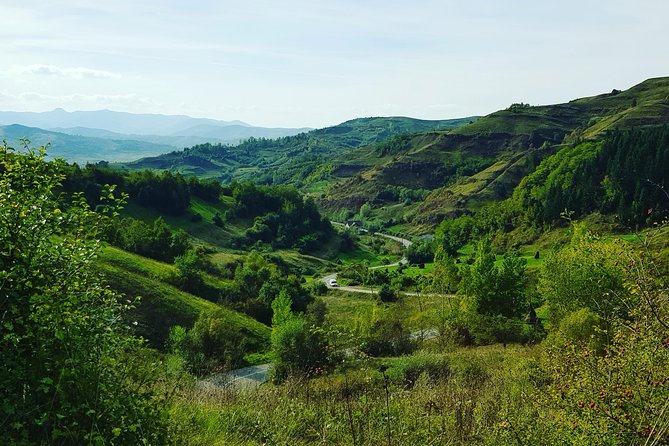
This tour is built around geography. You are not just hopping between random attractions, you are moving through three different cultural regions: Wallachia (Bucharest and Curtea de Arges), Transylvania (Saxon towns, fortified churches, castle country), and Bucovina plus Maramures (painted monasteries and wooden-church traditions).
That design matters, because each region feels different. Bucharest reads like a capital city shaped by the 20th century. Transylvania feels layered, with Gothic, Renaissance, and German-speaking heritage you can see in town squares and churches. Then Bucovina and Maramures go more folk and spiritual, with fresco-heavy monasteries and whole villages organized around wood and tradition.
The biggest value is that you are not spending your energy planning routes, timing, and ticket logistics. You get a licensed English-speaking guide and driver plus assistance throughout the tour, which is exactly what you want when you are covering UNESCO sites that can take focus.
Bucharest day one: Palace of Parliament, Village Museum, and Old Town (Lipscani)
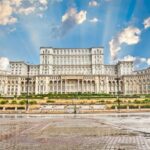
You begin with the big statement: the Palace of Parliament. It was built by Nicolae Ceaușescu, and it is described as the second largest administrative building in the world after the Pentagon. The interior details are the real shock, with crystal chandeliers, mosaics, oak paneling, marble, gold leaf, stained-glass windows, and carpeted floors.
Next comes the Muzeul Național al Satului Dimitrie Gusti (Village Museum). This is not a quick “look at a building” stop. It is a huge outdoor museum, founded by royal decree in 1936, and it covers about 30 acres with around 50 buildings showing Romania’s rural architecture history. If you want a break from monuments, this gives you scale and context fast.
Then you walk the Old Town area, focused on Lipscani, the cluster of streets between Calea Victoriei, Bd. Brătianu, Bd. Regina Elisabeta, and the Dâmbovița River. Even if you already like cities, this portion helps you get your bearings for the rest of the week.
Practical heads-up: admission tickets are not included for the Palace of Parliament or the Village Museum. Also, the Village Museum can have closures, so if your timing puts it on the wrong day, you might have to work around it.
Sinaia and Brasov: Peliș Castle and Transylvania’s town center
On day two, you go to Sinaia for Manastirea Sinaia, also called the Cathedral of Bucegi Mountains. It is an Orthodox monastery and was built at the end of the 17th century, making it a calmer, religious contrast to the urban start in Bucharest.
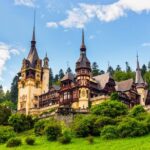
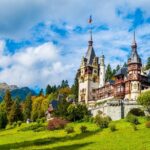
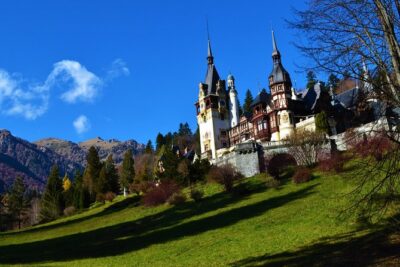
Right after, you hit Peliș Castle in Sinaia, described as one of the most beautiful castles in Europe by many visitors. The architecture is German Renaissance in style, and the backdrop is the Carpathian mountain setting. This stop works well because it is timed so you can enjoy it before the day turns into more town walking.
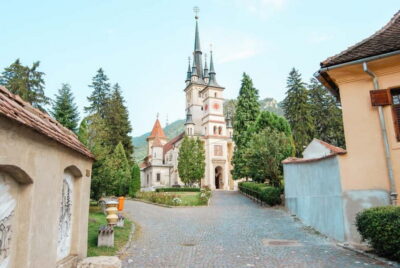
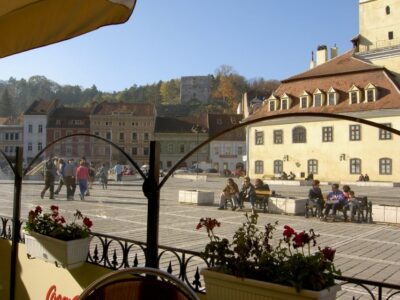
Then you continue to Brașov, and you get a structured historical center tour. The highlights listed are Black Church, Citadel of Brașov, Ecaterina’s Gate, White Tower, Black Tower, Council Square, City Hall, and the Palace of Justice.
If you want to understand Transylvania without only chasing Dracula imagery, Brașov is a strong anchor. It is a real city center with a mix of architectural styles you can actually see in the streets.
Admissions for the castle are not included here, so budget time and money for that if you are ticket-dependent.
Dracula country, without losing your footing: Bran Castle and Rasnov Citadel
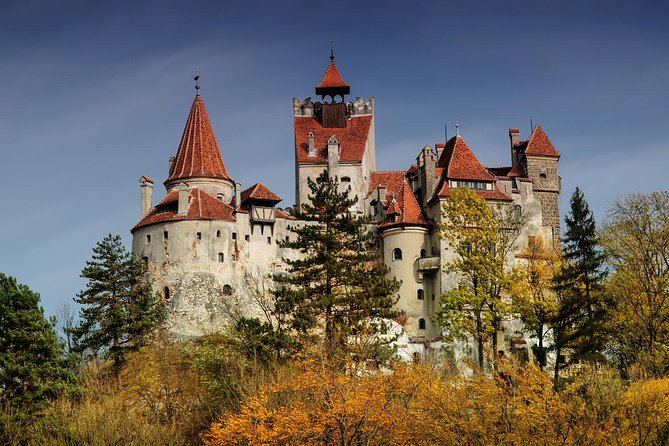
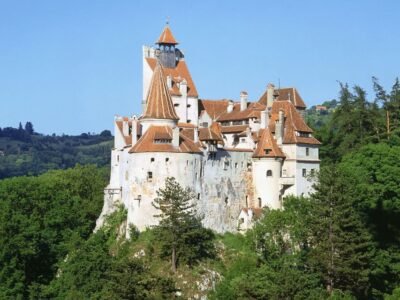
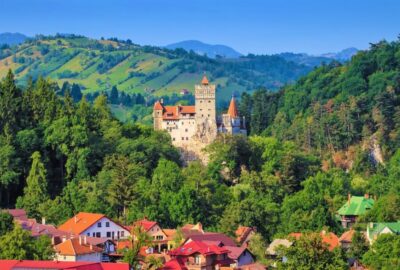
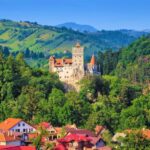
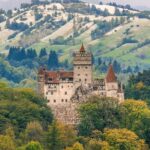
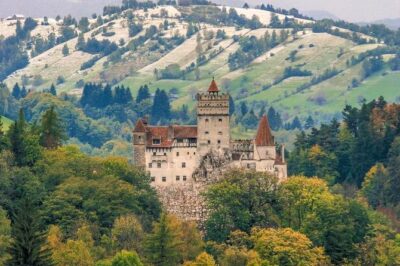
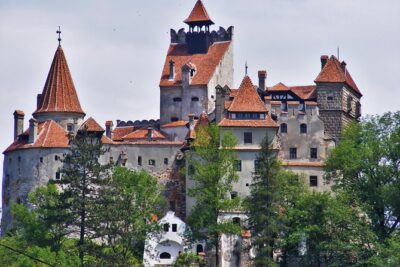
Day three targets the famous name first: Bran Castle, often called Dracula’s Castle. It is a medieval dwelling dating from the 14th century. The story connection here is to Vlad Țepeș, known as Vlad the Impaler, and his conflict with the Ottomans, which is why this site has so much cultural weight even beyond the novel-and-movie hype.
The value of this stop, if you approach it thoughtfully, is that it is less about a single legend and more about how folklore attaches to architecture. You get a medieval layout plus a story that Romanians link to historical resistance.
Then you go to Râșnov Citadel, with panoramic views. It was built in the 14th century to protect people from invasions, and during war periods, townspeople would retreat into the fortress with cattle. That detail helps the citadel feel less like a set piece and more like a survival design.
Admissions are not included for either stop, so plan for tickets if they matter to you. Also, this day can feel “legend heavy.” If you want a better balance, lean into the architectural and defensive details the guide points out.
Elsewhere in Bucharest, and up the valley
UNESCO day in Transylvania: Biertan fortified church and Sighișoara
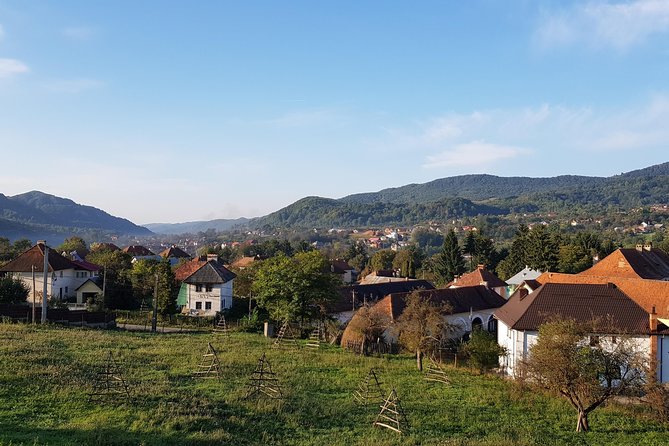
Day four is built around UNESCO. First, you visit Biertan Fortified Church, an ensemble that made it into the UNESCO World Heritage list. The focus is on the position, historic value, and the preserved original substance from the end of the 15th and beginning of the 16th century.
This is the kind of sight that gets better when someone explains what you are looking at. You stroll the village afterward, and the intention is to help you feel time layers, not just see walls.
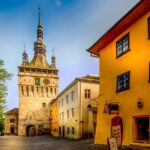
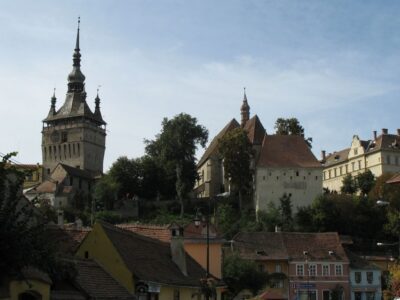
Then comes Sighișoara, a fortified medieval town founded by German craftsmen and merchants called the Saxons of Transylvania. Your walking highlights include the Clock Tower and History Museum, the Church on the Hill, the House of Dracula, and central squares.
A useful way to enjoy Sighișoara is to treat it like a living museum of routes and trade, not just a postcard. The guide tour highlights are designed to show the town’s commercial and strategic role on the edges of central Europe.
Again, admissions are not included for some major pieces here, but the core tour time and walking portions are laid out.
From Bicaz Gorge to Voroneț: the Painted Monasteries of Bucovina
On day five, you cross from Transylvania into Bucovina via Bicaz Gorge and the Hasmas Mountain National Park area. This drive is one of Romania’s most dramatic road scenes, with limestone cliffs rising steeply. You also get a photo stop built into the plan.
Then you visit Red Lake, a natural mountain lake connected to reddish alluvia from the Red Creek. The description paints it as dark and brooding, with stumps that can look like something from a lost story. After lunch at a lakeside restaurant, you get time to walk around and even feed ducklings if you have bread.
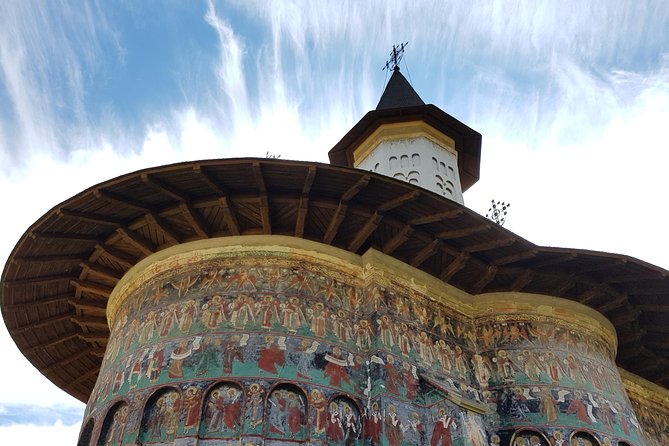
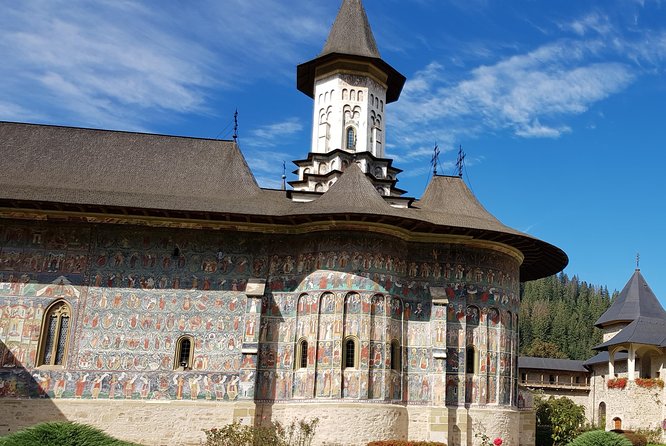
In the afternoon, you visit the star of the painted tradition, Manastirea Voroneț, described as the Sistine Chapel of the East. The UNESCO connection is tied to the Last Judgment fresco and the famous “Voroneț blue,” known for not fading.
This day is valuable because it changes your emotional gear. One part is raw geology. One part is food plus atmosphere. One part is spiritual art in sky-blue. That rhythm is exactly why this route feels more like a journey and less like a checklist.
Admissions are not included for Voroneț, so factor that in.
Humor, Sucevita, Moldovița, and Marginea: when folk art becomes the main event
Day six keeps you in Bucovina’s painted-monastery orbit. You start with Humor Monastery (UNESCO) and then Sucevita Monastery (UNESCO), each listed with visit time and not-included admission tickets.
Next you go to Marginea and the Ceramica neagra tradition, specifically black pottery. The village is associated with pottery dating back to around 1500, and local artisans still make it today. This is a great contrast to fresco art: you get material culture you can touch and buy if you want.
Then you visit Moldovița Monastery (UNESCO). Seeing these monasteries across multiple days helps you spot differences in color use, the way fresco scenes are framed, and how the “same theme” looks distinct depending on monastery style.
The day finishes with the Letitia Orsivschi’s Egg Museum. This is not a casual stop. It has over 3,000 painted eggs and a long list of rare types in the collection, including eggs like emu and rhea. The workshop focus is on symbol meanings in Bucovina egg craft, and the museum is connected to the professor Letitia Orsivschi and her work.
If you like cultural details that are small-scale but meaningful, you will enjoy this. If you prefer only monumental sights, you might wish for more time to linger at the monasteries.
Admissions are not included for several monastery stops and the egg museum.
Maramures wooden churches and the Sapanta tone shift
Day seven moves you into Maramureș, described as the heart and soul of rural Romania. You get a scenic journey plus visits to several sites that are about wood, faith, and older peasant rhythms.
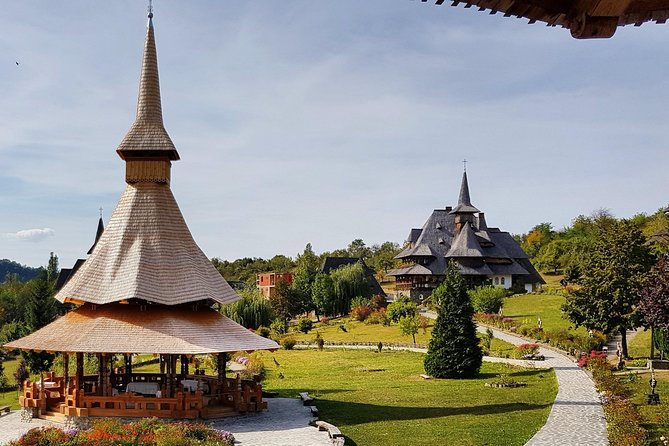
You start with Wooden Churches of Maramures, then visit Barsana Monastery, famous for its amazing two-level wooden church. After that comes the UNESCO listed Rozavlea Wooden Church and then Ieud Deal Wooden Church, described as the oldest of the wooden churches dating back to the 14th century.
This day works if you like the slow “look and understand” style of travel. The wooden church interiors and their design logic make more sense when you compare them in a sequence, which is exactly how the stops are arranged.
A practical thought: admission tickets are not included for most of the churches, but several stops are marked free. Either way, give yourself time for photos and for the quiet moments.
Mocănița steam train, Merry Cemetery, and Sapanta-Peri Monastery
Day eight is one of the most memorable mixes: steam, humor, and tall wooden-spired religious tradition.
First is Mocănița Maramureș, a narrow-gauge steam train ride starting from Viseu de Sus. The train runs about 30 miles along a scenic road and passes areas where it is described as the only access, other than walking, to higher valley settlements. During stops, you can watch workers load firewood and take water from mountain streams. You also may hear the engine driver whistle and see how brakemen stop or pick up passengers.
Even if you are not a train person, this is a strong “feel Romania in motion” experience.
Then you visit the Merry Cemetery in Sapânța. It is a cemetery with blue wooden crosses featuring carved scenes and humorous verses about the deceased’s life. You do not need perfect translation to get the intent, because the craftsmanship and the playful tone come through.
Finally, you visit Sapanta-Peri Monastery, described as the tallest wooden church in the world, located next to Sapanta Village in a dendrology park, and included in UNESCO patrimony.
This day is emotionally balanced. Steam and scenery relax you. The Merry Cemetery adds a human perspective on death and memory. The tall wooden church brings you back to spirituality.
Cluj-Napoca and Sibiu: Germanic town squares in Transylvania
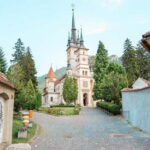
Day nine shifts back toward urban Transylvania, but it does not feel like a break from the cultural thread. You start with Cluj-Napoca and a city tour with highlights like Union Square and St. Michael’s Church, known as a fine example of Gothic architecture in Romania. You also see the Opera House and other historic center points.
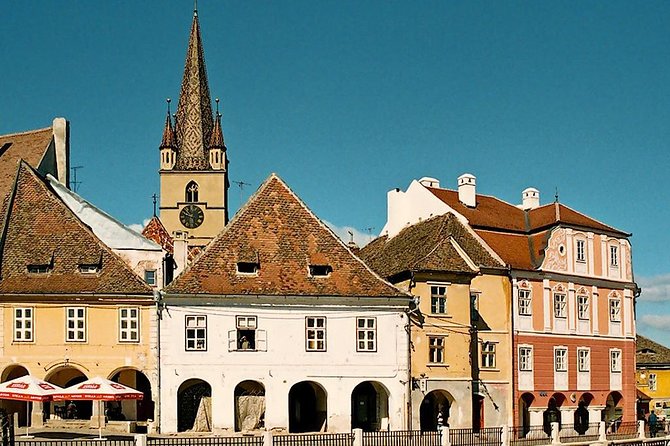
Then you go to Sibiu, where the Old Town is described as Germanic in feel, with narrow streets, steep-roofed buildings, and church-dominated squares like Great Square and Little Square. Your listed highlights include the Evangelical Church, the Bridge of Lies, the Historical Center, the Brukenthal Museum, the Stairs Passage, and more.
This day is useful if you want to compare old town planning across Transylvania. Cluj feels more active and civic. Sibiu feels more medieval and compact. Both help you understand why UNESCO and Saxon heritage matter here.
Admissions are marked free for the city tours, which is a nice budgeting advantage.
Wallachia reset in Curtea de Argeș
Day ten takes you to Curtea de Argeș, a city on the Argeș River valley and formerly tied to the capital status of Wallachia. You take a walking tour visiting the Princely Church and Old Court ruins, the Episcopal Church, and the Olari Church, described as a painted church from Moldavia on Wallachian grounds.
This is a solid “final culture day” before you return to Bucharest. It also helps your brain reset from Transylvania and Bucovina into something that feels more southern and river-valley in character.
Price and logistics: what $2,367.30 buys you
At $2,367.30 per person, this is not a budget tour. But it is also not just a handful of museums. You are getting:
- Ten nights accommodation included
- Round-trip airport transfers
- English-speaking licensed guide and driver
- Comfortable transportation by air-conditioned car or van
- Breakfast for 10 days
- Free hotel pickup and drop-off
The hidden value is that you get less friction. You do not have to coordinate transfers, keep track of how to get between regions, or worry about the timing of multiple UNESCO sites. When you are doing Bucovina plus Maramureș, that logistical stress is real.
Food and drinks are not included, and admission tickets are not included at several stops, so you still need a travel budget for meals and ticketed entrances. Souvenirs are also on you.
Still, if you compare what private guiding and multi-region driving typically cost, this price starts to make sense, especially because it is a private tour for your group only.
Who this Romania tour is best for
This tour fits best if you want three things at once: structure, depth, and variety. It is also a strong match for people who like small learning moments, like the symbol meanings behind the painted eggs, or the way the pottery tradition connects to daily life.
It is also family-friendly, based on the tour highlights. Steam trains, outdoor village architecture, and the Merry Cemetery can be easier for mixed ages than an all-museum itinerary.
If you prefer a slow travel pace with lots of free time, you might feel it is packed. It is a “see a lot” trip, and you will get the most from it by staying present, not trying to rush every photo.
Finally, if you care about guides, pay attention to this point: the tour experience is repeatedly praised for guides who are described as personable and knowledgeable, with coordinators like Diana and guides like Chris, Christian, and Gabriel showing up in positive comments. That matters, because Romania’s best moments often depend on what you are told while you are standing in front of the site.
Should you book this 11-day Romania route?
I’d book it if your dream trip includes UNESCO in Bucovina, wooden churches in Maramureș, and Transylvania towns with real architectural variety. The blend of fortress and frescoes, plus the steam train and black pottery, makes the days feel less repetitive.
I would not book it if you want a light-touch vacation, because you are constantly moving between regions. In that case, look for a shorter itinerary or a version that reduces driving.
If you do book, my best advice is simple: build time in your head for more than just photos. Let the guide’s explanations do the heavy lifting, then use your free minutes to walk slowly, especially in the old towns and monastery villages.
FAQ
How long is the Romania tour?
It runs for about 11 days.
Where does the tour start?
It starts in Bucharest, with a start time of 9:00 am.
Is pickup from hotels included?
Yes. Free hotel pickup and drop-off are included.
Are airport transfers included?
Yes. Round-trip airport transfers are included.
Is this a private tour?
Yes. It is a private tour/activity, and only your group participates.
Are admissions and attraction tickets included?
Admissions are not included for many stops. Some experiences are marked free, while others list admission as not included, so you should expect to pay tickets for several highlights.
What’s included in the price besides transportation?
You get an English-speaking licensed guide and driver, assistance during the tour, accommodation for 10 nights, and breakfast for 10 days.
What is not included?
Food and drinks and souvenirs are not included.
Can I cancel and get a full refund?
You can cancel up to 3 days in advance for a full refund. If you cancel less than 3 days before the experience starts, the amount you paid is not refunded.
What documents do I need?
A current valid passport is required on the day of travel. Most travelers can participate.
More Tour Reviews in Bucharest
More Bucharest Tours in Bucharest
Transylvania, Further In

Just added from Bucharest


Transylvania Day Trips, compared.
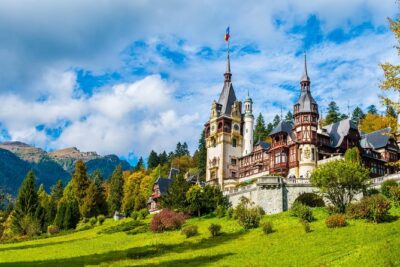 ★ 4.5Transylvania and Dracula Castle Full Day Tour from BucharestFrom $351,589 reviews
 ★ 4.5Castles of Transylvania: Private Day Trip from BucharestFrom $151248 reviews
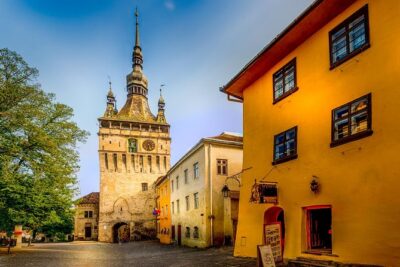 ★ 4.52-Day Medieval Transylvania with Brasov,Sibiu and Sighisoara Tour from BucharestFrom $120145 reviews
 ★ 4.8Transylvania: Dracula’s Castle and Birthplace TourFrom $175123 reviews
 ★ 5.02-Day Transylvania from Bucharest: Brasov, Bran, SighisoaraFrom $40960 reviews
 ★ 4.8Transylvania: Cultural Full-Day Trip by MinivanFrom $44157 reviews
 ★ 5.04-Day Private Tour in Transylvania from BucharestFrom $1,17548 reviews
 ★ 5.0Private Tour: Transylvanian Castles and Brasov’s Medieval Old TownFrom $19242 reviews
Browse the lists this tour appears in