
REVIEW · PRIVATE
10 Days Private Tour in Romania from Bucharest
Romania feels huge, even on a private route. This 10-day tour strings together big-name sights and real local texture, from Bucharest’s Palace of Parliament to Bukovina’s famous painted monasteries and Transylvania’s medieval towns. You get a licensed English-speaking guide in a private car, plus the freedom to tweak the daily flow when the moment calls for it.
I especially like two things. First, the balance between monuments and oddballs, like Salina Turda salt mine and the Merry Cemetery in Sapanta, not just castles and churches. Second, the logistics are handled for you, with a private vehicle, Wi-Fi onboard, and a guide who can steer you through the hard-to-pronounce stops without turning the day into a scavenger hunt.
One thing to consider before booking: the pace is full, and some road access is seasonal, like the Transfagarasan Highway which is fully open only from June to October. If you prefer slow days and long meals, you may want to plan on more movement than you’d get with a lighter itinerary.
Key highlights and practical wins
- Private car, just your group: no waiting around for other schedules.
- English-speaking guide all day: helps with timing, history context, and smooth transitions.
- Season matters on Transfagarasan: plan your dates with this in mind.
- Painted monasteries in Bukovina: the Voroneț blue frescoes and fortified churches are a standout.
- Mix of major and offbeat stops: from the Lucia Condrea egg museum to Dacian ruins at Sarmizegetusa Regia.
- City-center rhythm: the itinerary is built around towns where you can walk after the guided part.
Elsewhere in Bucharest, and up the valley
- Bucharest: Dracula’s Castle, Peles Castle, & Brasov Old Town★ 4.5 · 17,858 reviews
- Bucharest: Dracula Castle, Peles Castle & Brasov Old Town★ 4.6 · 10,891 reviews
- Bucharest: Dracula’s Castle, Peleș Castle & Brașov Day Trip★ 4.5 · 5,919 reviews
- Bucharest: Palace of Parliament Tickets and Guide★ 4.3 · 3,182 reviews
Romania by private car, what it really means for you
A private Romania tour works best when it acts like a map you can feel. You do not just “see places,” you move through changing landscapes with enough structure that you spend more time looking and less time figuring out transport.
This route is designed that way. You start in Bucharest, then gradually work your way through Wallachia and the Carpathians, into Transylvania and on to Bukovina, before finishing in Brasov for Dracula-country icons and royal castles. It is a lot for 10 days, but the stops are grouped so each day has a theme and a reason to exist.
You also get onboard Wi-Fi in the car and a guide/driver who stays with you. That matters in Romania where driving between major sites can be straightforward, but long transfers can still drain the day. Here, those transfers are at least made painless.
Bucharest’s Palace of Parliament and the Village Museum reset your expectations
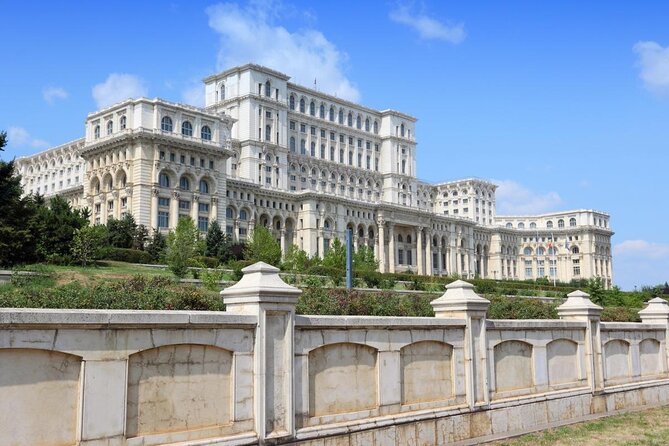
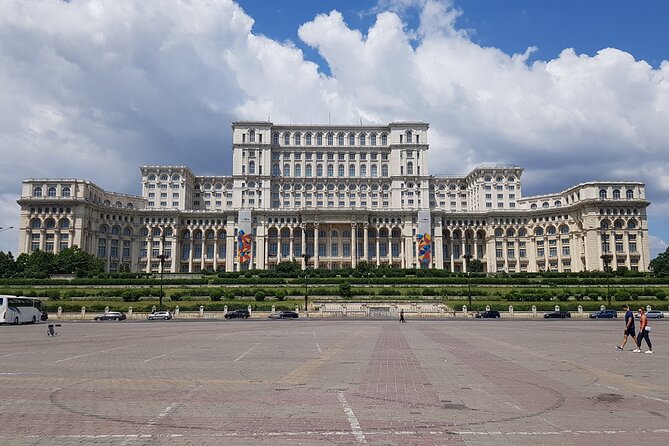
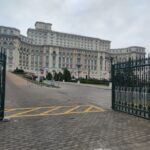
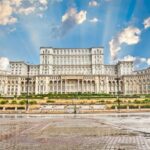
Bucharest can hit you in two directions at once: shock and clarity. On day one, the Palace of Parliament throws the scale problem right in your face. It is described as the second-largest administrative building in the world after the Pentagon, and even close-up photos can feel awkward because it is so massive.
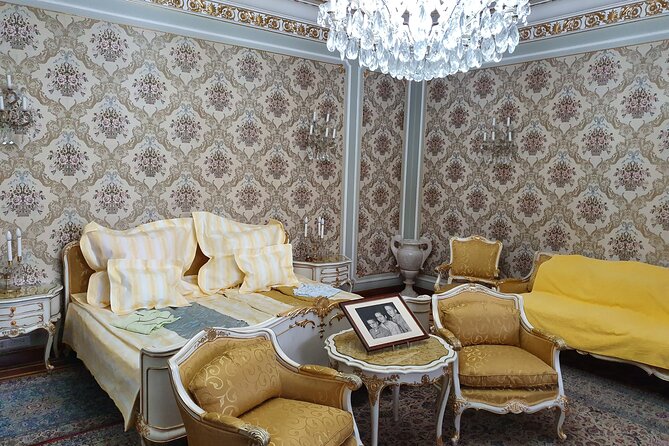
What I like about making this your first anchor is that it sets context fast. You learn how damaging totalitarian power can be, and you see how opulence can turn into a national warning sign. Then you get a sharp contrast with the National Village Museum Dimitrie Gusti, where the focus shifts to everyday Romanian life, built around tradition and sustainability.
The Romanian Athenaeum and Revolution Square follow that same logic: culture first, then history’s rupture. The Revolution Square stop is tied to the December 1989 uprising and the moment Ceausescu was removed from power, including the role of the Senate Palace as part of the story’s setting. You get context, not just sightseeing.
Possible drawback in Bucharest days: this first day is packed with major stops. If you like slow mornings, plan for an earlier start and set expectations that your feet will get plenty of work in the Old Town area later.
Old Town Bucharest, where Hanul lui Manuc still feels functional
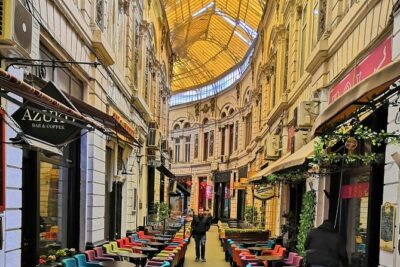
After the big-ticket history, you move into Bucharest’s Historical City Centre. The tour points you toward Hanul lui Manuc, a fortified inn built around 1806 by Manuc Bei. The cool part is that this is not a “museum building” in the abstract, it is tied to how merchants moved, bargained, and lived around the capital.
I also like that Old Town time is framed through walking logic. You are not just dropped into a pretty street grid, you have a guide to connect landmarks to what they used to do. That’s how Bucharest stops feeling like a blur of traffic photos and starts feeling like a real city.
Curtea de Argeș, Poienari, and the Carpathians start to take over
Day two turns the volume down on the city and up on the landscape. Curtea de Argeș Monastery is tied to royal tombs, the ruins of a Wallachian princely court, and the older church layers that shaped the area. There is a strong sense of “sacrifice and endurance” in the storytelling, but it is anchored to places you can still stand in front of.
Then comes Poienari Castle, perched high above the Arges River, looking out toward the foothills of the Carpathians. The story here connects to Vlad and the legend that he escaped via a secret passage when Turks attacked in 1462. Even if you treat some details as legend, the location and viewpoint still make it worth your time.
More private days in Bucharest
Transfăgărășan Highway, plan your dates or you may miss the magic
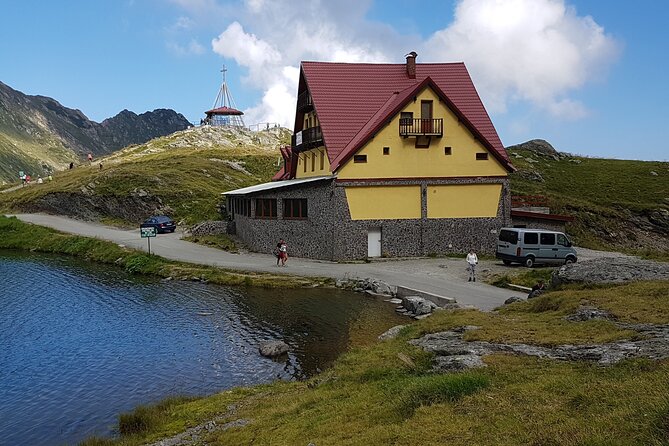
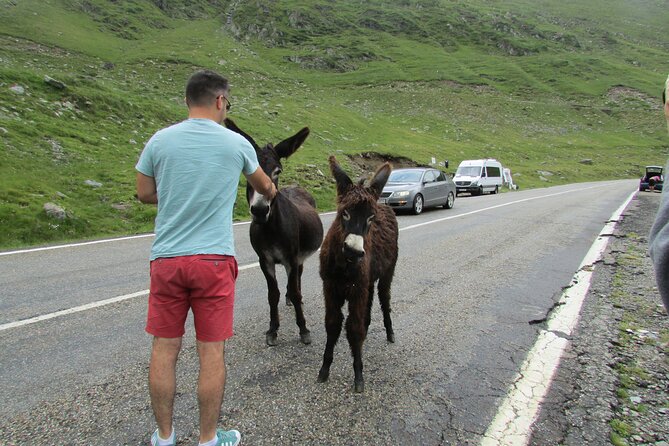
Now for the road that makes people add Romania to their bucket list: the Transfăgărășan Highway. The route notes it is over 150 km and that the highest point reaches 2042 meters. The tunnel near Lake Balea is also part of the highlight chain.
The practical key is seasonal timing. This highway is fully open only from June to October. If you travel outside that window, you may not get the same driving experience or may face different routing. That is the biggest scheduling dependency in the whole itinerary, so your booking dates matter.
Sibiu and Piata Mare, a European Capital of Culture stop you can actually enjoy
After the mountain drive day, the tour pivots to a slower, walkable Transylvanian city moment around Piata Mare. This is positioned as part of a Sibiu experience, including the Evangelical Cathedral and the Old City Center.
You get a guided walk that ties architecture to why Sibiu earned the European Capital of Culture title. For you, it means less time guessing what you are looking at and more time enjoying the atmosphere. Even if you are not a cathedral person, the square itself works as a reset.
Corvin Castle and Densuș Church, Gothic drama plus stone-age roots
Day three is a strong one for architecture fans. Corvin Castle (also called Hunyadi Castle or Hunedoara Castle) is presented as Gothic-Renaissance and one of the largest castles in Europe, linked to the Seven Wonders of Romania. If you enjoy dramatic towers, layered styles, and castle details, this day delivers.
Then you switch to Densuș Church, described as the oldest stone church in Romania. It is built in a form dating to the 13th century, with a 2nd-century Roman temple underneath, plus materials pulled from Dacian sites. The inside matters too, with 15th-century mural paintings showing Jesus in Romanian traditional clothes, painted by Ștefan, and later additions by Simion de Pitești.
This pairing is smart because it shows Romania’s building story in two tempos. One is medieval spectacle, the other is older material reused and still standing.
Sarmizegetusa Regia, Dacians up on a mountain
The day ends on a different scale with Sarmizegetusa Regia, the Dacian capital and key military, religious, and political center. It sits on top of a 1200 m high mountain and includes six citadels as part of a broader defensive system in the Orăștie Mountains.
For me, the value here is how it shifts the narrative away from only Dracula and queens. This is Romania’s deeper spine, and the altitude helps you feel how defense through location makes sense.
What you should consider: this is not an effortless stop if you dislike uneven terrain or big viewpoints. Wear shoes you trust, and take it slow on the approach.
Transylvania’s salt air and wooden craft at Salina Turda and Surdesti
Day four is a good example of why this itinerary feels like it has more than one “type” of traveler. The Salina Turda salt mine is the fun lung-clearing stop. The tour emphasizes the purifying saline air, which is especially beneficial for respiratory issues like allergies or asthma.
Then it switches into garden and city texture around Cluj. The itinerary highlights Gradina Botanica Alexandru Borza and frames nearby Cluj Napoca sightseeing with Baroque, Renaissance, and Gothic architecture. It notes the oldest buildings date back to the 17th century and points you toward local restaurants, including the reality that popular spots can have lines.
The day ends with woodwork at Surdesti Wooden Church, with major craft details like a 54 m tower measurement and the fact that it was built in 1721. The description also calls it a 72 m wooden structure, so you get the message: it was built to be impressive, and it still looks it.
Maramureș and Sapanta, a region where folk culture is the main event
Day five brings Maramureș energy and a different kind of history. The Merry Cemetery in Sapanta is where tone changes completely. Instead of solemn stones, you get colorful crosses and tombstones with humorous poems about the deceased.
That humor is not a gimmick. The stop is framed through Dacian ideas about laughter at funerals and crying at births, which gives you a lens for understanding local attitude toward life and death.
The other major stop is the Memorial of the Victims of Communism and of the Resistance. This museum aims to show how damaging the communist regime was and how quickly it brought suffering. The contrast between Sapanta’s playful art and this museum’s weight is deliberate, and it helps you understand Romania as more than just scenic postcards.
Barsana Monastery, barefoot feeling and big wooden height
Day six stays in wooden-church country with Barsana Monastery. The itinerary calls it one of the tallest wooden churches in Romania at 57 m. It also builds atmosphere into the description, including the idea of walking barefoot through grass to feel that connection to the earth and then stepping into the courtyard for a spiritual view.
Even if you skip the deeper symbolic framing, this stop is about craft and scale, and the setting does most of the work. You are not just looking at a structure, you are in the landscape that helped preserve it.
Tihuța Pass and the Bram Stoker link, with Dracula seasoning
Then you go up through the Tihuța Pass, connecting Bistrița in Transylvania with Vatra Dornei in Bukovina. The tour notes the area’s link to Bram Stoker’s Dracula through what Stoker calls the Borgo Pass. It also makes a smart clarification that Stoker likely got the name from a map and never visited.
There is also a practical point: the pass is home to Hotel Castel Dracula, built in 1976 at about 1,116 m elevation. This is the kind of stop that works even if you are not a hardcore literature fan, because the mountain setting sells the mood.
Ciocănești painted houses and the Golden Bistrița river vibe
Later in day six, you visit Ciocănești, known for painted houses with traditional motifs. The description places the village along both sides of the Golden Bistrița River, surrounded by pine spruce forests and fertile meadows.
The best value here is that this is a living village stop. It is not only about a single monument, it is about what daily life looks like when architecture reflects local identity.
Voroneț, Humor, Sucevita, Moldovita, the painted monasteries day
Day seven is the heavy-hitter for Bukovina art. Voroneț Monastery is described as one of the famous painted monasteries from southern Bukovina, built by Stephen the Great in 1488 in about 3 months and 3 weeks to commemorate the Battle of Vaslui victory. The standout is the intense shade of blue known locally as Voroneț blue, which is why the site is sometimes called the Sistine Chapel of the East.
Then you go to Humor Monastery, a fortified monastery that endured through centuries. The tour notes it is hidden away and was built to protect spiritual treasures. After that, Sucevita Monastery is framed as UNESCO-listed, with biblical scenes and icons painted across walls, described as like an open book.
Finally, Moldovita Monastery adds another layer with its fortified church and mural artwork inside and outside. It is built in 1532 and combines Byzantine, Gothic, and Moldavian style.
For you, the practical benefit is that these stops are grouped so you can compare fresco style and church architecture day-to-day. If you only visited one monastery, you would learn less. With all four, you start seeing patterns fast.
Lucia Condrea egg museum and the human scale of folk art
Day eight has fewer big architectural shocks and more quirky Romanian creativity. The International Museum of Eggs Lucia Condrea is located in Moldovița and opened in summer 1993. It is described as having over 5,500 exhibits arranged in 56 display cases across two levels.
This is not a filler stop. It is a good reminder that Romania’s storytelling does not live only in churches and fortresses. The museum’s specific focus also means you can slow down and actually look without getting pulled along by a crowd.
Then there is the Popa Museum in Târpești near Târgu Neamț. It is in the sculptor Nicolae Popa’s own house. The story is tied to World War II injury, imprisonment by communists for fighting against the regime, and later his decision to preserve and show Romanian values through art. That human thread is the point.
Bicaz Gorges, when you want legs and air
After museums, the tour gives you a nature break at Bicaz Gorges. The description frames it as a walk along a river carved through mountains and virgin forests.
This is the kind of stop that helps balance a fast-paced itinerary. If you are tired of stone walls and frescoes, it is a chance to move, breathe, and watch water work its way through rock.
Sighișoara and Biertan, Saxon fortress towns with UNESCO weight
Day nine brings medieval town energy in Transylvania. The tour focuses on Sighișoara, specifically the Clock Tower and Arms museum as part of a walk through the Old Town. It mentions the citadel was built in 1280 and has been inhabited for over 700 years, which is a big deal because many medieval fortresses are frozen in time.
It also ties Sighișoara to Vlad the Impaler as his birthplace, so you get Dracula context again, but in a town where everyday life long predates the legend.
Then you visit Biertan Fortified Church, a UNESCO site. The tour describes it as one of the first Transylvanian Saxon settlements in Ardeal, and highlights the defensive construction: built on a hillock in the town center, surrounded by three defensive walls and seven bastions. It also notes the town dates back to 1224.
I like this day because it blends story and structure. You can stand in the middle of a defensive layout and understand why it was built this way.
Brasov, Black Church, Bran Castle, and Peles Castle in three very different moods
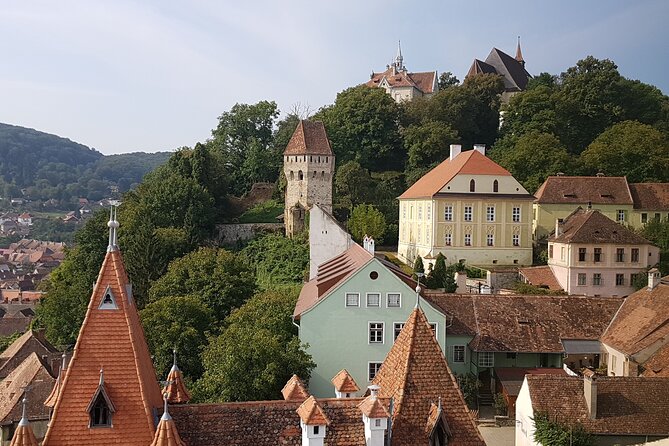
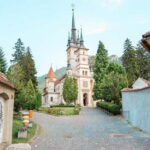
Day ten is for finishing strong in Brasov. You start with a walking tour of the Old Town, including the Black Church, the Old Town square, and medieval city walls. The itinerary also gives free time to absorb the atmosphere in a café, which is smart. At this point you will want to sit without feeling like you missed something.
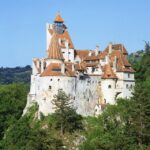
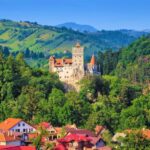
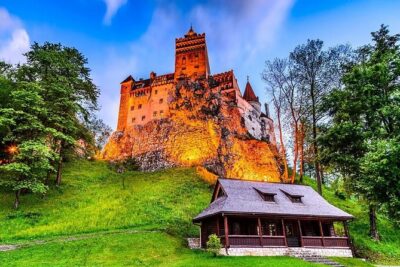
Then comes Bran Castle, often called Dracula’s Castle. The tour walks the line between myth and history, noting that it is believed Bram Stoker may have used descriptions that resemble Bran when creating Dracula’s fictional home. It also gives you a practical food moment outside the castle, including handmade cheeses, pálinka (plum and pear brandy), and traditionally produced ham and sausages.
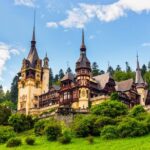
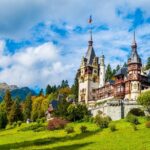
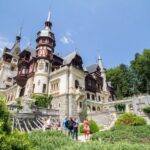
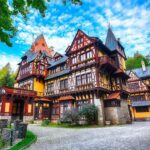
Finally, you close with Peles Castle, the Romanian royal family’s summer residence. The tour frames it as one of the most important castles to see in Europe, and that thousands of visitors book Romania tours for it. The reason it works as a finale is tone: after Dracula legend and defensive towns, Peles feels like a clean ending, luxury and craftsmanship without the doom.
Price and value, what $3,472.81 per person buys you
The price, $3,472.81 per person, is not a budget deal. But it is also not priced like a fly-in, fly-out experience where you barely touch the ground. You are paying for private movement across a huge distance spread, plus a guide/driver who stays with you.
Here is what stands out for value:
- A private car used only for your group, plus Wi-Fi onboard.
- All car expenses like gasoline, parking, and road tolls.
- A licensed English-speaking guide/driver available throughout the tour.
- Flexibility to adjust the daily itinerary even after it starts.
The big thing to watch is what is not included. The tour notes that accommodation, meals, and beverages are not included for you. Entrance fees are also not universally guaranteed, since the information says entrance fees are not included as per itinerary, even though some stops list ticket inclusion. So your best move is to confirm which entries are actually covered for your dates, then budget the rest.
If your group is small and you hate shared schedules, this is one of those times where private routing is worth it. You are buying time, comfort, and the ability to change plans when weather or pacing demands it.
Who this tour suits best, and who should rethink it
This tour fits you if you want a guided deep route without the stress of organizing Romania from scratch. You get history, architecture, scenery, and a few curveballs like the egg museum and the humor-filled cemetery.
You might want to rethink it if you prefer lighter travel days or if you will feel worn out by constant driving and frequent stops. Day-to-day, the itinerary leans active, and Transfăgărășan has a seasonal access window, so your travel month matters.
It also suits couples and small groups who want privacy but still want structure. Since the car is only for your group, you are not bargaining with other schedules while trying to enjoy a castle or monastery.
Should you book this 10-day private Romania route?
Book it if you want Romania in one coherent storyline, guided by someone who can explain what you are seeing and keep the day flowing. The strongest parts are the private car setup, the mix of major landmarks and unusual stops, and the full Bukovina monastery sequence around Voroneț, Humor, Sucevita, and Moldovita.
Hold off if your dates fall outside June to October and you have your heart set on the Transfăgărășan drive. Also, if you hate a packed itinerary, ask for a lighter pacing plan before you commit.
If you like walking old towns, looking hard at churches and castles, and you do not mind spending your days on the move, this is a satisfying way to experience Romania without losing hours to logistics.
FAQ
Is this a private tour?
Yes. This is a private tour or activity, so only your group participates.
How long is the Romania tour?
It runs for 10 days, approximately.
What locations does the tour include?
It starts in Bucharest and also covers stops across Wallachia, Transylvania, and Bukovina, ending in Brasov with Bran Castle and Peles Castle.
Do you get pickup and transportation during the tour?
Pickup is offered, and the tour includes a private car (tourism vehicle or minibus) used only for your group.
Is the guide available in English?
Yes. The tour includes a private, licensed English-speaking guide/driver available throughout the tour.
Are entrance fees included?
Entrance fees are listed as not included as per the itinerary, but the itinerary also marks certain stops as Admission Ticket Included or Admission Ticket Free. You should confirm what is covered for your specific dates.
Is accommodation included?
Accommodation, meals, and beverages are not included.
What kinds of tickets do you receive?
You receive a mobile ticket.
Can the itinerary be changed after the tour starts?
Yes. The tour notes there is great flexibility regarding changes to the daily itinerary even after the start of the tour.
What is the main cancellation rule?
Free cancellation is available, with a full refund if you cancel at least 24 hours before the experience start time.
More Tours in Bucharest

More Tour Reviews in Bucharest
More Bucharest Tours in Bucharest
Just added from Bucharest


Private, compared.
 ★ 4.5Castles of Transylvania: Private Day Trip from BucharestFrom $151248 reviews
 ★ 5.0Dracula’s Castle, Peles Castle and Brasov – Private Day Trip from BucharestFrom $199211 reviews
 ★ 5.0Best of Bucharest | Private Walking TourFrom $314199 reviews
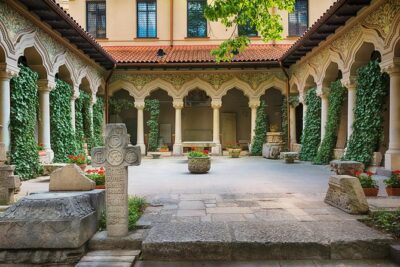 ★ 5.0Bucharest Panoramic Sightseeing – Private City TourFrom $101128 reviews
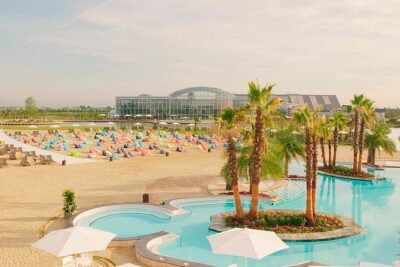 ★ 4.0THERME “Take It Easy” Pack: Full Spa Access + Private TransfersFrom $118117 reviews
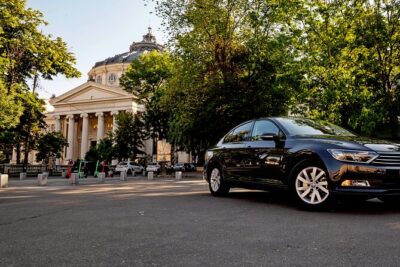 ★ 5.04h Bucharest Private Tour (2h by Car and 2h Walking in Old Town)From $10090 reviews
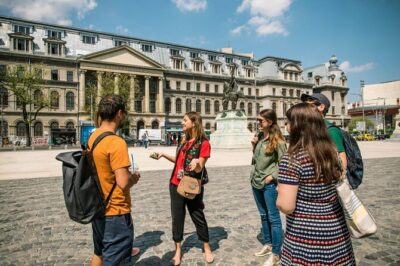 ★ 5.0Discover Bucharest: Private Highlights and Traditional Food TourFrom $14386 reviews
 ★ 5.0Dracula Castle, Peles Castle & Brasov-Private Tour from BucharestFrom $16580 reviews